
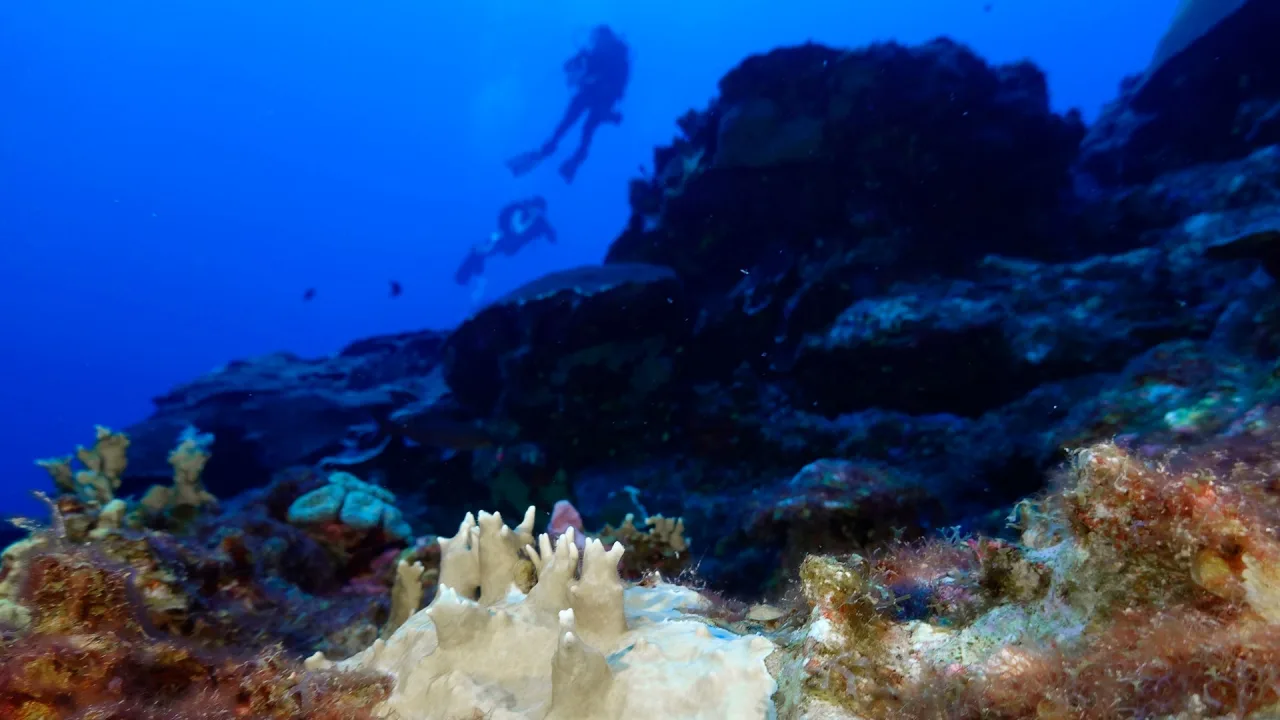
84% of the planet’s coral is now impacted by the worst reef bleaching event ever
Harmful bleaching of the world’s coral has grown to include 84% of the ocean’s reefs in the most intense event of its kind in recorded history, the International Coral Reef Initiative announced Wednesday.
It’s the fourth global bleaching event since 1998, and has now surpassed bleaching from 2014-17 that hit some two-thirds of reefs, said the ICRI, a mix of more than 100 governments, non-governmental organizations and others. And it’s not clear when the current crisis, which began in 2023 and is blamed on warming oceans, will end.
“We may never see the heat stress that causes bleaching dropping below the threshold that triggers a global event,” said Mark Eakin, executive secretary for the International Coral Reef Society and retired coral monitoring chief for the U.S. National Oceanic and Atmospheric Administration.
“We’re looking at something that’s completely changing the face of our planet and the ability of our oceans to sustain lives and livelihoods,” Eakin said.
Last year was Earth’s hottest year on record, and much of that is going into oceans. The average annual sea surface temperature of oceans away from the poles was a record 20.87 degrees Celsius (69.57 degrees Fahrenheit).
That’s deadly to corals, which are key to seafood production, tourism and protecting coastlines from erosion and storms. Coral reefs are sometimes dubbed “rainforests of the sea” because they support high levels of biodiversity—approximately 25% of all marine species can be found in, on and around coral reefs.
Coral get their bright colors from the colorful algae that live inside them and are a food source for the corals. Prolonged warmth causes the algae to release toxic compounds, and the coral eject them. A stark white skeleton is left behind, and the weakened coral is at heightened risk of dying.
The bleaching event has been so severe that NOAA’s Coral Reef Watch program has had to add levels to its bleaching alert scale to account for the growing risk of coral death.
Efforts are underway to conserve and restore coral. One Dutch lab has worked with coral fragments, including some taken from off the coast of the Seychelles, to propagate them in a zoo so that they might be used someday to repopulate wild coral reefs if needed. Other projects, including one off Florida, have worked to rescue corals endangered by high heat and nurse them back to health before returning them to the ocean.
But scientists say it’s essential to reduce greenhouse gas emissions that warm the planet, such as carbon dioxide and methane.
“The best way to protect coral reefs is to address the root cause of climate change. And that means reducing the human emissions that are mostly from burning of fossil fuels . . . everything else is looking more like a Band-Aid rather than a solution,” Eakin said.
“I think people really need to recognize what they’re doing . . . inaction is the kiss of death for coral reefs,” said Melanie McField, co-chair of the Caribbean Steering Committee for the Global Coral Reef Monitoring Network, a network of scientists that monitors reefs throughout the world.
The group’s update comes as President Donald Trump has moved aggressively in his second term to boost fossil fuels and roll back clean energy programs, which he says is necessary for economic growth.
“We’ve got a government right now that is working very hard to destroy all of these ecosystems . . . removing these protections is going to have devastating consequences,” Eakin said.
The Associated Press’ climate and environmental coverage receives financial support from multiple private foundations. AP is solely responsible for all content. Find AP’s standards for working with philanthropies, a list of supporters and funded coverage areas at AP.org.
—Isabella O’Malley, Associated Press
Originally published by fastcompany.com. Syndicated material does not necessarily reflect the views of Grazia British.
More Culture

Don’t Pull Out of Germany
Merz’s stupidity is no excuse for a stupid response. Source link

Step inside the gorgeous, futuristic offices of Vast, the startup designing the next-gen space station
A tall baobab tree greets people inside the Long Beach, California, headquarters of Vast, an aerospace company that is building the space station of the future. It’s planted beneath a…

5 ways high-performing teams stay calm when everything’s on fire
When markets swing, plans break, inboxes explode, and everyone starts saying the situation is “unprecedented” again, most teams do what humans have always done under pressure: they grip…

Confused Trump Openly Admits Plot to Rig Midterms as Polls Turn Brutal
Last week, the Supreme Court gutted protections against racial gerrymandering, and Donald Trump is already urging Republicans to seize on it. Trump unleashed a Truth Social rant on Monday…