

An Earthling’s guide to planet hunting
But there’s another way over these hurdles. At her lab among the redwoods, Jensen-Clem and her students experiment with new technologies and software to help Keck’s primary honeycomb mirror and its smaller, “deformable” mirror see more clearly. Using measurements from atmospheric sensors, deformable mirrors are designed to adjust shape rapidly, so they can correct for distortions caused by Earth’s atmosphere on the fly.
This general imaging technique, called adaptive optics, has been common practice since the 1990s. But Jensen-Clem is looking to level up the game with extreme adaptive optics technologies, which are aimed to create the highest image quality over a small field of view. Her group, in particular, does so by tackling issues involving wind or the primary mirror itself. The goal is to focus starlight so precisely that a planet can be visible even if its host star is a million to a billion times brighter.
In April, she and her former collaborator Maaike van Kooten were named co-recipients of the Breakthrough Prize Foundation’s New Horizons in Physics Prize. The prize announcement says they earned this early-career research award for their potential “to enable the direct detection of the smallest exoplanets” through a repertoire of methods the two women have spent their careers developing.
In July, Jensen-Clem was also announced as a member of a new committee for the Habitable Worlds Observatory, a concept for a NASA space telescope that would spend its career on the prowl for signs of life in the universe. She’s tasked with defining the mission’s scientific goals by the end of the decade.

“In adaptive optics, we spend a lot of time on simulations, or in the lab,” Jensen-Clem says. “It’s been a long road to see that I’ve actually made things better at the observatory in the past few years.”
Jensen-Clem has long appreciated astronomy for its more mind-bending qualities. In seventh grade, she became fascinated by how time slows down near a black hole when her dad, an aerospace engineer, explained that concept to her. After starting her bachelor’s degree at MIT in 2008, she became taken with how a distant star can seem to disappear—either suddenly winking out or gently fading away, depending on the kind of object that passes in front of it. “It wasn’t quite exoplanet science, but there was a lot of overlap,” she says.
“If you just look up at the night sky and see stars twinkling, it’s happening fast. So we have to go fast too.”
During this time, Jensen-Clem began sowing the seeds for one of her prize-winning methods after her teaching assistant recommended that she apply for an internship at NASA’s Jet Propulsion Laboratory. There, she worked on a setup that could perfect the orientation of a large mirror. Such mirrors are more difficult to realign than the smaller, deformable ones, whose shape-changing segments cater to Earth’s fluctuating atmosphere.
“At the time, we were saying, ‘Oh, wouldn’t it be really cool to install one of these at Keck Observatory?’” Jensen-Clem says. The idea stuck around. She even wrote about it in a fellowship application when she was gearing up to start her graduate work at Caltech. And after years of touch-and-go development, Jensen-Clem succeeded in installing the system—which uses a technology called a Zernike wavefront sensor—on Keck’s primary mirror about a year ago. “My work as a college intern is finally done,” she says.
Originally published by technologyreview.com. Syndicated material does not necessarily reflect the views of Grazia British.
More Culture

Don’t Pull Out of Germany
Merz’s stupidity is no excuse for a stupid response. Source link
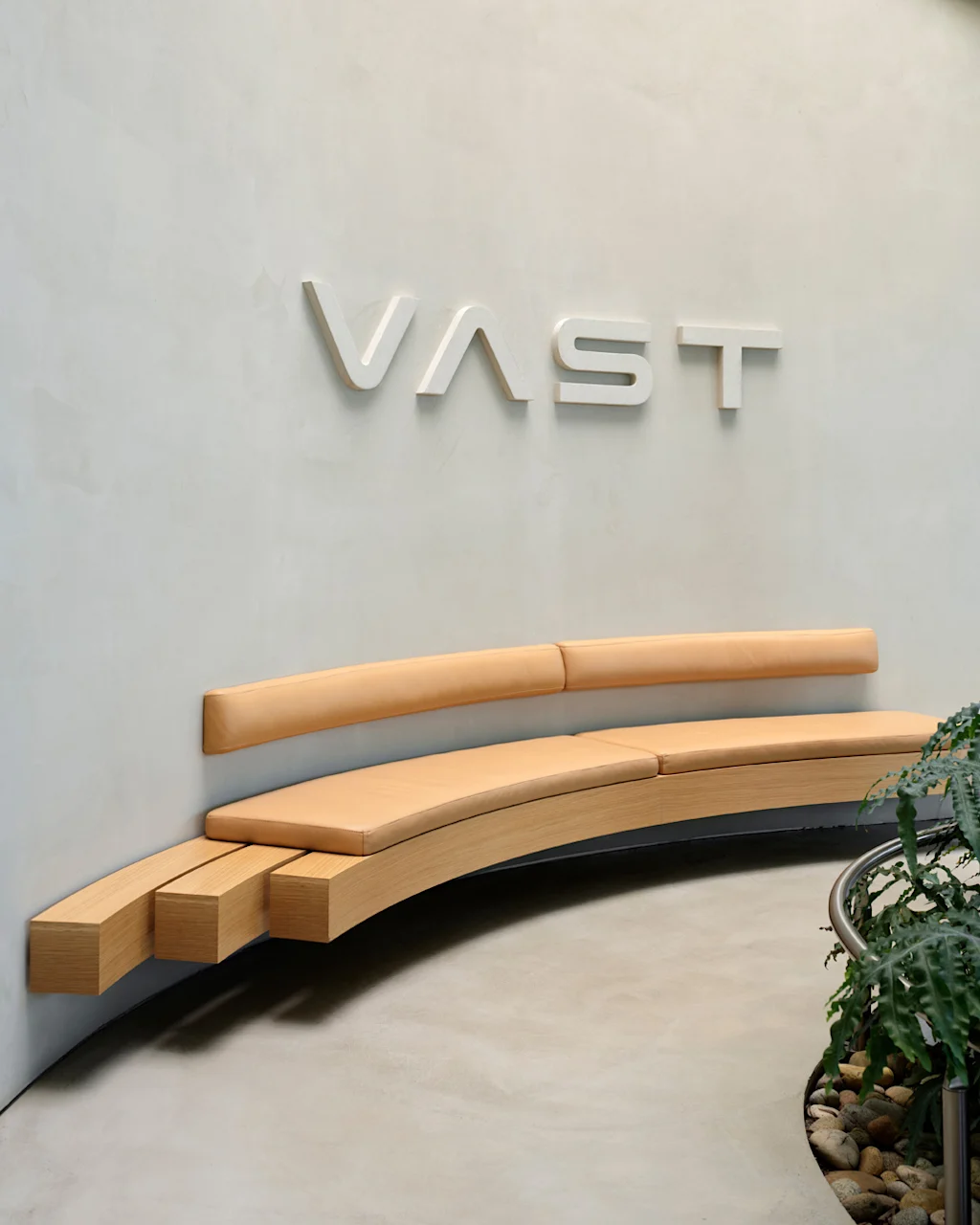
Step inside the gorgeous, futuristic offices of Vast, the startup designing the next-gen space station
A tall baobab tree greets people inside the Long Beach, California, headquarters of Vast, an aerospace company that is building the space station of the future. It’s planted beneath a…
5 ways high-performing teams stay calm when everything’s on fire
When markets swing, plans break, inboxes explode, and everyone starts saying the situation is “unprecedented” again, most teams do what humans have always done under pressure: they grip…

Confused Trump Openly Admits Plot to Rig Midterms as Polls Turn Brutal
Last week, the Supreme Court gutted protections against racial gerrymandering, and Donald Trump is already urging Republicans to seize on it. Trump unleashed a Truth Social rant on Monday…