

Cairo Film Festival Highlights Egyptian Classics Restoration as Hussein Fahmi Sets Vision for Archival Future
The Cairo Intl. Film Festival opened this year not by looking outward, but inward, highlighting the expansive archive of Egyptian classics undergoing restoration. During the ceremony, audiences were shown striking before-and-after footage of restored films such as Hossam El Din Mostafa’s “A Crime in a Quiet Neighborhood” and Kamal Al-Sheikh’s “Sunset and Sunrise,” drawing audible reactions as decades-old images re-emerged with new clarity and texture. For CIFF president Hussein Fahmi, the moment signaled a renewed commitment to not only safeguarding, but reinvigorating Egypt’s cinematic heritage.
The restoration program, spearheaded in partnership with Egypt’s Ministry of Culture-affiliated Holding Company for Investment in the fields of Culture and Cinema, marks one of the most ambitious archival efforts in regional history. Fahmi said the push stemmed from both cultural responsibility and the dramatic shift in filmmaking technologies. “The technology has changed, so I had to change with it.”
This year’s edition showcased 21 newly restored titles, all of which now include English subtitles to reach international viewers. But the initiative doesn’t end with festival screenings. “It’s useless if you restore the films and screen them within the festival, and then nobody else sees them,” Fahmi said during a press roundtable. To ensure long-term access, CIFF and the Holding Company are developing a dedicated digital platform for Egyptian classics. “On that platform you can watch all these movies,” he shared, noting that younger cinephiles often have no entry point into the country’s earlier film tradition.
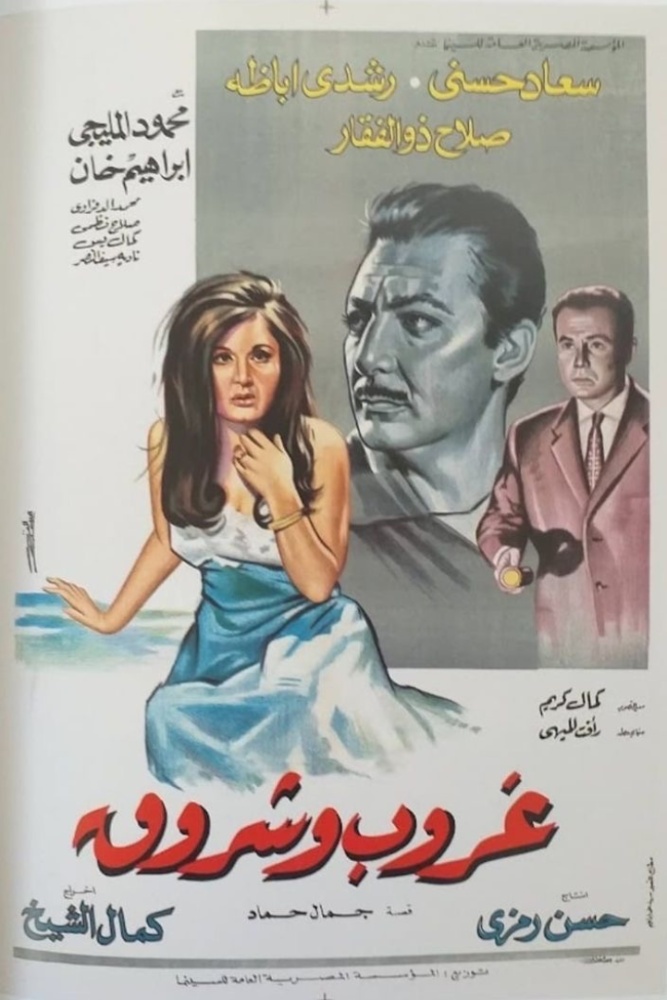
The initiative isn’t entirely new; CIFF began restoring and presenting heritage titles in recent editions, steadily expanding the effort into the large-scale program unveiled this year.
The side-by-side restoration footage played at the opening ceremony sparked enthusiasm among festival guests, underscoring the sophistication of Egypt’s studio era and the craftsmanship that, as Fahmi put it, stood “parallel with the American cinema, with the European cinema” in its time.
While the first restored batch marks a milestone, the scale of the work ahead remains staggering. “We have 1,300 movies to be restored,” Fahmi acknowledged. Still, he sees the size of the archive as a long-term opportunity. Once digitized and available, the collection could form one of the most comprehensive archives of Arab cinema anywhere in the world. “If we have all these numbers, we can have a fantastic platform, with a wide range of films,” he emphasized.
Fahmi placed the restoration effort within a larger reflection on Egypt’s shifting role in regional production. The country once produced around 60 films annually and exported them across the Middle East and North Africa. In recent years, political turmoil, market losses in neighboring countries, and the pandemic have brought output down to an average of 16 films a year.
Even so, he insists that Egyptian cinema maintains a deeply recognizable identity. “When you watch an Egyptian film, you know this is Egyptian cinema,” he said. Its rhythm, themes, and cultural grounding, he argues, are what give it an enduring international appeal: “The more international you become, it’s because you’re deriving from your own society, your own culture.”
For Fahmi, the restoration program is not only about preservation but about restoring a kind of emotional filmmaking he feels is increasingly missing from mainstream cinema. “The disadvantage in what’s happening today is that when watching films, we’re not part of the film,” the veteran actor noted. “The films that we made had a lot of feelings and emotions. You connected to the characters.”
He hopes that reintroducing Egypt’s classic cinema, rooted in character, mood, and emotional proximity, will inspire younger filmmakers to reconnect with storytelling anchored in humanity rather than pure spectacle.
Amid growing competition from regional festivals, Fahmi emphasized the need for CIFF to remain “young in spirit,” even as it reaches its 46th edition. Reviving the national archive, he believes, is one of the most powerful ways to do so by preserving history while giving new filmmakers a foundation on which to build.

Originally published by variety.com. Syndicated material does not necessarily reflect the views of Grazia British.
More Lifestyle

Millennium Docs Against Gravity Festival Director on How Documentary Film Helps Audiences Find ‘Sense Amid the Chaos’ of Current Events
Poland’s Millennium Docs Against Gravity, the documentary film festival that takes place simultaneously across seven Polish cities, returns for its 23rd edition from May 7 – 17 with a…

Mubi Acquires Na Hong-Jin’s Korean Thriller ‘Hope,’ Starring Michael Fassbender, Alicia Vikander and Hoyeon, For Multiple Territories Ahead of Cannes Premiere
Mubi is once again flexing it financial muscle ahead of Cannes, picking up one of the buzziest films heading to this year’s festival. The arthouse distributor and production company has…

MetFilm Sales Acquires Mongolian Documentary ‘Colors of White Rock’ Ahead of World Premiere at Tribeca (EXCLUSIVE)
London-based MetFilm Sales has acquired Mongolian filmmaker Khoroldorj Choijoovanchig’s debut feature documentary “Colors of White Rock” for worldwide sales representation. The film will…

Brit Detective Drama ‘Bergerac’ Bought for U.S. by PBS Distribution (EXCLUSIVE)
British detective drama “Bergerac” is heading to the U.S. with PBS Distribution following a deal with Banijay Rights. The acquisition comes ahead of next week’s London TV Screenings, with…