

‘Call Me Ted’ Duo on Why Studying Ted Turner’s Legacy as a Media Maverick Is More Urgent Than Ever
There was the time he held an impromptu telethon to help cover his nearly-bankrupt TV station’s payroll. There was the time he declared himself to be the manager of the Atlanta Braves for a day — because he could. And there was the time when he changed the world by launching CNN.
Ted Turner’s life and legacy is measured in warts-and-all fashion in the Max docu-series “Call Me Ted,” directed by Keith Clarke and produced by Joni Levin through the couple’s Point Blank Productions banner.
A hagiography it’s not. The six-part series probes the highs and lows of the innovative, Atlanta-based media mogul who helped drive the cable revolution with TBS, TNT, Turner Classic Movies, Cartoon Network and the dawn of 24/7 global TV news with CNN. Turner, who also owned the Atlanta Braves for three decades, is 86 and was diagnosed with Lewy Body Dementia in 2018.
“This is a man who believed so much in what he was doing, in himself, and a guy that just was told ‘no’ so many times, and he took ‘no’ and he turned it into ‘on,’ ” says Levin. “One of the reasons we did this is that we felt that people kind of know about him, but they don’t really know about him.”
Turner has largely been out of media since the mid-2000s, after selling his Turner Broadcasting System to Time Warner in 1996 and suffering through the wealth-destroying ride that was the AOL-Time Warner merger five years later. Levin worried that as time marches on, the most important parts of Turner’s legacy would be forgotten.
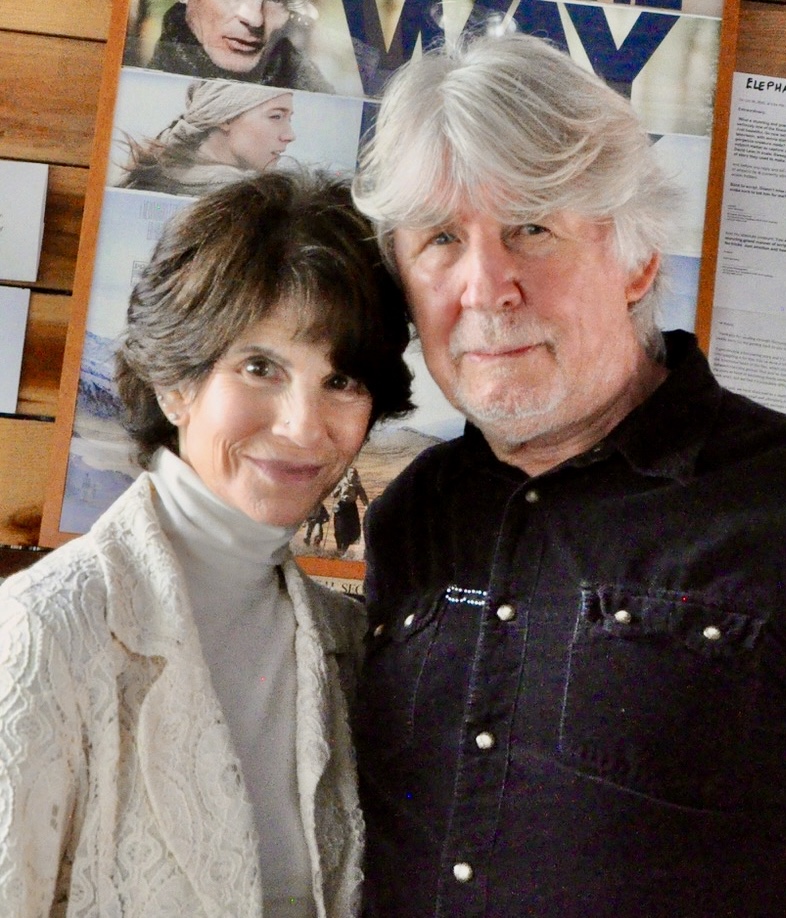
“The younger generation in particular really doesn’t know about him,” she says. He was a true maverick who always looked for ways to defy convention. “Ted always said, you know, ‘It’s the citizens of the world, it’s we the people, it’s the fans in the stadium that can change the momentum of the game,’ ” she recalls.
Levin brought great perspective to Turner’s story, having worked for him in the late 1980s and ’90s. Turner Broadcasting System acquired Levin’s 1988 documentary “John Huston: The Man, the Movies, the Maverick” out of Sundance. The title wound up airing on the then-fledgling TNT. She also produced 1992’s three-part series “MGM: When the Lion Roars,” which earned TNT its first Emmy Award.
Decades later, amid the tumult in the industry that Turner helped build, Levin realized that Turner himself had never been the subject of a deep-dive documentary. From there, she was dogged in securing the permission of the mogul himself — which took some time. She also recruited support and funding for the project from the cable Brahmins who benefited from Turner’s bold vision: John Malone, Brian Roberts and Charles Dolan, who died in December at age 98.
Clarke has worked on a range of narrative and nonfiction projects over his career as a writer, director and producer. Initially, he was not planning to collaborate with Levin on “Call Me Ted.” But as he saw the depth of her commitment to telling the story, he took a listen to Turner’s audio-book narration of his 2008 memoir “Call Me Ted.”
“All of his colloquialisms and the way he talks, his irreverence. What struck me was his vulnerability. That’s the reason why I decided to do it, solely because of that,” Clarke says. “Here’s a guy who’s willing to share his mistakes, his foibles, the pain that he’s given to others and the pain that he’s felt. And frankly, I love non fiction.”
Levin feels there’s new urgency to studying how Turner managed to scale the hurdles that he faced as an independent media operator, given the Trump administration’s assault on journalism, legal and democratic norms.
“We want to reach today’s generation. Because the things that concerned Ted back then that are things we’re concerned about today. He fought the battles for them,” Levin says. “All the things we’re dealing with today he would stand up for today — freedom of speech, freedom of press. When CNN came out and the Reagan administration said ‘Oh CNN can’t be part of the press pool.’ Ted sued the White House and Reagan personally — and of course, he won. He wouldn’t be backing down because of this pressure right now. He’d be standing up for them.”
Originally published by variety.com. Syndicated material does not necessarily reflect the views of Grazia British.
More Lifestyle

Millennium Docs Against Gravity Festival Director on How Documentary Film Helps Audiences Find ‘Sense Amid the Chaos’ of Current Events
Poland’s Millennium Docs Against Gravity, the documentary film festival that takes place simultaneously across seven Polish cities, returns for its 23rd edition from May 7 – 17 with a…

Mubi Acquires Na Hong-Jin’s Korean Thriller ‘Hope,’ Starring Michael Fassbender, Alicia Vikander and Hoyeon, For Multiple Territories Ahead of Cannes Premiere
Mubi is once again flexing it financial muscle ahead of Cannes, picking up one of the buzziest films heading to this year’s festival. The arthouse distributor and production company has…

MetFilm Sales Acquires Mongolian Documentary ‘Colors of White Rock’ Ahead of World Premiere at Tribeca (EXCLUSIVE)
London-based MetFilm Sales has acquired Mongolian filmmaker Khoroldorj Choijoovanchig’s debut feature documentary “Colors of White Rock” for worldwide sales representation. The film will…

Brit Detective Drama ‘Bergerac’ Bought for U.S. by PBS Distribution (EXCLUSIVE)
British detective drama “Bergerac” is heading to the U.S. with PBS Distribution following a deal with Banijay Rights. The acquisition comes ahead of next week’s London TV Screenings, with…