
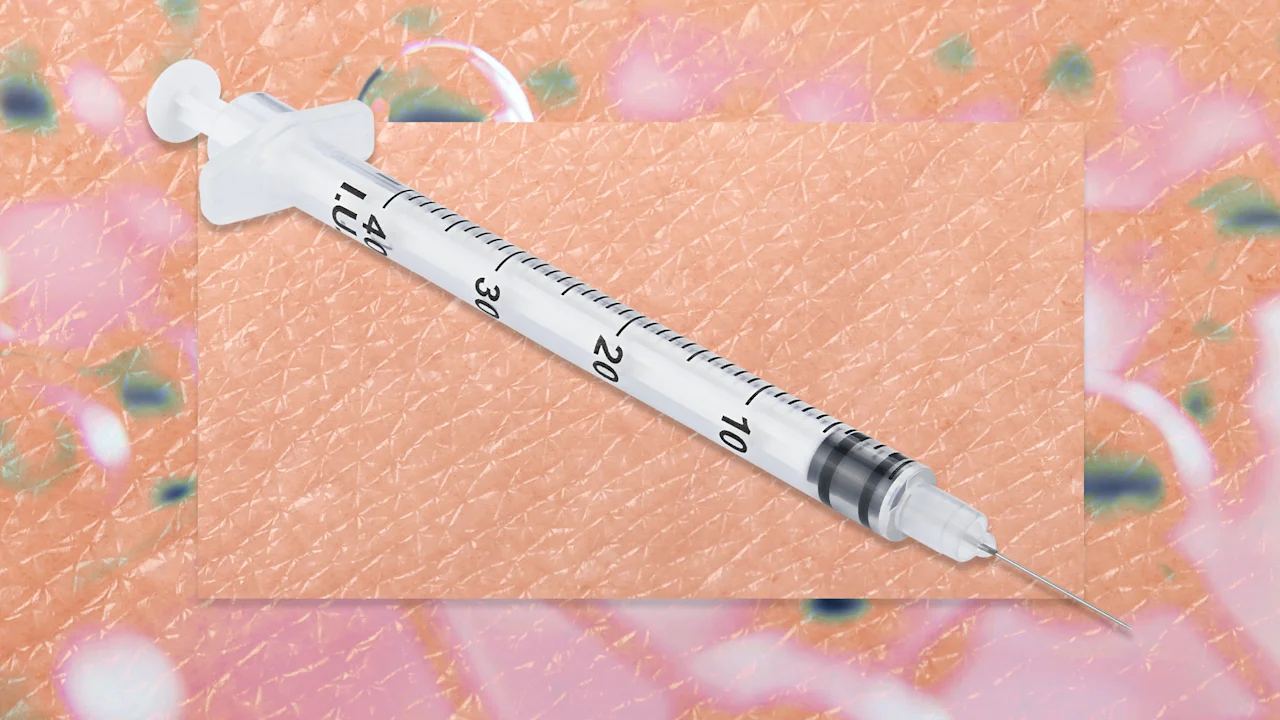
Cash-strapped young women are turning to DIY Botox. That’s as scary as it sounds
If there wasn’t enough to be worried about, DIY Botox is now trending.
Across social media, people have been uploading close-ups of their forehead mapped out with tiny dots and step-by-step advice for injecting Botox-like products purchased online (yes, it is as dangerous as it sounds).
“Probably needed a hug,” one TikToker wrote. “Learned how to do my own tox instead.” On the Reddit forum r/DIYCosmeticProcedures, members also share tips for injecting themselves at home with everything from fat-dissolving injections to dermal filler and Botox.
One of the most popular Botox alternatives that has emerged online, with references often accompanied by discount codes, is Innotox, a Korean over-the-counter injectable.
Like Botox, Innotox is a neurotoxin that contains botulinum toxin A. Unlike Botox, which comes as a powder, it arrives as a ready-to-use liquid, making it convenient for self-administration. Also unlike Botox, which is FDA approved, Innotox is not authorized in the U.K. or U.S.
Botulinum toxin A—which blocks nerve signals when injected to stop muscles in the face from moving, thereby reducing the appearance of wrinkles—is highly toxic and can have catastrophic effects when not administered safely and properly. That’s assuming you can even be sure of whether what you’ve purchased online is the authentic product.
Just as blondes going back to their natural hair color has become a well-known recession indicator, people are now injecting their own faces to save a few hundred dollars. But while one leaves you with a darker shade of hair, the other could leave you permanently disfigured.
Doctors and licensed injectors are shouting from the rooftops about the risks, and sometimes fatal side effects, of incorrect administration of the neurotoxin. And no, it’s not because they’re worried about losing business.
Medytox, which produces Innotox, recently opened an investigation into the unauthorized importation of Innotox to the U.S., U.K., and other countries.
“Botulinum toxins should be administered only by qualified healthcare professionals in a medically appropriate setting,” Tom Albright, chief executive of Luvantas, a subsidiary of Medytox, told The Guardian. “Administration requires a deep understanding of facial anatomy and aesthetic principles, which cannot be replicated in consumer-administered or unregulated environments.”
If even licensed injectors aren’t doing their own botox at home, there’s probably a reason why.
Originally published by fastcompany.com. Syndicated material does not necessarily reflect the views of Grazia British.
More Culture

Don’t Pull Out of Germany
Merz’s stupidity is no excuse for a stupid response. Source link

Step inside the gorgeous, futuristic offices of Vast, the startup designing the next-gen space station
A tall baobab tree greets people inside the Long Beach, California, headquarters of Vast, an aerospace company that is building the space station of the future. It’s planted beneath a…

5 ways high-performing teams stay calm when everything’s on fire
When markets swing, plans break, inboxes explode, and everyone starts saying the situation is “unprecedented” again, most teams do what humans have always done under pressure: they grip…

Confused Trump Openly Admits Plot to Rig Midterms as Polls Turn Brutal
Last week, the Supreme Court gutted protections against racial gerrymandering, and Donald Trump is already urging Republicans to seize on it. Trump unleashed a Truth Social rant on Monday…