
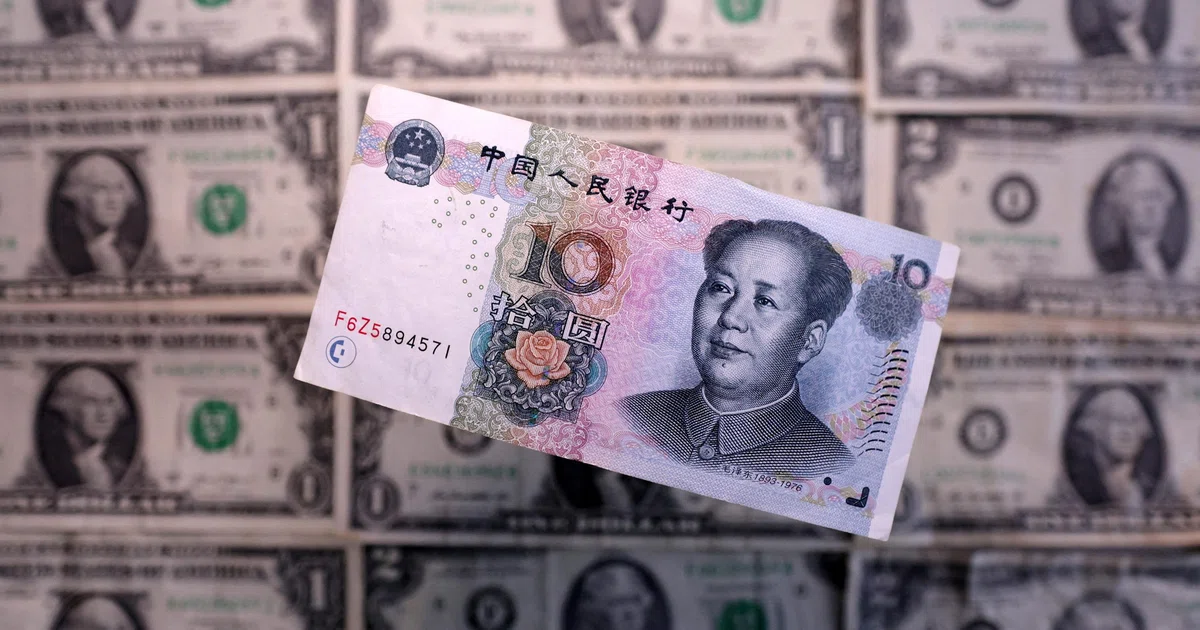
Chinese investors’ FX pile hits US$1 trillion amid low local rates
Chinese corporates and households boosted their foreign-currency deposits last month to the highest in three years, as they shunned the renminbi on bets domestic interest rates will remain low.
Total foreign-currency deposits onshore rose to US$1.02 trillion in June, the highest since March 2022, according to data from the People’s Bank of China released on Monday (Jul 15). The net increase in the first half of the year was US$165.5 billion, the biggest jump in data going back to 2005.
The accumulation of foreign deposits reflects lower confidence in the economy and expectations for a further depreciation in the currency even as the US dollar weakens amid US President Donald Trump’s tariffs and fiscal policy. Fixed-asset investments in the first half of the year missed estimates, reflecting caution among companies to deploy funds for expansion.
“This is a reflection of a low FX conversion ratio still due to a much lower interest rate for renminbi than US dollars,” said Becky Liu, head of China macro strategy at Standard Chartered Bank.
There is also a “strong desire to diversify the business into global markets given deflationary entitlement at home, and a lack of conviction that the renminbi will continue to appreciate despite a weak US dollar,” she said.
The renminbi has risen in 2025 after posting losses for three consecutive years as the US dollar fell more than 8 per cent this year. Still, the renminbi‘s gains have lagged those in most Asian currencies as the Chinese economy continues to face deflation and the prospect of further interest-rate cuts to support growth.
BT in your inbox

Start and end each day with the latest news stories and analyses delivered straight to your inbox.
Both residents and non-financial companies increased FX savings last month. Trade surplus reached US$114.8 million in June, the highest in five months. Exporters repatriating their proceeds onshore may have also boosted foreign deposits.
While PBOC data reflect activities in June, there are some signs that Chinese traders may have started pulling back from the greenback, with swap points reflecting decreasing demand for the US currency.
However, any withdrawal is unlikely to be rapid with US interest rates still much higher than China’s, and with doubts emerging over a widely expected Federal Reserve rate cut in September.
“The onshore renminbi is more likely to depreciate than appreciate in the second half, on weaker economic growth, weaker exports, and stronger outbound securities investments after the recent relaxation,” Liu said.
“The FX deposit will continue to increase in the second half.” BLOOMBERG
Originally published by businesstimes.com.sg. Syndicated material does not necessarily reflect the views of Grazia British.
More Culture

Don’t Pull Out of Germany
Merz’s stupidity is no excuse for a stupid response. Source link

Step inside the gorgeous, futuristic offices of Vast, the startup designing the next-gen space station
A tall baobab tree greets people inside the Long Beach, California, headquarters of Vast, an aerospace company that is building the space station of the future. It’s planted beneath a…

5 ways high-performing teams stay calm when everything’s on fire
When markets swing, plans break, inboxes explode, and everyone starts saying the situation is “unprecedented” again, most teams do what humans have always done under pressure: they grip…

Confused Trump Openly Admits Plot to Rig Midterms as Polls Turn Brutal
Last week, the Supreme Court gutted protections against racial gerrymandering, and Donald Trump is already urging Republicans to seize on it. Trump unleashed a Truth Social rant on Monday…