
Cinema’s Most Iconic Love Story of All Time Hinges on One Romantic Quote
When Westley (Cary Elwes) first says “As you wish” to Buttercup (Robin Wright) in The Princess Bride, it sounds like nothing more than a servant’s reply. He fetches water, she barely glances at him, and the words effectively mean nothing. But each repetition carries more weight, and every “As you wish” enters a rhythm of unspoken affection building beneath the film’s fairytale surface. By the time Buttercup realizes that every “As you wish” actually means “I love you,” the audience already knows, and that’s what makes the revelation so satisfying.
DirectorRob Reiner and screenwriter William Goldman understood that sincerity works best when it isn’t forced. The Princess Bride is full of parody and exaggeration from its monologue-loving villains to its swordsmen who speak in poetry, but this line cuts through all the humor and has endured the decades since it first hit screens. It’s honest and simple, and in a movie that constantly reminds the audience it’s “just a story,” “As you wish” becomes the heart of cinema’s greatest love story.
The Line Turns a Parody Into a Promise
The Princess Bride exists in two worlds: the exaggerated fantasy that Buttercup and Westley inhabit, and the cynical modern (now dated) world of the grandson (Fred Savage) rolling his eyes at “the kissing parts.” In both, “As you wish” becomes a kind of bridge, as it’s those three words that turn skepticism into belief. In the fairytale frame, the phrase transforms servitude into devotion. Westley’s love isn’t loud or self-important, and every time he says those words, he’s giving Buttercup freedom by letting her be herself without asking for anything in return. That’s what makes the moment he’s taken from her so tragic. When she thinks he’s gone forever, she’s not just mourning a person, but the rare kind of love that never tried to control her.
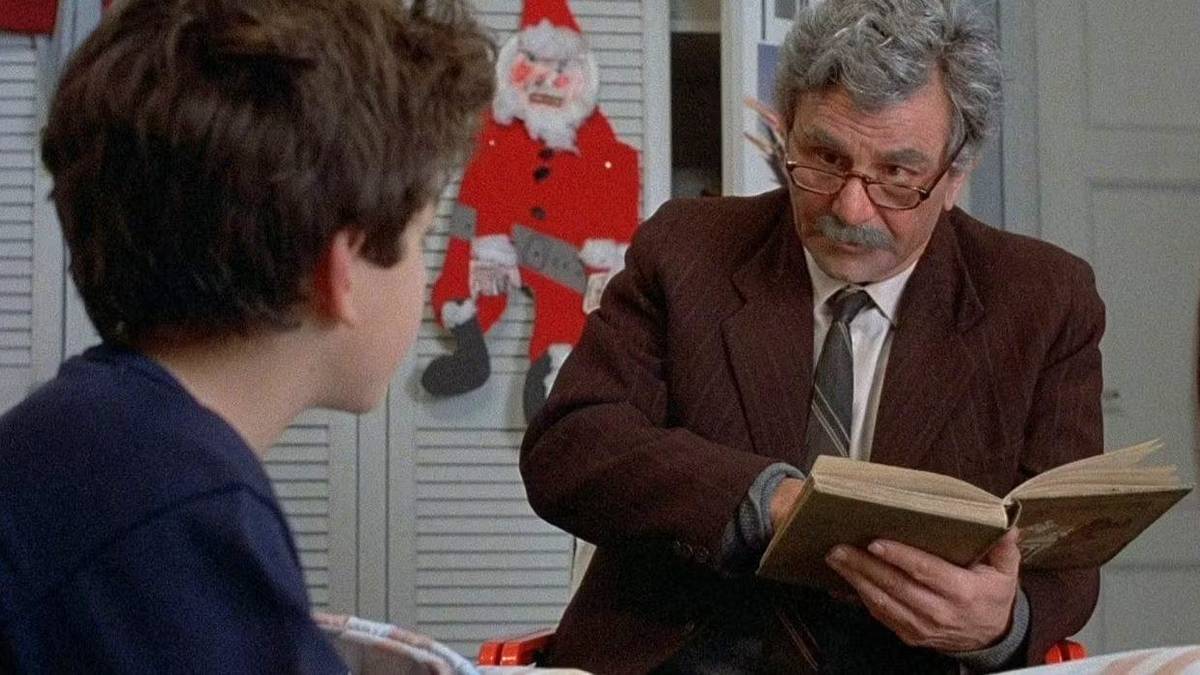
In the frame story, the same principle plays out again. The grandfather (Peter Falk) tells this “kissing book” to his skeptical grandson who just wants sword fights and pirates. At first, the grandson resists sentimentality, but as the story unfolds, even he gives in to the sincerity of it. When his grandfather whispers “As you wish” at the end, the grandson has learned that love stories aren’t something to outgrow, they’re something to carry forward.
Why Three Words Still Hold More Power Than Any Love Monologue
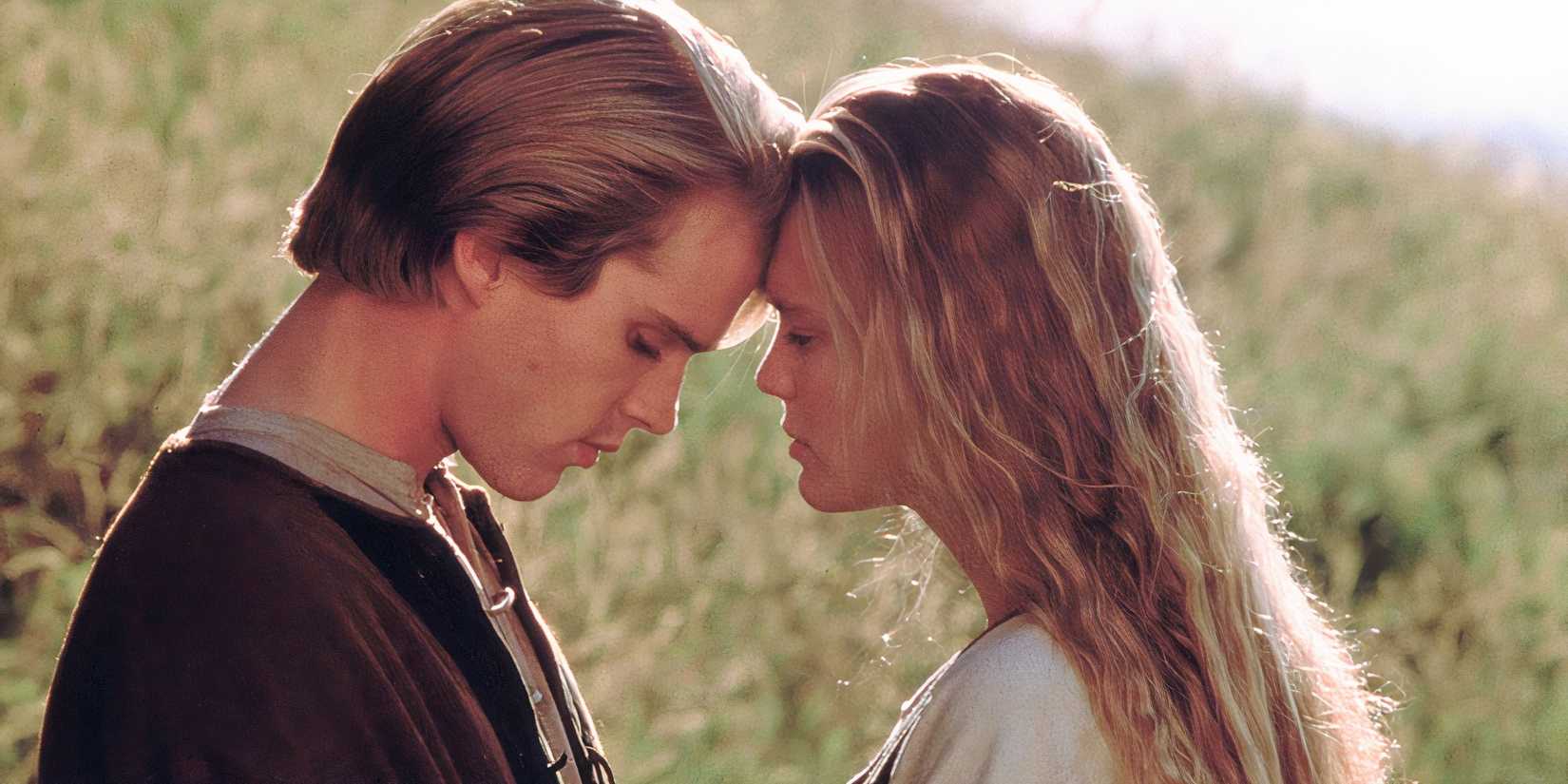
The reason “As you wish” endures is because of its universality. It’s the sound of one person telling another, “I see you, and I choose to stay.” Most cinematic declarations of love go big, while The Princess Bride does the opposite and stays modest by allowing three words to do all the work. The magic lies in what’s unsaid. Westley never tells Buttercup that he’ll give her the world, because he already does. His love is in his patience, his service, and his persistence, refusing to give up on finding her and later even being able to come back from the dead (okay, “mostly dead”) to be with her. Every time he repeats the phrase, whether with humor or reverence, it circles back to that first meaning. What makes it powerful decades later is that it resists cynicism. The line doesn’t need to be clever or modernized. It works because it believes in the purity of its own emotion, something that most modern romances struggle to recapture. Its endurance also says something about storytelling itself. Goldman wrote The Princess Bride as both a satire and a love letter to classic adventure tales, but “As you wish” belongs entirely to the latter.
The power of “As you wish” isn’t that it’s grand or poetic, but that it’s real. It says everything that needs to be said about how love should sound: patient, consistent, and free of ego. It’s a reminder that the most enduring romances don’t hinge on declarations shouted from mountaintops, but on small promises kept over a lifetime. Nearly forty years later, The Princess Bride still stands apart because it refuses to treat love as a spectacle, it treats it as a choice. “As you wish” is the expression of that choice, creating a phrase that transforms parody into truth and reminds the audience that even the most unbelievable story can hold something entirely sincere.
Release Date
September 25, 1987
Runtime
99 minutes
Writers
William Goldman
Originally published by collider.com. Syndicated material does not necessarily reflect the views of Grazia British.
More Lifestyle

Millennium Docs Against Gravity Festival Director on How Documentary Film Helps Audiences Find ‘Sense Amid the Chaos’ of Current Events
Poland’s Millennium Docs Against Gravity, the documentary film festival that takes place simultaneously across seven Polish cities, returns for its 23rd edition from May 7 – 17 with a…

Mubi Acquires Na Hong-Jin’s Korean Thriller ‘Hope,’ Starring Michael Fassbender, Alicia Vikander and Hoyeon, For Multiple Territories Ahead of Cannes Premiere
Mubi is once again flexing it financial muscle ahead of Cannes, picking up one of the buzziest films heading to this year’s festival. The arthouse distributor and production company has…

MetFilm Sales Acquires Mongolian Documentary ‘Colors of White Rock’ Ahead of World Premiere at Tribeca (EXCLUSIVE)
London-based MetFilm Sales has acquired Mongolian filmmaker Khoroldorj Choijoovanchig’s debut feature documentary “Colors of White Rock” for worldwide sales representation. The film will…

Brit Detective Drama ‘Bergerac’ Bought for U.S. by PBS Distribution (EXCLUSIVE)
British detective drama “Bergerac” is heading to the U.S. with PBS Distribution following a deal with Banijay Rights. The acquisition comes ahead of next week’s London TV Screenings, with…