
Congress Won’t Act on the Iran Strikes. That Doesn’t Make Them Legal.
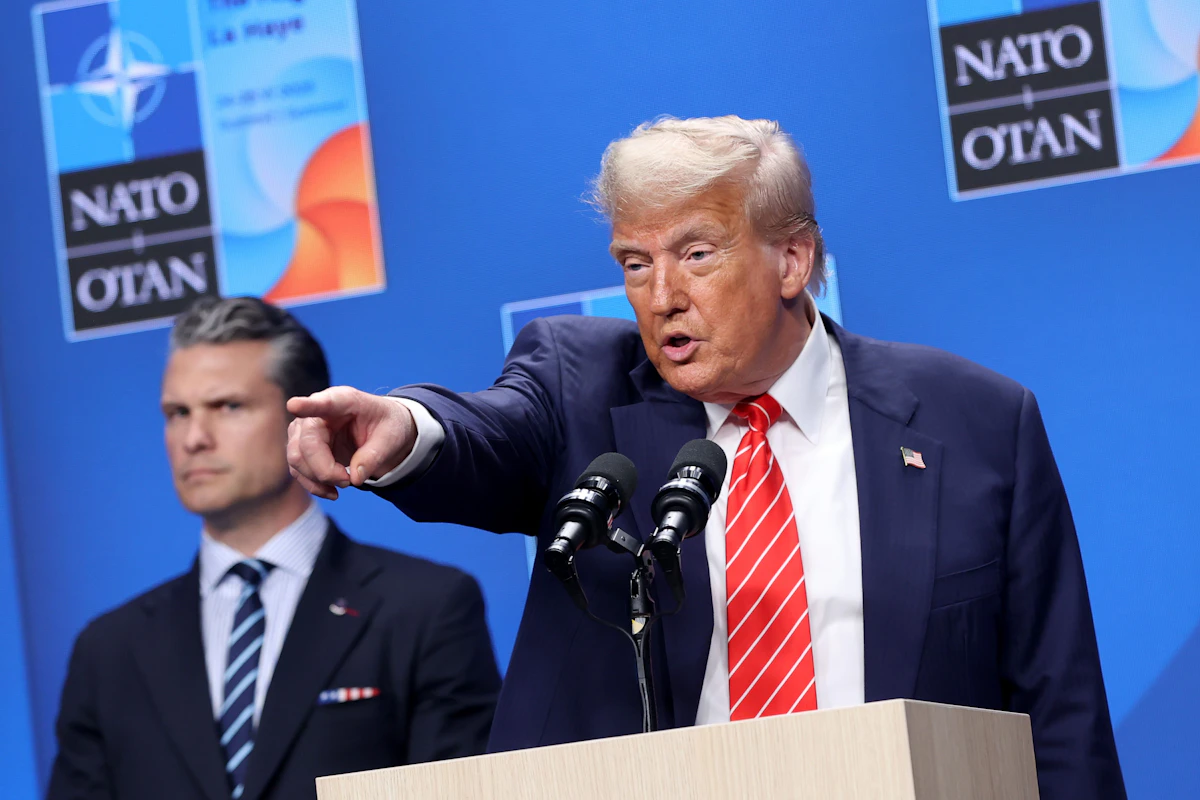
Indeed, there is little political will to repudiate the president, and even if there was, lawmakers would need to marshal a veto-proof majority to take concrete action. Overturning a presidential veto would require support from two-thirds of members, which is unlikely in a Republican-majority Congress. In 2019, Congress approved a measure that would have pulled American support for Saudi Arabia’s conflict in Yemen, but that resolution was vetoed by Trump. This puts Congress in a “terrible fix,” said Hathaway: Rather than the president going to Congress to authorize military action, Congress must take the initiative to repudiate it.
“We end up with this learned helplessness in the sense that Congress chooses to stop trying, because what’s the point?” said Hathaway. “The president has learned that can use military force without seeking authorities from Congress without consequence.”
Aside from a seeming unwillingness to counter smaller-scale military engagements by presidents, Congress has similarly struggled to repeal or update authorizations for the use of military force in Iraq and Afghanistan approved ahead of the Gulf War and after the 9/11 terrorist attacks. The 2001 authorization, which applied to perpetrators of the 9/11 attacks, has been treated by presidents as an umbrella approval to strike at other organizations affiliated with Al Qaeda. Efforts to overturn or narrow these authorizations have floundered in recent years, even decades after they were approved.
Countering the president invites risk for members of Congress. For Republicans, resistance to the president’s aims will only court Trump’s retaliation. More generally, however, lawmakers take the view that authorizing the commencement of military engagements—or ordering them to cease—comes with unintended political consequences. Voting in favor of the 2003 authorization of military force in Iraq became a major political albatross for Democratic primary candidates in the 2008 presidential election. That said, repealing such an authorization invites blowback, as well, if, for example, the move to do away with such a law was followed by a terrorist attack on American soil, or U.S. interests getting threatened abroad. The status quo has a latent appeal to lawmakers, who get to offset the political risk of military intervention while maintaining the ability to criticize it—or take credit.
Originally published by newrepublic.com. Syndicated material does not necessarily reflect the views of Grazia British.
More Culture

Don’t Pull Out of Germany
Merz’s stupidity is no excuse for a stupid response. Source link

Step inside the gorgeous, futuristic offices of Vast, the startup designing the next-gen space station
A tall baobab tree greets people inside the Long Beach, California, headquarters of Vast, an aerospace company that is building the space station of the future. It’s planted beneath a…

5 ways high-performing teams stay calm when everything’s on fire
When markets swing, plans break, inboxes explode, and everyone starts saying the situation is “unprecedented” again, most teams do what humans have always done under pressure: they grip…

Confused Trump Openly Admits Plot to Rig Midterms as Polls Turn Brutal
Last week, the Supreme Court gutted protections against racial gerrymandering, and Donald Trump is already urging Republicans to seize on it. Trump unleashed a Truth Social rant on Monday…