
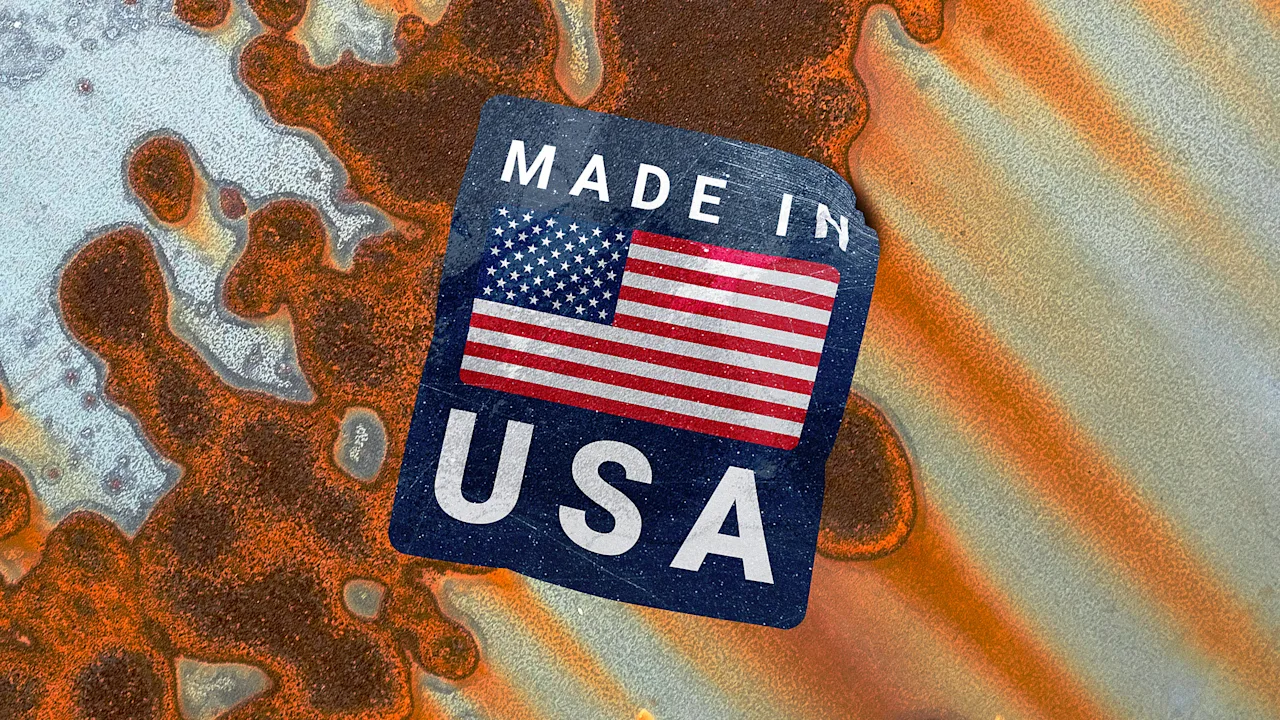
Data shows the ‘Made in USA’ brand still suffered under tariffs
In Denmark, a grocery store chain used a black star. In Canada, it was a maple leaf.
President Donald Trump’s trade war inspired new country-of-origin “Made In” labels this year as shoppers outside the U.S. looked to avoid buying American-made goods and shop local instead. In the U.S., though, the “Made in USA” brand is losing its domestic appeal.
Country-of-origin labeling is designed to be a stamp of authenticity and quality. Countries police their own rules to ensure products labeled “made” or “assembled” in their country really were made or assembled there and that they meet national standards.
When the Copenhagen-based think tank 21st Century introduced its concept for a possible future “Made in Europe” label, its managing director said it was designed to establish trust, as in, if something was made in Europe, consumers could trust no arsenic would be in it.
In the U.S. this year, though, “Made in USA” isn’t so much about trust for a growing number of consumers as it is about higher prices. And they don’t want to pay them.
A Conference Board survey released in August found about half of U.S. consumers say knowing a product was made in the U.S. made them more likely to buy it again, an 18% decline since 2022. The report’s author blamed the drop on consumers appearing to associate “Made in USA” with being expensive because of high domestic production costs.
U.S. consumers today face an overall average effective tariff rate of 16.8%, according to Yale’s Budget Lab. That’s the highest rate since 1935, and it comes amid wider economic discontent.
Half of U.S. adults say they are spending more time than usual looking for the the lowest price for items, according to an Associated Press-NORC Center for Public Affairs Research poll. That’s up from 31% in 2021 and helps explain the rise of yuppie, designified generic brands. Value matters to consumers today.
Trump’s Federal Trade Commission (FTC) plans to make “Made in USA” one of its top enforcement priorities in 2026, but for half of all shoppers looking for the best deal, they won’t be swayed one way or the other, no matter where a product was produced.
Americans say they are generally attentive to where their products are made, an October Gallup poll found, with 76% aware of the country products were made in before purchasing them sometimes, most of the time, or always.
Following years of inflation, though, the most important label for many U.S. shoppers isn’t “Made in USA.” It’s the price tag.
Originally published by fastcompany.com. Syndicated material does not necessarily reflect the views of Grazia British.
More Culture

Don’t Pull Out of Germany
Merz’s stupidity is no excuse for a stupid response. Source link

Step inside the gorgeous, futuristic offices of Vast, the startup designing the next-gen space station
A tall baobab tree greets people inside the Long Beach, California, headquarters of Vast, an aerospace company that is building the space station of the future. It’s planted beneath a…

5 ways high-performing teams stay calm when everything’s on fire
When markets swing, plans break, inboxes explode, and everyone starts saying the situation is “unprecedented” again, most teams do what humans have always done under pressure: they grip…

Confused Trump Openly Admits Plot to Rig Midterms as Polls Turn Brutal
Last week, the Supreme Court gutted protections against racial gerrymandering, and Donald Trump is already urging Republicans to seize on it. Trump unleashed a Truth Social rant on Monday…