
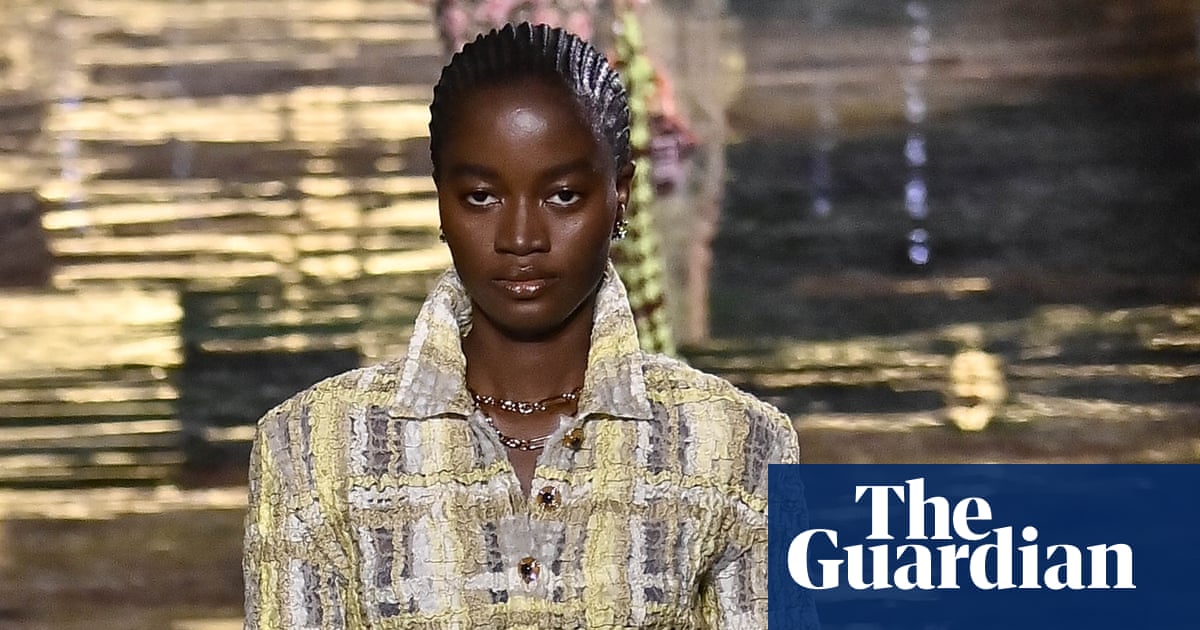
From the streets of Lagos to the Chanel catwalk: how a creative’s thrift-shop style took her to Paris
Before Paris, there was Lagos, with its busy markets, roadside stalls and maze of disorderly streets. And then there was Rachel Ojuromi, sashaying through it all and turning the everyday into an unlikely catwalk.
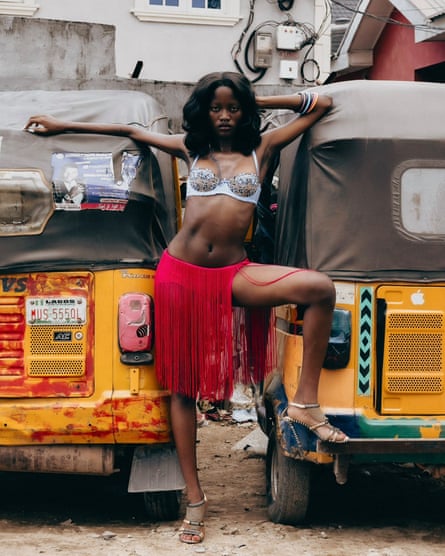
For the past six months, Ojuromi has taken social media by storm, transforming the vibrant streets of Lagos into her personal runway, showcasing designs made from secondhand, thrifted clothes and scraps mostly sourced from local open-air hubs such as Yaba market.
Her childhood friend, neighbour and stylist, Debby Fasingha, puts her looks together. Filmed in Gbagada, Yaba and other parts of Lagos without disrupting traffic, the videos often draw amused stares, smiles and cheers from pedestrians, traders and drivers as she struts past.
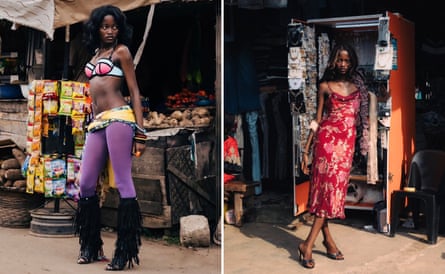
In one video, Ojuromi turns a busy Lagos road into a runway, walking confidently through traffic with a tray of bananas balanced on her head. In another, she sits drinking tea with a teenage boy at a table outside a street-side shop, with a kettle in front of them.
The shot was inspired by a Japanese advertising campaign; she had imagined the scene but needed someone to play the tea drinker. When a passerby, curious about the filming, was told that they needed an extra, she went off and brought back her son to appear in the shot.
For Ojuromi, better known on Instagram as Give Rachel a Shot, that unexpected moment sums up the joy of shooting fashion photos in Lagos.
Allow Instagram content?
This article includes content provided by Instagram. We ask for your permission before anything is loaded, as they may be using cookies and other technologies. To view this content,click 'Allow and continue'.
“There is something meaningful about knowing that a particular image or video exists because of a moment that happened at a specific time and place,” she says. “Even if somebody tries to recreate it, it will never be the same.”
That instinct for finding beauty in the everyday has helped take the 22-year-old Nigerian from filming in Lagos markets to a Chanel fashion show.
Ojuromi’s love of creativity started long before she embraced it as her digital identity. Growing up, she was surrounded by clothes because her mother sold them in local markets, but she first aspired to a career in medicine. Inspired by Gifted Hands, the autobiography of Ben Carson, an African-American doctor from Detroit, she dreamed of becoming a neurosurgeon who breaks down barriers.
But after complications with her college application, she took a year off and began exploring film-making. She eventually decided that surgery was not for her.
“I wanted to contribute something meaningful and push boundaries,” she says. “I discovered that I could pursue that ambition through creativity rather than medicine.”
The Lagos videos began with experiments in creative direction and street photography. Working with Fasingha, Ojuromi started reinterpreting global fashion collections using secondhand clothes and wardrobe finds before taking the creations to the streets.
“One of my mantras is to live within the reality of your situation,” she says. “I am not going to spend money on something I cannot afford simply because I want to create a particular look.
“We are more interested in the conversations happening around those clothes. We ask ourselves what the designer is trying to communicate through the collection. What is the central message? What is the cultural reference?”
For six months, beginning in March this year, she and her team committed themselves to publishing a new fashion video every day.
Then Chanel came calling.
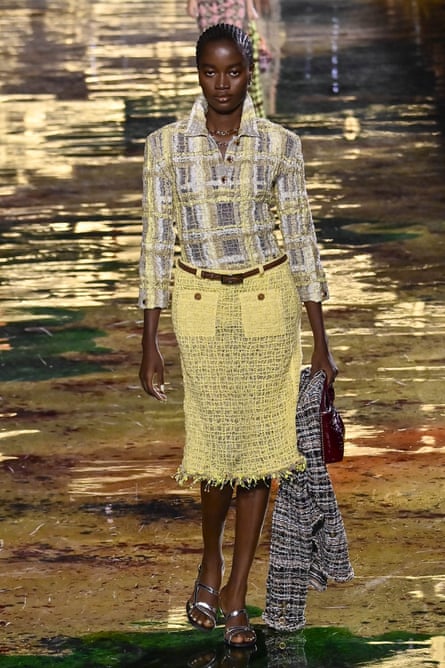
Ojuromi and Fasingha had created looks inspired by the fashion house’s Métiers d’Art 2026 collection. After Chanel’s casting director, Anita Bitton, gave them the go-ahead to publish their versions, their clip caught the attention of several influential figures in fashion, including Chanel’s creative director, Matthieu Blazy.
The conversations that followed eventually took Ojuromi from Lagos to Paris, where she walked for the Chanel spring/summer 2027 show at the Grand Palais last month.
But her ambitions extend well beyond modelling. She is also a film-maker, creative director and founder and editor of the Process Africa, a platform promoting young African creatives.
Launched in 2023 following an event organised by her young artist friend Temidayo Aríṣe, it aims to address the barriers faced by young artists, designers, photographers and other creatives in Africa, particularly those who struggle to access the opportunities needed to establish themselves.
“I remember looking around [at the event] and thinking that somebody needed to tell the stories of these people,” she says.
Her aim is also based on the idea that African creativity should not have to justify itself through its geographical identity.
“I don’t want people to constantly feel the need to introduce their work as African fashion or African art, as though it belongs to a separate category,” she says. “It is fashion. It is art. It is music. It is creativity.”
Originally published by theguardian.com. Syndicated material does not necessarily reflect the views of Grazia British.
More Fashion
‘Minimal look, maximal politics’: why the black T-shirt signals modern power
Worn by Democrat Abdul El-Sayed, Andy Burnham and Volodymyr Zelenskyy, fashion experts say the look radiates authority and no-nonsense masculinity
True Whitaker on '90s Low-Rise, Party Dressing, and Celebrating the Holidays With Old Navy
'Tis the season for sequins and faux fur.
Jess Cartner-Morley on fashion: chocolate, mocha, cacao … whatever you call it, brown is autumn’s chicest shade
Black feels like a no-brainer for boots, handbags or coats - but if you swap it for brown, the same outfit looks more considered
My 5 Best Dressed at the CFDA Fashion Awards
The cream of the crop.