
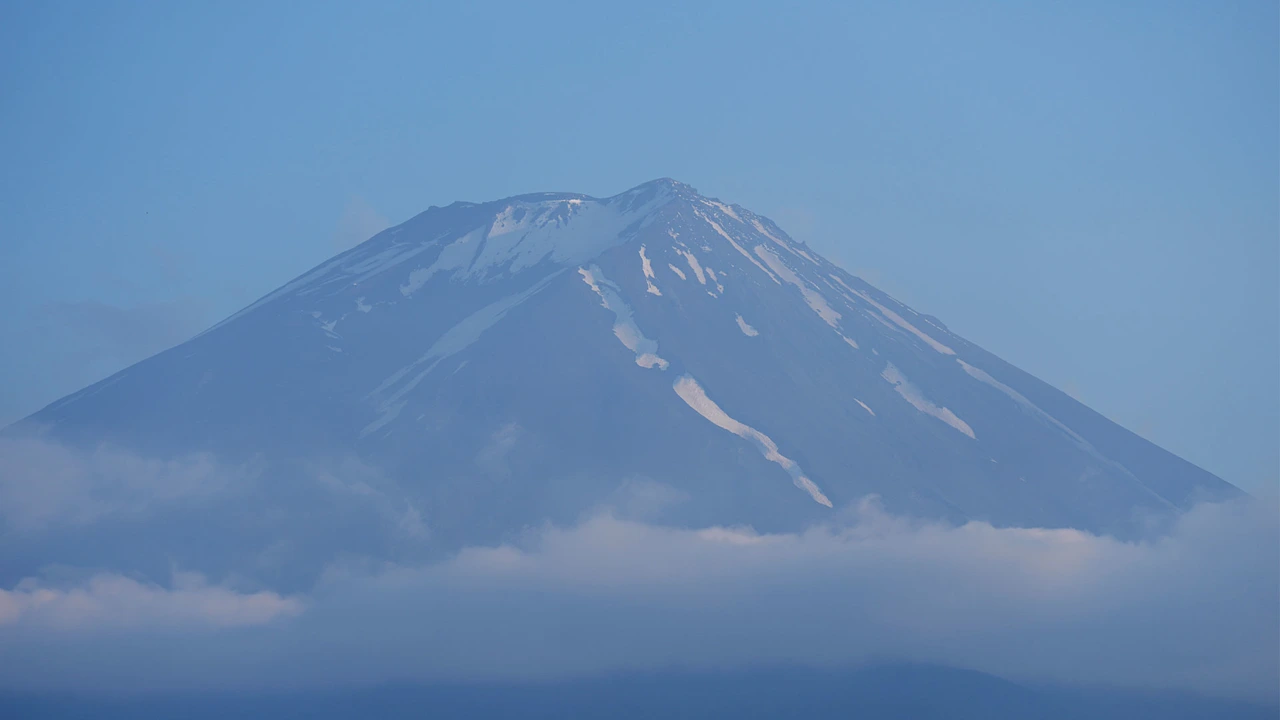
How Japan is using AI to prepare Tokyo residents for a Mount Fuji volcanic eruption
Mount Fuji hasn’t erupted since 1707. But for Volcanic Disaster Preparedness Day, Japanese officials have released computer- and AI-generated videos showing a simulation of a potential violent eruption of the active volcano.
The videos, released this week, are meant to prepare the 37 million residents in the greater Tokyo metropolitan area for potential disasters.
The Tokyo Metropolitan Government’s video warns an eruption could strike “at any moment, without warning,” depicting volcanic ash shrouding central Tokyo, about 100 kilometers (60 miles) away, within hours, paralyzing transportation, disrupting food and power, and causing long-term respiratory problems.
The video ends with the message: “We need to arm ourselves with facts and prepare for disaster in our daily lives.” It shows a family’s pantry stocked with canned food and a first-aid kit.
The Tokyo government said in a statement that there are currently no signs of Fuji erupting. “The simulation is designed to equip residents with accurate knowledge and preparedness measures they can take in case of an emergency,” it explained.
But the videos have caused anxiety and confusion among some residents.
“Are there actually any signs of eruption?” said Shinichiro Kariya, a 57-year-old hospital employee. “Why are we now hearing things like ’10 centimeters of ash could fall,’ even in Tokyo? I’m wondering why this is happening all of a sudden.”
Hiromi Ooki, who lives in Mishima City, which has prime views of Fuji, said she planned to buy emergency supplies the next day. “Nature’s power is so great that maybe it’s better if it scares us a little,” she said.
Representatives of both the Tokyo Metropolitan Government and Japan’s Cabinet Office Disaster Prevention Division said they had not received complaints from Tokyo residents about the videos.
University of Tokyo professor and risk communication expert Naoya Sekiya said the government has for years modeled scenarios for volcanic eruptions and earthquakes, but added that does not mean Fuji is about to erupt.
“There’s no particular significance to the timing,” Sekiya said.
Japan is highly vulnerable to natural disasters because of its climate and topography and is known for its meticulous disaster planning which spans earthquakes, typhoons, floods, mudslides and volcanic eruptions.
The Japan Meteorological Agency last August issued its first-ever “megaquake advisory” after a powerful quake struck off the southeastern coast of the southern main island of Kyushu.
Of the world’s roughly 1,500 active volcanoes, 111 are in Japan, which lies on the Pacific “Ring of Fire.”
Fuji, Japan’s tallest peak, used to erupt about every 30 years, but it has been dormant since the 18th century.
Video journalist Ayaka McGill contributed to this report.
—Reeno Hashimoto, Associated Press
Originally published by fastcompany.com. Syndicated material does not necessarily reflect the views of Grazia British.
More Culture

Don’t Pull Out of Germany
Merz’s stupidity is no excuse for a stupid response. Source link

Step inside the gorgeous, futuristic offices of Vast, the startup designing the next-gen space station
A tall baobab tree greets people inside the Long Beach, California, headquarters of Vast, an aerospace company that is building the space station of the future. It’s planted beneath a…

5 ways high-performing teams stay calm when everything’s on fire
When markets swing, plans break, inboxes explode, and everyone starts saying the situation is “unprecedented” again, most teams do what humans have always done under pressure: they grip…

Confused Trump Openly Admits Plot to Rig Midterms as Polls Turn Brutal
Last week, the Supreme Court gutted protections against racial gerrymandering, and Donald Trump is already urging Republicans to seize on it. Trump unleashed a Truth Social rant on Monday…