
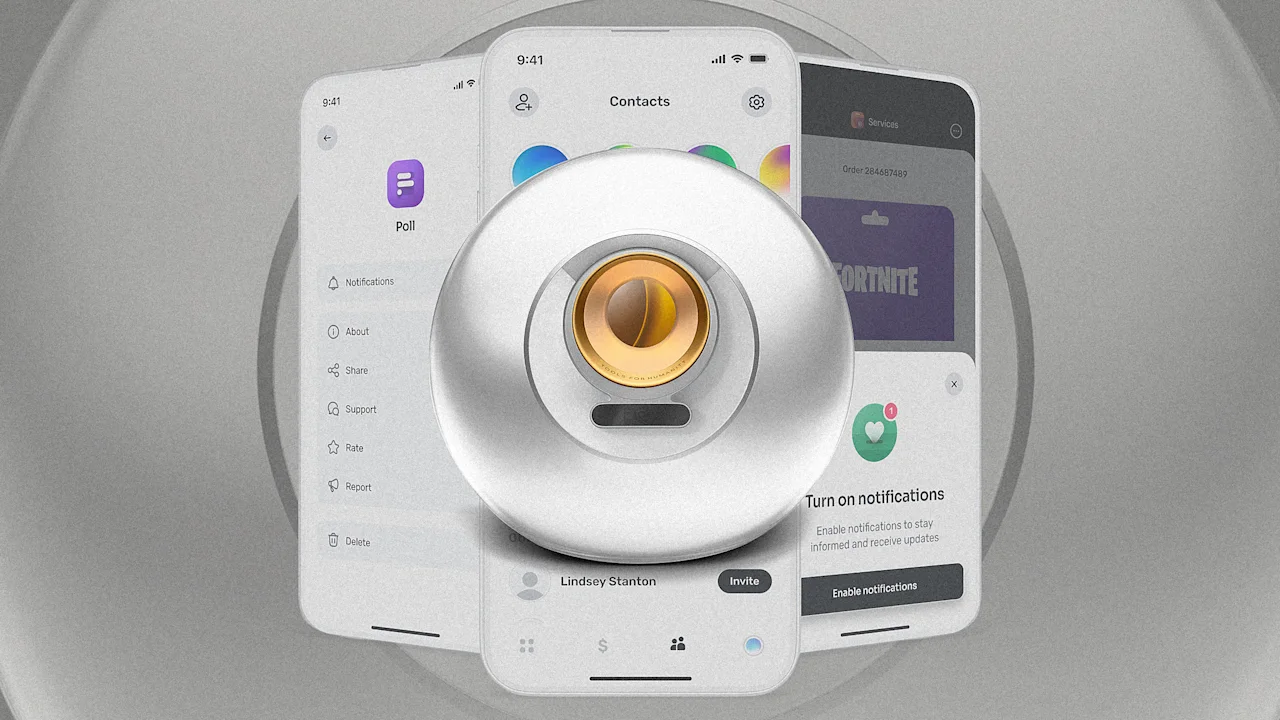
Inside World, the first-ever human verification brand
Back in June, Tools for Humanity—a startup cofounded by OpenAI CEO Sam Altman—launched its first U.S. brand campaign for World, an identity and financial network that includes a cryptocurrency called Worldcoin and an unprecedented piece of hardware: the Orb.
The volleyball-size spherical device uses a retina scan to authenticate users as human, and then provides a digital verification code. World is also opening brick-and-mortar locations for the Orb in six U.S. cities: Austin, Nashville, San Francisco, Los Angeles, Miami, and Atlanta.
So far, World has more than 27 million participants and nearly 13 million verified humans across more than 20 countries. Its goal is to verify 50 million people by the end of 2025, and eventually to sign up every human being on the planet.
The company hopes the biometric verification code it creates will essentially be our digital passport, to ward against fake AI-driven content, and utilized for everything from online banking to dating apps. Altman told Time, “If this really works, it’s like a fundamental piece of infrastructure for the world.”
However, before that, we all need to be convinced to use it.
The consumer brands of the new AI era are already emerging. We have Anthropic’s Claude, OpenAI’s ChatGPT, Google’s Gemini, Microsoft’s Copilot, DeepSeek, and more. The tools and promise of our AI future are both exciting and terrifying, which is an incredibly thin tightrope for any marketer to walk.
In this episode of Brand New World, I’m talking to John Patroulis, chief marketing officer at Tools for Humanity—the guy tasked with convincing us all to get human verified by the World platform.
On why he joined Tools for Humanity in 2022: “It was the sincerity of the ambition that really drew me to it. The world was going to change, artificial intelligence was going to become increasingly powerful, and it was going to be disruptive in many wonderful ways, but also create new challenges. And this was going to be an absolutely critical thing to have to ensure human beings remain central and benefit from all of those changes.”
On making World a local brand: “This is an open-source protocol, and this is an open-source brand. So I really believe the brand needs to be built from the ground up in the communities that it exists in. So when we’re in Argentina, yes the insight needs to be human and universal, but it needs to look and feel Argentinian.”
On why World’s brand vibe has been using fun over futurism: “My feeling is that we need a sense of lightness and what is right for a human brand—that the real human network reflects humanity. And I think human beings are funny, they’re confusing, they’re silly. They can be sincere. But it allows for a range of emotion. But the tone needs to continue to feel relatable. The tone through all of is human and relatable.”
Originally published by fastcompany.com. Syndicated material does not necessarily reflect the views of Grazia British.
More Culture

Don’t Pull Out of Germany
Merz’s stupidity is no excuse for a stupid response. Source link

Step inside the gorgeous, futuristic offices of Vast, the startup designing the next-gen space station
A tall baobab tree greets people inside the Long Beach, California, headquarters of Vast, an aerospace company that is building the space station of the future. It’s planted beneath a…

5 ways high-performing teams stay calm when everything’s on fire
When markets swing, plans break, inboxes explode, and everyone starts saying the situation is “unprecedented” again, most teams do what humans have always done under pressure: they grip…

Confused Trump Openly Admits Plot to Rig Midterms as Polls Turn Brutal
Last week, the Supreme Court gutted protections against racial gerrymandering, and Donald Trump is already urging Republicans to seize on it. Trump unleashed a Truth Social rant on Monday…