

Man finds rare 89 million-year-old tooth of ancient hunter in Texas cave
A man has wowed internet users with his fascinating discovery, showing an incredibly old tooth belonging to an ancient animal in a cave in Texas.
Jared Cooke, 23, is a zoology student at Texas A&M, studying to be a vertebrate paleontologist. Cooke took to Instagram to show off the unique discovery he made, one that dates back millions of years.
The viral clip, which has received over 6.9 million views since it was first shared on October 13, shows Cooke lying in a cave and inspecting the walls of it, revealing where he found a shark tooth embedded.
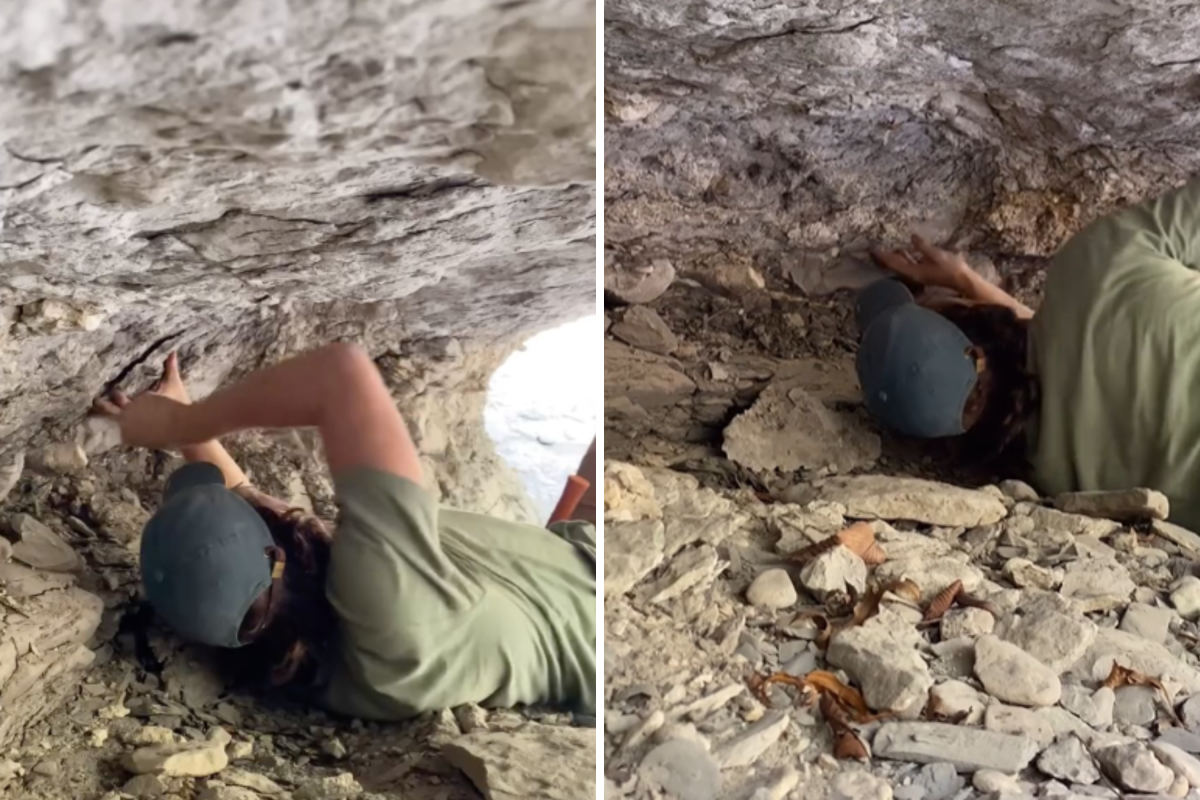
"That is crazy," he says in the clip as he discovered what's hidden in the cave walls. Cooke told Newsweek that the tooth he found is of the Cretodus genus, which contains "five known species, and the largest of them, Cretodus crassidens, has been projected to reach up to 36 feet (11m) in length by Amalfitano."
"These giants have even been found with sea turtles in their belly, like in a specimen discovered in Italy," he said. "These sharks were the giants of their time, coexisting with the much smaller Cretolamna, an ancestor of Megalodon that likely shied away from Cretodus."
Central Texas might not seem like the place to find the remains of a sea creature. However, as Cooke explains, North America was "flooded right down the middle" during the Cretaceous period.
"Texas is one place where this ancient sea floor preserves very well, and while exploring Coniacian aged limestones (~86-89 million years old) in central Texas, I found what is in my experience, one of the rarest shark species in this layer—Cretodus," he told Newsweek.
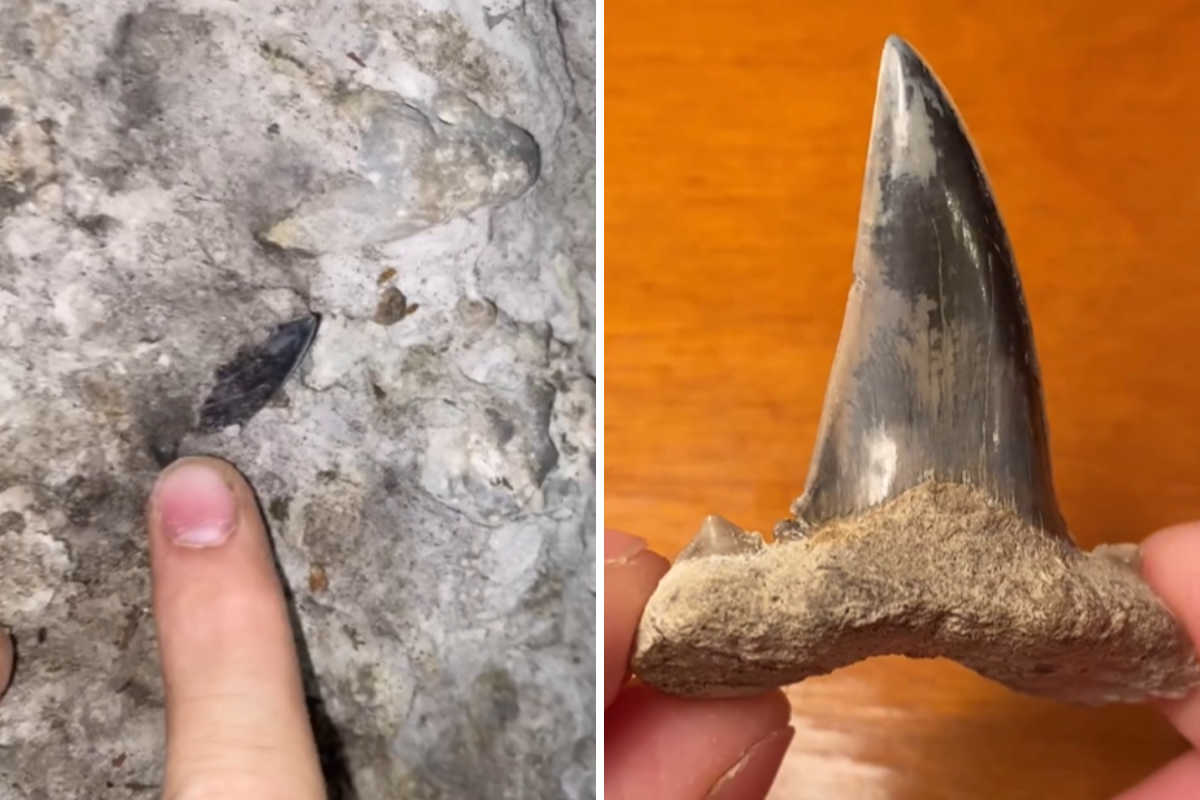
"I suspect there are more species of Cretodus locked away in Texas rocks than we know of, and finding remains like this help paleontologists explore these questions and flesh out Cretaceous ecosystems and how they evolved. Though my current research priority is the evolution of mosasaurs, Cretodus and the other unique denizens of the long lost Western Interior Seaway tell a story that would excite any curious mind."
According to the British Natural History Museum, the Cretaceous Period began 145 million years ago and ended 66 million years ago, known for many large dinosaurs, coming right after the Jurassic era.
Many were fascinated by Cooke's find, taking to the comments section of his video to share their reactions.
"That is a TOOTH," @lina_lani_yu observed.
@sirmarkfrancis commented: "89 million! Sheesh! Can't even comprehend that."
"What a feeling to hold millions of years in hand! Thanks for sharing," said @__logan_h__.
Originally published by newsweek.com. Syndicated material does not necessarily reflect the views of Grazia British.
More Lifestyle

Millennium Docs Against Gravity Festival Director on How Documentary Film Helps Audiences Find ‘Sense Amid the Chaos’ of Current Events
Poland’s Millennium Docs Against Gravity, the documentary film festival that takes place simultaneously across seven Polish cities, returns for its 23rd edition from May 7 – 17 with a…

Mubi Acquires Na Hong-Jin’s Korean Thriller ‘Hope,’ Starring Michael Fassbender, Alicia Vikander and Hoyeon, For Multiple Territories Ahead of Cannes Premiere
Mubi is once again flexing it financial muscle ahead of Cannes, picking up one of the buzziest films heading to this year’s festival. The arthouse distributor and production company has…

MetFilm Sales Acquires Mongolian Documentary ‘Colors of White Rock’ Ahead of World Premiere at Tribeca (EXCLUSIVE)
London-based MetFilm Sales has acquired Mongolian filmmaker Khoroldorj Choijoovanchig’s debut feature documentary “Colors of White Rock” for worldwide sales representation. The film will…

Brit Detective Drama ‘Bergerac’ Bought for U.S. by PBS Distribution (EXCLUSIVE)
British detective drama “Bergerac” is heading to the U.S. with PBS Distribution following a deal with Banijay Rights. The acquisition comes ahead of next week’s London TV Screenings, with…