
Milei Faces Fresh Protest in Argentina Over Cuts to Universities
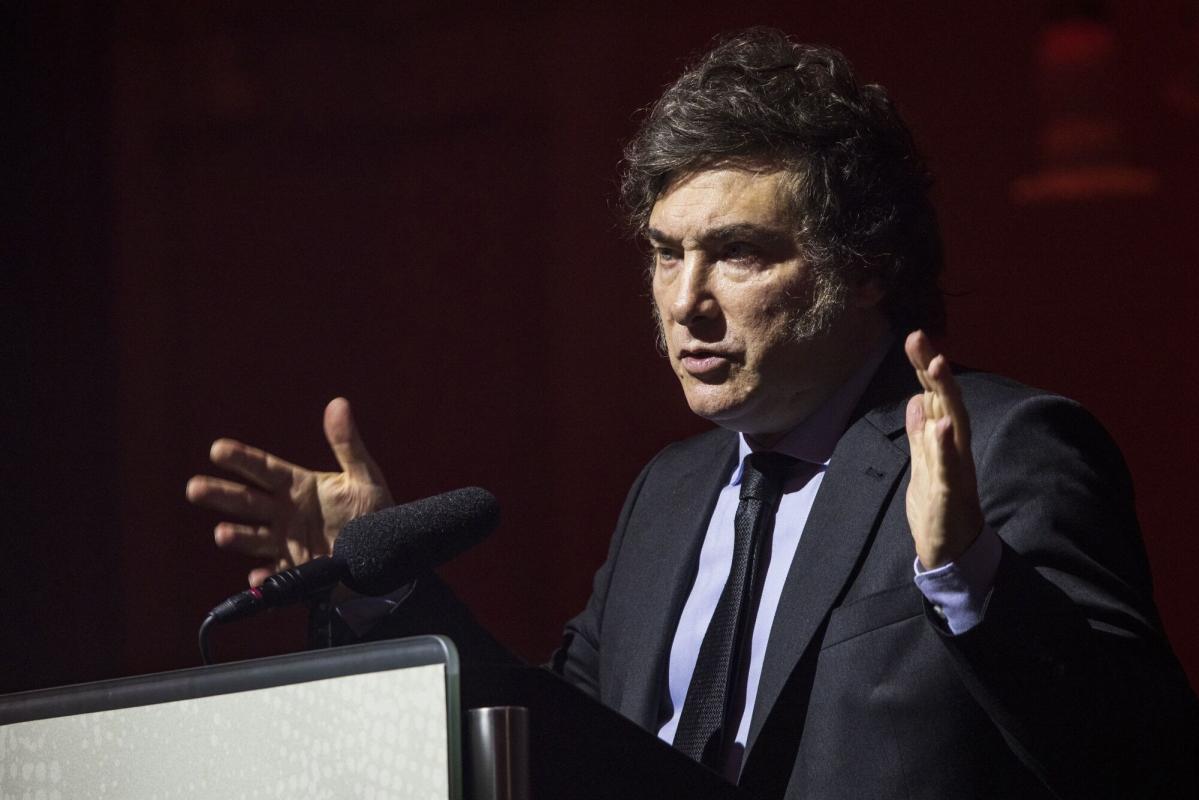
(Bloomberg) -- President Javier Milei’s austerity campaign in Argentina faced renewed opposition Wednesday in a nationwide march against budget cuts in higher education.
Most Read from Bloomberg
Public university staff and students took to the streets to protest against Milei’s forthcoming veto of a bill that would raise salaries to compensate for sky-high inflation, which was approved in the House in August and the Senate last month.
Organized by labor unions, it’s the second mass demonstration over threats to higher education posed by the libertarian’s aggressive spending cuts. Argentina’s public university system is a nearly universal point of pride in the crisis-prone nation.
The first protest in April swelled into one of the biggest during Milei’s nearly 10-month term, spanning most age groups and political parties. After that march, the government compensated universities for operational costs but failed to account for salaries, which make up the bulk of spending.
In a bid to contain the unrest this time around, protesters have been told to clear the streets by 7 p.m. local time. The government has offered a salary increase of 6.8% that was rejected by the public universities, according to a statement from the Human Capital Ministry.
University salaries have lost about 24% in real terms since November 2023, according to Nicolas Lavagnino, who heads a research center based out of Universidad de San Martin and Universidad de La Plata. As a proportion of gross domestic product, higher education spending has sunk to its lowest level since 2005, according to Empiria, a Buenos Aires-based consulting firm.
Milei took office on Dec. 10 and immediately devalued the currency by nearly 55%, giving way to more than 25% monthly inflation that has since fallen to around 4%. While salaries have been slowly rising in real terms, they have yet to make up for the initial spike.
The bill would increase university salaries to make up for 2024 inflation and then adjust them for inflation going forward, the equivalent of about 0.14% of GDP, according to a congressional budget analysis.
The discussion over university funding mirrors the debate that took place earlier this year over pensions and social security. Both houses of Congress approved bills that would compensate for inflation and Milei immediately threatened to veto the measures because they would throw off the budget balance. The president’s pension veto was sustained when lawmakers were unable to muster a two-thirds majority to overturn it, a victory his government hopes to replicate this time around.
“This has all the same elements as the social security discussion,” said Luis Picat, a national congressman from Cordoba province who voted against the budget expansion. “Congress can’t meddle in the budget without saying where it’ll get the resources to spend more.”
Most Read from Bloomberg Businessweek
©2024 Bloomberg L.P.
Originally published by yahoo.com. Syndicated material does not necessarily reflect the views of Grazia British.
More Culture

Don’t Pull Out of Germany
Merz’s stupidity is no excuse for a stupid response. Source link

Step inside the gorgeous, futuristic offices of Vast, the startup designing the next-gen space station
A tall baobab tree greets people inside the Long Beach, California, headquarters of Vast, an aerospace company that is building the space station of the future. It’s planted beneath a…

5 ways high-performing teams stay calm when everything’s on fire
When markets swing, plans break, inboxes explode, and everyone starts saying the situation is “unprecedented” again, most teams do what humans have always done under pressure: they grip…

Confused Trump Openly Admits Plot to Rig Midterms as Polls Turn Brutal
Last week, the Supreme Court gutted protections against racial gerrymandering, and Donald Trump is already urging Republicans to seize on it. Trump unleashed a Truth Social rant on Monday…