
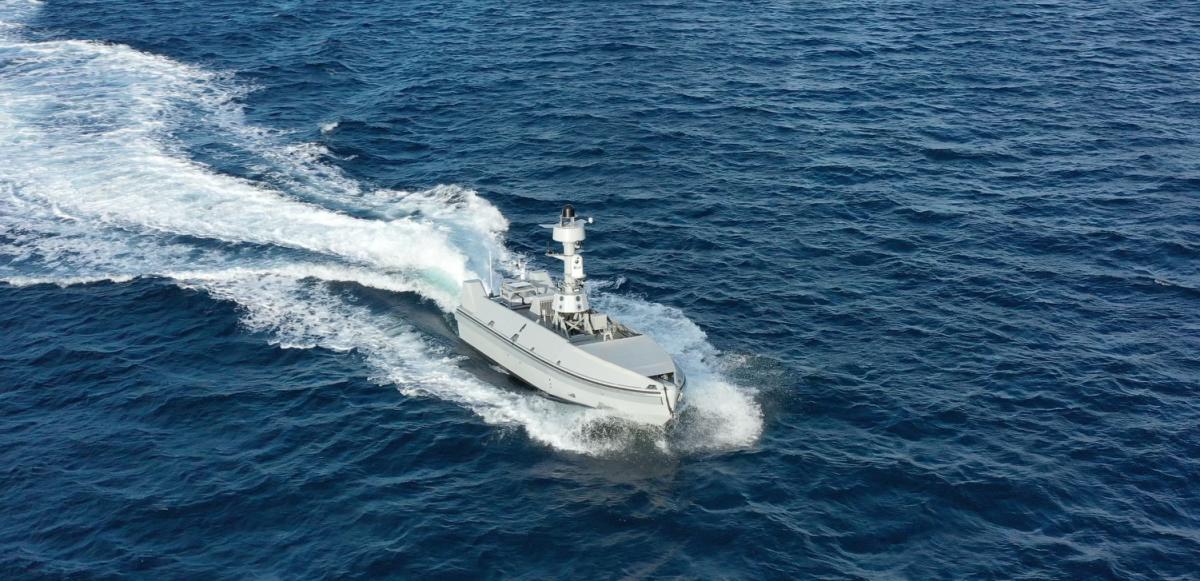
Naval Group launches robotic boat featuring lessons from Ukraine
LORIENT, France — Naval Group subsidiary Sirehna has launched an unmanned surface vessel that incorporates lessons learned from Ukraine’s deployment of robotic boats against Russian targets in the Black Sea, according to company officials.
The craft, measuring just under 10 meters in length, is named the Seaquest S and has an endurance of 24 hours. Sirehna plans to offer the vessel optimized for surveillance, electronic-warfare, strike and anti-submarine missions, executives said here during a press trip ahead of the Euronaval naval confab in Paris next month.
Speaking about some lessons Naval Group has taken from Ukraine’s widespread use of naval drones, Pierre-Antoine Fliche, head of drones and autonomous systems product lines, highlighted the speed at which these types of systems need to be upgraded.
“One of the things we’ve learned is the cycle of development in Ukraine, where they go from one version to another every six months, and it’s not only because they are super fast but also because the adversary puts up defenses,” Fliche told Defense News. “That is one of the reasons we purposely built the SeaQuest as a highly modular platform and that we want to develop machine tactics with end-users because we know they will evolve on a six- to nine-month cycle.”
USV technologies have grown increasingly sophisticated, and Ukrainian forces have used a multitude of different systems, most recently arming them with multiple-launch rocket systems, to strike a greater number of small surface, air and coastal targets.
In May, the Ukrainian intelligence chief, Kyrylo Budanov, said that the country has relied on them to a greater extent recently due to their consistent effectiveness.
“This equipment works — that’s the important thing, it gives results ... a third of the destroyed combat potential of the Russian Black Sea Fleet is the most decent indicator,” Budanov said in an interview with RBC-Ukraine.
According to Naval Group, SeaQuest is currently the only small USV designed to be able to embark onboard frigates and warships.
While the naval drone, which is undergoing sea trials in France, does not yet possess swarming capabilities, Fliche said those could be added later.
Ukrainian officials have predicted that as these types of robotic maritime platforms undergo improvements, they are poised to dominate conventional combat vessels in the future, at least in closed or semi-closed water bodies.
Originally published by yahoo.com. Syndicated material does not necessarily reflect the views of Grazia British.
More Culture

Don’t Pull Out of Germany
Merz’s stupidity is no excuse for a stupid response. Source link

Step inside the gorgeous, futuristic offices of Vast, the startup designing the next-gen space station
A tall baobab tree greets people inside the Long Beach, California, headquarters of Vast, an aerospace company that is building the space station of the future. It’s planted beneath a…

5 ways high-performing teams stay calm when everything’s on fire
When markets swing, plans break, inboxes explode, and everyone starts saying the situation is “unprecedented” again, most teams do what humans have always done under pressure: they grip…

Confused Trump Openly Admits Plot to Rig Midterms as Polls Turn Brutal
Last week, the Supreme Court gutted protections against racial gerrymandering, and Donald Trump is already urging Republicans to seize on it. Trump unleashed a Truth Social rant on Monday…