
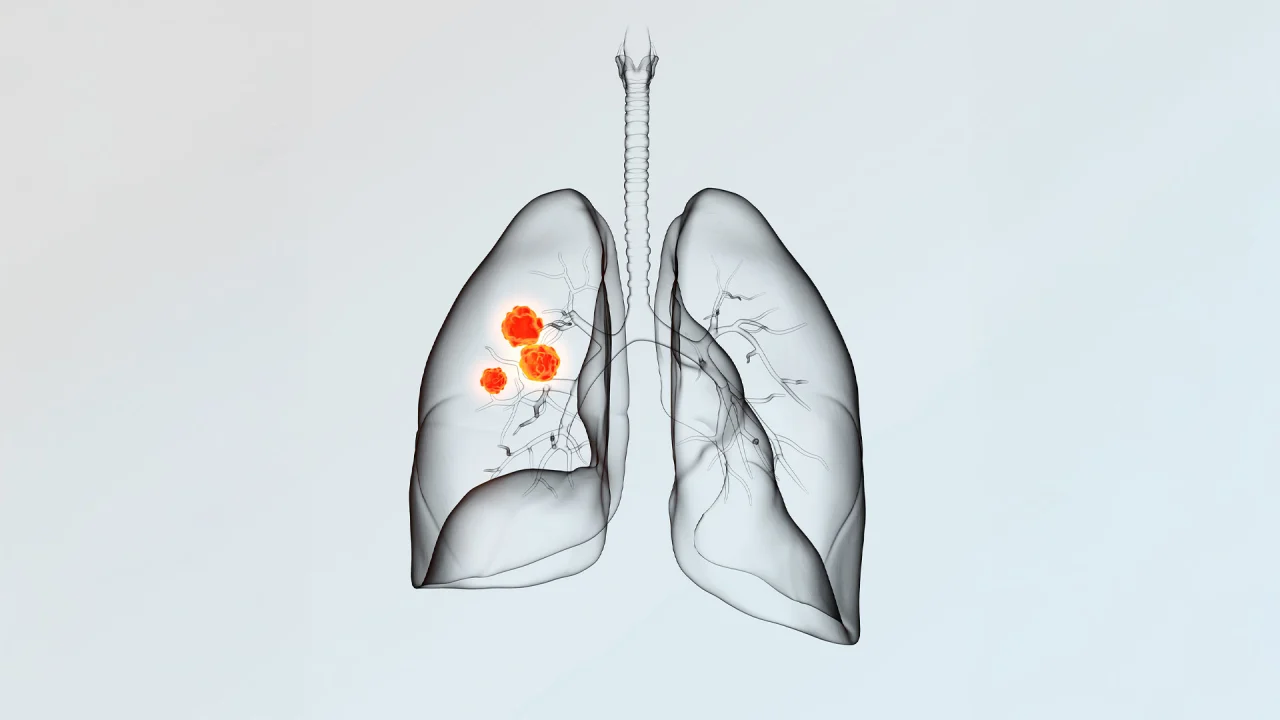
New AI outlines lung tumors better and faster than doctors, study finds
Scientists have developed a revolutionary new AI tool which, according to a new study, may become crucial in lung cancer screening and treatment.
The study, published in the journal npj Precision Oncology, explored the capabilities of a new device, developed by a team at Northwestern Medicine. The device is called iSeg, which comes from its ability to perform tumor segmentation (online or mapping tumors). The traditional process of tumor segmentation is complex and poses challenges for doctors. It can also take multiple doctors visits, several scans, and a great deal of time. In one study, manual segmentation required 12 scans and took doctors seven hours to complete the manual tumor mapping.
Other AI tools have been developed for cancer screenings, however, those tools used static images. iSeg uses 3D imagery for a deeper understanding of the tumor, including how it moves as a patient breathes—an important factor in determining treatment plans. iSeg’s clearer mapping also means it exposes areas that doctors may miss while using manual segmentation.
In the study, after the AI was trained, iSeg was shown scans it had never seen, and was tasked with outlining tumors. When compared to outlines drawn by physicians, iSeg matched experts’ drawings, but it also flagged additional areas that doctors couldn’t see. Interestingly, those areas turned out to be critical, as they are often linked to more serious diagnoses and worse outcomes if overlooked.
“We’re one step closer to cancer treatments that are even more precise than any of us imagined just a decade ago,” said Dr. Mohamed Abazeed, senior author of the study, and chair and professor of radiation oncology at Northwestern University Feinberg School of Medicine. “The goal of this technology is to give our doctors better tools,” added Abazeed.
Other experts say AI technology is important when it comes to lung cancer patients, not only because it can save lives, but also because it may help close care gaps that lead to underdiagnosing for certain groups due to socioeconomic factors. Pulmonologist Stephen Kuperberg, MPH ’24, and David Christiani, Elkan Blout Professor of Environmental Genetics at Harvard T.H. Chan School of Public Health, explained in a June commentary that cancer screening rates are lower among high-risk patients from Black and Latinx neighborhoods.
“The underlying reasons for poor uptake within this population are complex, including structural racism and social and cultural factors,” they wrote, urging the “vital need” for more AI tools which can help with “optimal data collection.” Currently, the glaring gap in early detection leads to higher mortality from the disease for those groups.
They added, “AI technologies will transform reporting, collecting, and processing population data, whether in public datasets and repositories or within institutions, paving the way for discovery and methodology development in lung cancer detection.”
Originally published by fastcompany.com. Syndicated material does not necessarily reflect the views of Grazia British.
More Culture

Don’t Pull Out of Germany
Merz’s stupidity is no excuse for a stupid response. Source link

Step inside the gorgeous, futuristic offices of Vast, the startup designing the next-gen space station
A tall baobab tree greets people inside the Long Beach, California, headquarters of Vast, an aerospace company that is building the space station of the future. It’s planted beneath a…

5 ways high-performing teams stay calm when everything’s on fire
When markets swing, plans break, inboxes explode, and everyone starts saying the situation is “unprecedented” again, most teams do what humans have always done under pressure: they grip…

Confused Trump Openly Admits Plot to Rig Midterms as Polls Turn Brutal
Last week, the Supreme Court gutted protections against racial gerrymandering, and Donald Trump is already urging Republicans to seize on it. Trump unleashed a Truth Social rant on Monday…