NPR to get $36 million in government funds to operate U.S. public radio system
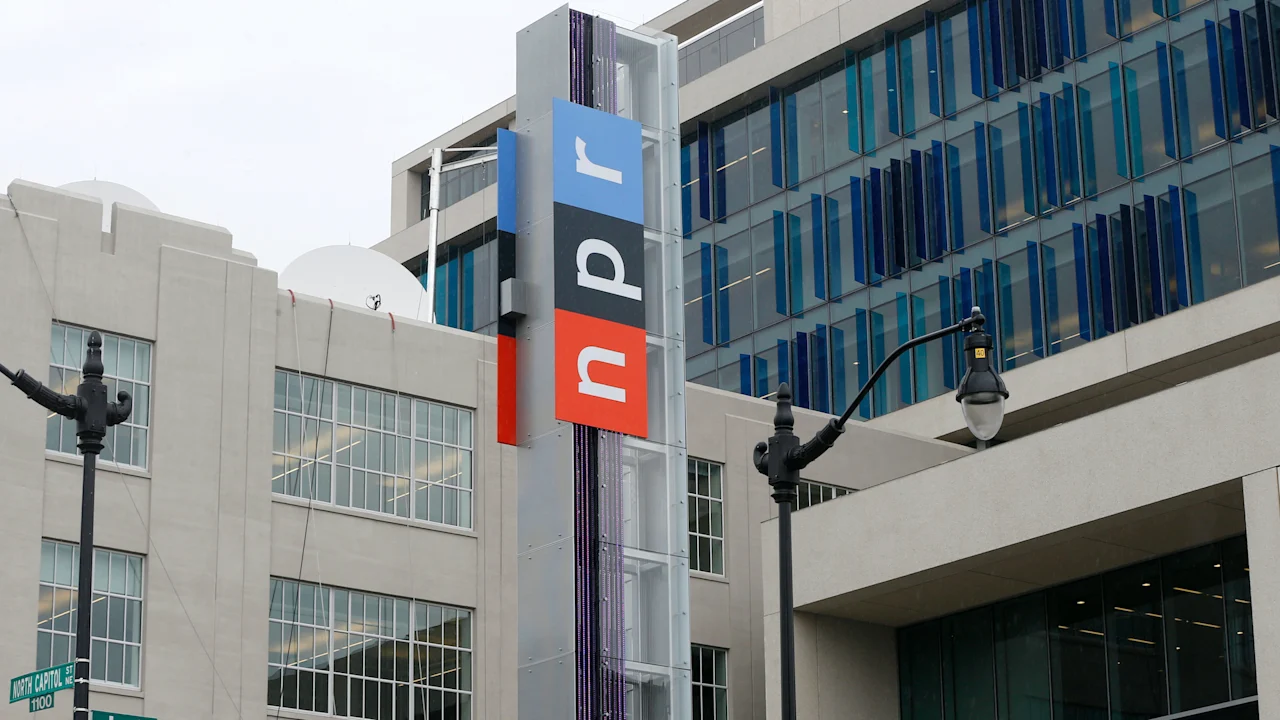
National Public Radio will receive approximately $36 million in grant money to operate the nation’s public radio interconnection system under the terms of a court settlement with the federal government’s steward of funding for public broadcasting stations.
The settlement, announced late Monday, partially resolves a legal dispute in which NPR accused the Corporation for Public Broadcasting of bowing to pressure from President Donald Trump to cut off its funding.
On March 25, Trump said at a news conference that he would “love to” defund NPR and PBS because he believes they are biased in favor of Democrats.
NPR accused the CPB of violating its First Amendment free speech rights when it moved to cut off its access to grant money appropriated by Congress. NPR also claims Trump, a Republican, wants to punish it for the content of its journalism.
On April 2, the CPB’s board initially approved a three-year, roughly $36 million extension of a grant for NPR to operate the “interconnection” satellite system for public radio. NPR has been operating and managing the Public Radio Satellite System since 1985.
But the CPB reversed course under mounting pressure from the Trump administration, according to NPR. The agency redirected federal interconnection funds away from NPR to an entity that didn’t exist and wasn’t statutorily authorized to receive it, NPR says.
CPB attorneys denied that the agency retaliated against NPR to appease Trump. They had argued that NPR’s claims are factually and legally meritless.
On May 1, Trump issued an executive order that called for federal agencies to stop funding for NPR and PBS. The settlement doesn’t end a lawsuit in which NPR seeks to block any implementation or enforcement of Trump’s executive order. U.S. District Judge Randolph Moss is scheduled to preside over another hearing for the case on Dec. 4.
The settlement says NPR and CPB agree that the executive order is unconstitutional and that CPB won’t enforce it unless a court orders it to do so.
Katherine Maher, NPR’s president and CEO, said the settlement is “a victory for editorial independence and a step toward upholding the First Amendment rights of NPR and the public media system.”
Patricia Harrison, the corporation’s CEO, said in a statement that the settlement marks “an important moment for public media.”
—Michael Kunzelman, Associated Press
Originally published by fastcompany.com. Syndicated material does not necessarily reflect the views of Grazia British.
More Culture

Don’t Pull Out of Germany
Merz’s stupidity is no excuse for a stupid response. Source link

Step inside the gorgeous, futuristic offices of Vast, the startup designing the next-gen space station
A tall baobab tree greets people inside the Long Beach, California, headquarters of Vast, an aerospace company that is building the space station of the future. It’s planted beneath a…

5 ways high-performing teams stay calm when everything’s on fire
When markets swing, plans break, inboxes explode, and everyone starts saying the situation is “unprecedented” again, most teams do what humans have always done under pressure: they grip…

Confused Trump Openly Admits Plot to Rig Midterms as Polls Turn Brutal
Last week, the Supreme Court gutted protections against racial gerrymandering, and Donald Trump is already urging Republicans to seize on it. Trump unleashed a Truth Social rant on Monday…