
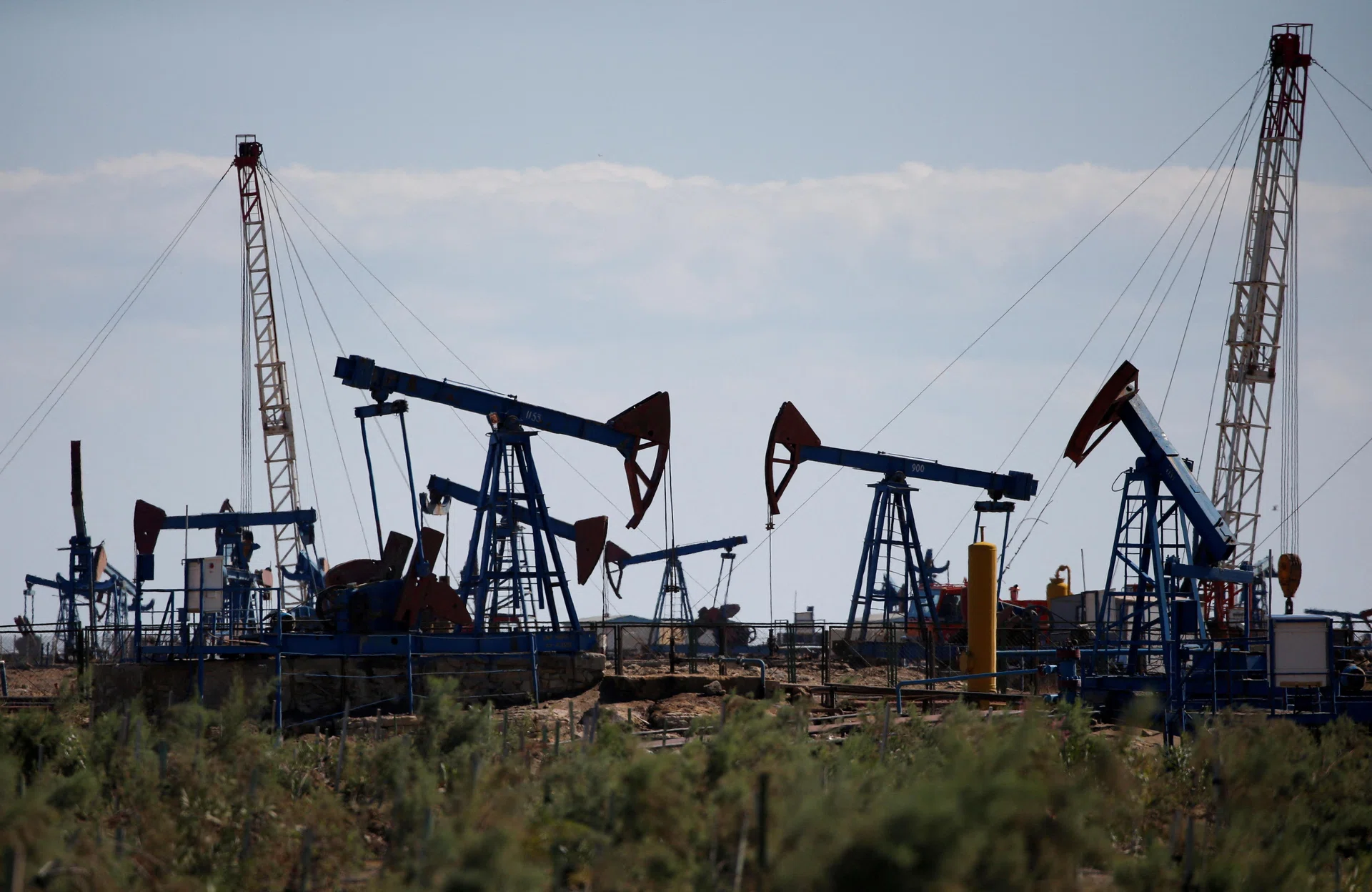
Oil edges down on easing Middle East risks but gains for a second month
Oil prices edged down on Monday as investors weighed easing Middle East risks and a possible Opec+ output increase in August.
Both Brent and US crude oil benchmarks posted their biggest weekly declines since March 2023 last week but rose for the second consecutive month, gaining around 6 per cent and 7 per cent respectively.
Brent futures settled down 16 cents, or 0.2 per cent, to US$67.61 a barrel and expired on Monday. The more active September contract ended at US$66.74.
US West Texas Intermediate crude settled down 41 cents, or 0.6 per cent, at US$65.11 a barrel.
A 12-day war that started with Israel targeting Iran’s nuclear facilities on June 13 sent prices above US$80 a barrel before sliding back to US$67.
“This ceasefire that was quickly engineered appears to be holding up, so the supply risk premium that was in place is continuing to be withdrawn in a rapid fashion,” said John Kilduff, a partner at Again Capital.
BT in your inbox

Start and end each day with the latest news stories and analyses delivered straight to your inbox.
Meanwhile, US crude oil production hit a record 13.47 million barrels per day in April, up from 13.45 million bpd in March, according to data released by the Energy Information Administration as part of its Petroleum Supply Monthly series.
The record US oil production was adding to the bearish sentiment on Monday, Kilduff added.
Opec+ set to boost production in August
Four Opec+ sources told Reuters last week that the group was set to boost production by 411,000 bpd in August after similar increases for May, June and July.
If the increase is agreed, it would bring the total rise in supply from Opec+ to 1.78 million bpd so far this year, equivalent to over 1.5 per cent of total global demand.
“I believe this potential supply pressure remains under-priced, leaving crude vulnerable to further weakness,” said Ole Hansen, head of commodity strategy at Saxo Bank.
The oil producer group is set to meet again on July 6.
Some market tightness remains despite rising output, however, said Giovanni Staunovo, analyst at UBS.
A Reuters survey found that Opec oil output rose in May, but gains were limited by cuts by countries that had previously exceeded their quotas. Saudi Arabia and the United Arab Emirates, meanwhile, made smaller increases than allowed.
Kazakhstan, which has persistently exceeded quotas set by Opec+, may exceed its previous oil production forecast by around 2 per cent this year following an upgrade to output at its largest Caspian oilfields, Reuters calculations, based on data from state-owned energy company KazMunayGaz, showed.
A survey of 40 economists and analysts in June forecast Brent crude will average US$67.86 per barrel in 2025, up from May’s US$66.98 forecast, while US crude is seen at US$64.51, above last month’s US$63.35 estimate. REUTERS
Originally published by businesstimes.com.sg. Syndicated material does not necessarily reflect the views of Grazia British.
More Culture

Don’t Pull Out of Germany
Merz’s stupidity is no excuse for a stupid response. Source link

Step inside the gorgeous, futuristic offices of Vast, the startup designing the next-gen space station
A tall baobab tree greets people inside the Long Beach, California, headquarters of Vast, an aerospace company that is building the space station of the future. It’s planted beneath a…

5 ways high-performing teams stay calm when everything’s on fire
When markets swing, plans break, inboxes explode, and everyone starts saying the situation is “unprecedented” again, most teams do what humans have always done under pressure: they grip…

Confused Trump Openly Admits Plot to Rig Midterms as Polls Turn Brutal
Last week, the Supreme Court gutted protections against racial gerrymandering, and Donald Trump is already urging Republicans to seize on it. Trump unleashed a Truth Social rant on Monday…