
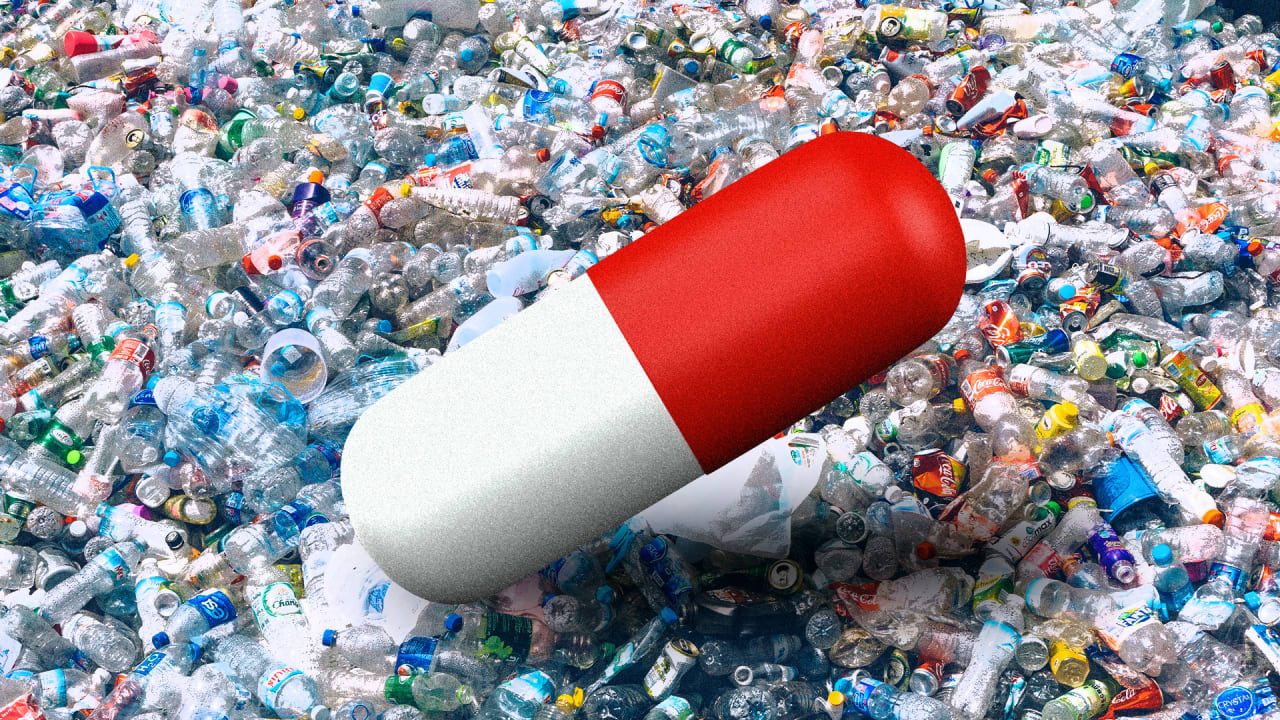
Scientists engineer bacteria to turn plastic waste into painkillers
Tales of turning water into wine or weaving straw into gold are one thing, but a new study shows that scientists can transform trash into . . . Tylenol?
Scientists at the University of Edinburgh were able to convert plastic waste into paracetamol, aka acetaminophen, the active ingredient in the pain reliever Tylenol. Stranger yet, they pulled off the alchemical feat using the bacteria E. coli.
“We’re able to transform a prolific environmental and societal waste into such a globally important medication in a way that’s completely impossible, using chemistry alone or using biology alone,” says study coauthor Stephen Wallace, a chemical biotechnologist at the University of Edinburgh in Scotland.
The research team began with polyethylene terephthalate (PET), a common plastic found in food packaging and polyester clothing. Using established chemical methods, they broke down the PET plastic into a precursor molecule and then added it into a cell culture of E. coli that was genetically modified.
Enzymes in the modified E. coli bacteria were able to convert the plastic precursor into paracetamol 92% of the time. The transformation relies on a chemical process known as a Lossen rearrangement, which can convert one kind of molecule into a different kind of molecule. Scientists have known about the Lossen rearrangement for more than 100 years, but generally observe the phenomenon in a flask or a test tube.
The research group is now working with pharmaceutical makers including AstraZeneca, one of the study’s sponsors, to replicate the same chemical transformations on a larger scale.
The new research isn’t the first to observe the way that bacteria can be deployed to usefully break down plastic. Researchers have previously studied how wastewater bacteria found in urban waterways use a special enzyme to chew up plastic trash and convert it into carbon-based food.
As we grapple with the cascading environmental and health effects that decades of proliferating plastics have wrought on the planet, bacteria capable of converting plastic into harmless or even useful molecules is a promising area of research.
Originally published by fastcompany.com. Syndicated material does not necessarily reflect the views of Grazia British.
More Culture

Don’t Pull Out of Germany
Merz’s stupidity is no excuse for a stupid response. Source link
Step inside the gorgeous, futuristic offices of Vast, the startup designing the next-gen space station
A tall baobab tree greets people inside the Long Beach, California, headquarters of Vast, an aerospace company that is building the space station of the future. It’s planted beneath a…
5 ways high-performing teams stay calm when everything’s on fire
When markets swing, plans break, inboxes explode, and everyone starts saying the situation is “unprecedented” again, most teams do what humans have always done under pressure: they grip…

Confused Trump Openly Admits Plot to Rig Midterms as Polls Turn Brutal
Last week, the Supreme Court gutted protections against racial gerrymandering, and Donald Trump is already urging Republicans to seize on it. Trump unleashed a Truth Social rant on Monday…