
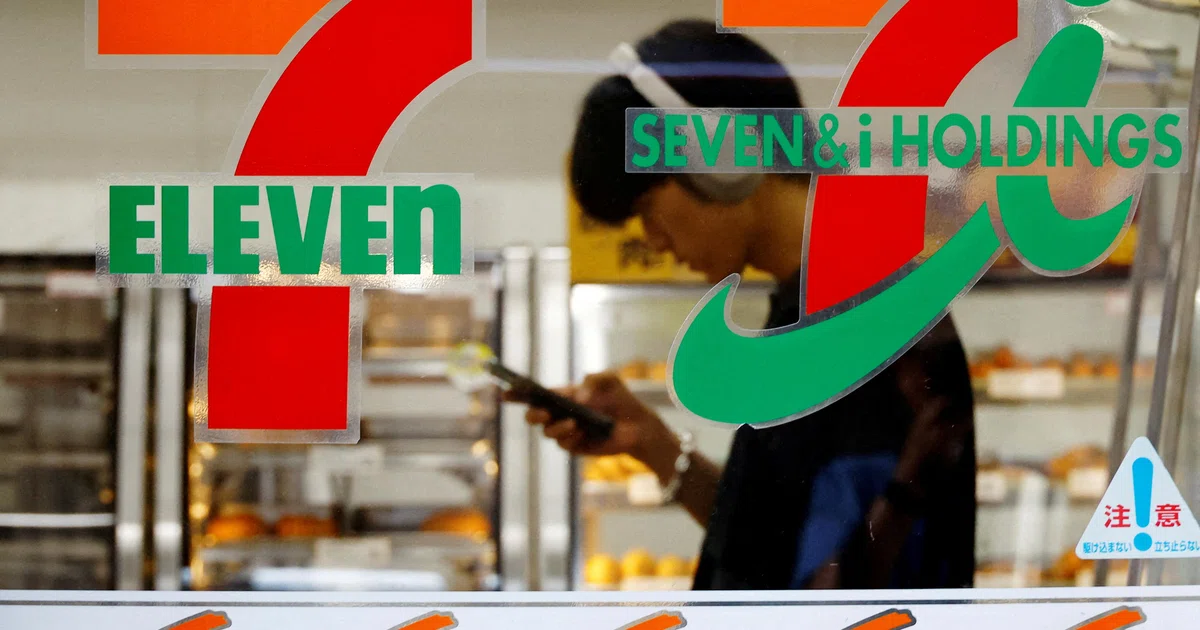
Seven & i’s new CEO aims aggressive investments in US stores
Seven & i Holdings’ new chief executive officer plans to boost investments in its US stores using cash from a planned listing of its American retail operations.
“The initial public offering gives us the financial flexibility to invest a bit more aggressively in our stores,” Stephen Dacus, who was named to the leadership position last month, said on Friday (Apr 25).
The Japanese operator of 7-Eleven convenience stores is in the middle of a restructuring to boost growth and shareholder value after years of weak investor returns made it the target of activist shareholders, as well as Canada’s Alimentation Couche-Tard, which proposed to buy the company last year.
The overhaul includes a plan to list the US stores business next year, besides revamping its board, selling under-performing superstore business, divesting its banking unit, and undertaking about two trillion yen (S$18 billion) worth share buyback to 2030.
The company has about 1,000 stores with quick service restaurants in the US that outperform normal stores by quite a lot in terms of sales and profit, Dacus said. “We would like to expand that as rapidly as we can,” he said, specifying that there are another 1,200 stores that could add QSR.
Seven & i operates more than 13,000 convenience stores in North America, making it larger than its next three competitors – Couche-Tard, Casey’s General Stores and Murphy USA, combined.
BT in your inbox

Start and end each day with the latest news stories and analyses delivered straight to your inbox.
Despite the raft of measures to turn things around, the Japanese retailer’s stock has remained under pressure after a management buyout effort designed to challenge Couche-Tard’s offer failed. Seven & i is valued at roughly around 5.5 trillion yen, lower than Couche-Tard’s 7.39 trillion yen offer.
In addition to investing in its North America operations, Dacus is also looking to review the company’s supply chain globally, especially at a time when consumers in the world’s largest economy are becoming more conservative amid US President Donald Trump’s tariffs on imports.
“We don’t have a global supply strategy, even though we may have the same suppliers around the world for many things,” Dacus said. “As a consequence, we are missing an opportunity.”
The shift in consumer behaviour reinforces the need for the company to move with speed and discipline to deliver greater value to customers, Dacus added.
There’s a need to “squeeze your costs really tightly,” he said. “You need to do everything you can to make your customers happy.” BLOOMBERG
Originally published by businesstimes.com.sg. Syndicated material does not necessarily reflect the views of Grazia British.
More Culture

Don’t Pull Out of Germany
Merz’s stupidity is no excuse for a stupid response. Source link
Step inside the gorgeous, futuristic offices of Vast, the startup designing the next-gen space station
A tall baobab tree greets people inside the Long Beach, California, headquarters of Vast, an aerospace company that is building the space station of the future. It’s planted beneath a…

5 ways high-performing teams stay calm when everything’s on fire
When markets swing, plans break, inboxes explode, and everyone starts saying the situation is “unprecedented” again, most teams do what humans have always done under pressure: they grip…

Confused Trump Openly Admits Plot to Rig Midterms as Polls Turn Brutal
Last week, the Supreme Court gutted protections against racial gerrymandering, and Donald Trump is already urging Republicans to seize on it. Trump unleashed a Truth Social rant on Monday…