
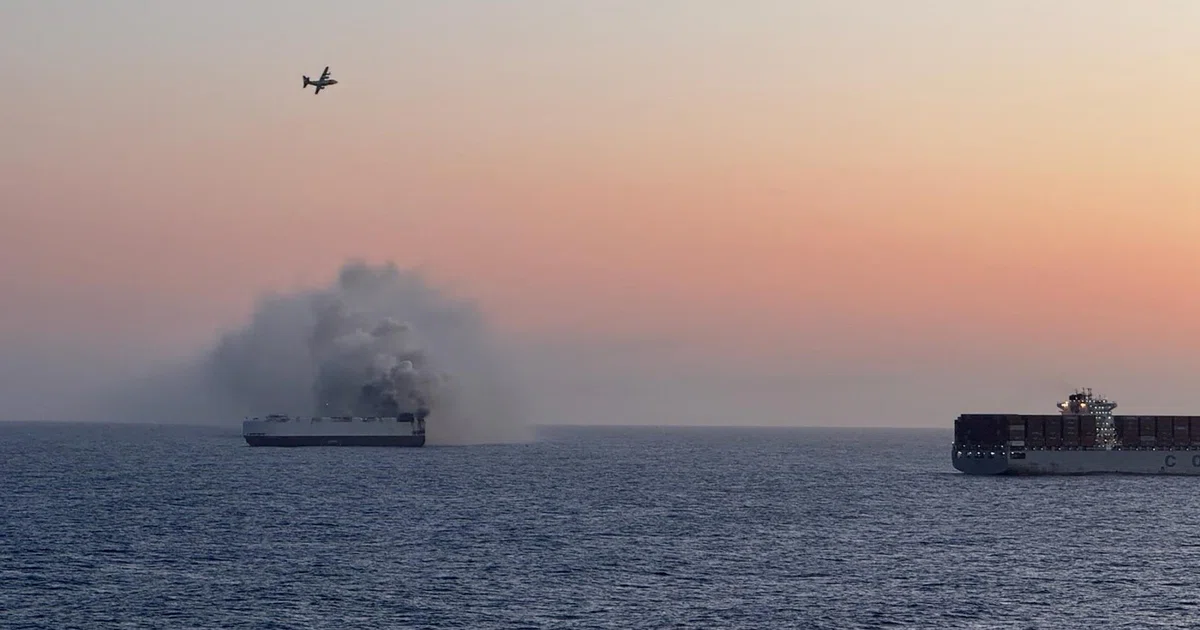
Ship carrying EVs abandoned in Pacific after catching fire
A ship carrying about 3,000 cars to Mexico was abandoned in the middle of the Pacific Ocean after catching fire on Tuesday (Jun 3), highlighting a growing risk to the transportation of electric vehicles (EVs).
The fire aboard the Morning Midas occurred approximately 300 miles south of Adak Island in Alaska, according to the US Coast Guard. Smoke was first seen coming from a deck of the vessel, whose cargo included about 800 EVs, the ship’s manager Zodiac Maritime said in a statement.
The crew initiated firefighting procedures but the blaze could not be brought under control, Zodiac said. Responders were being deployed to support salvage and firefighting operations, it added. A spokesperson for the firm declined to comment on who owns the vehicles.
The US Coast Guard evacuated all 22 crew members, transferring them to a nearby merchant ship.
The 46,800-tonne Morning Midas, built in 2006 by China’s Xiamen Shipbuilding Industry, departed the port of Yantai on May 26, according to ship-tracking data compiled by Bloomberg. Prior to that it called at two other Chinese ports, Nansha in the south and Shanghai.
Demand for lithium-ion batteries, including in EVs, is bringing a new risk to the global shipping industry, particularly given the value of the vehicles on board the largest car-carrying vessels, according to a report last month by insurance giant Allianz.
BT in your inbox

Start and end each day with the latest news stories and analyses delivered straight to your inbox.
While such ships haul thousands of vehicles at a time across the world’s oceans, a handful of significant blazes have raised concerns about transporting them. Such incidents can have major ramifications for carmakers, shipowners and the firms that insure them.
Fires involving EVs are often harder to extinguish and more dangerous to fight. The conditions of a tightly packed car-carrying cargo ship lead to limited ventilation, which can rapidly intensify heat. The confined, steel-lined environment makes fire suppression and rescues significantly more dangerous.
Additionally, when an EV burns, it does so for longer and the fire gets hotter. The flames can end up accelerating through chain reactions and spiralling out of control quickly, a process called thermal runaway. EV fires can take up to 8,000 gallons of water to cool the lithium-ion batteries.
In 2022, a vessel carrying about 4,000 vehicles caught fire in the Atlantic and ended up sinking despite efforts to tow it to safety. A year later another ship with close to 3,000 cars on board caught fire near the Dutch coast.
Shipowners have taken steps to try to manage the safety risks involved in hauling EVs. Last year, a key safety group published guidelines on how to deal with fires on board the vessels. BLOOMBERG
Originally published by businesstimes.com.sg. Syndicated material does not necessarily reflect the views of Grazia British.
More Culture

Don’t Pull Out of Germany
Merz’s stupidity is no excuse for a stupid response. Source link

Step inside the gorgeous, futuristic offices of Vast, the startup designing the next-gen space station
A tall baobab tree greets people inside the Long Beach, California, headquarters of Vast, an aerospace company that is building the space station of the future. It’s planted beneath a…

5 ways high-performing teams stay calm when everything’s on fire
When markets swing, plans break, inboxes explode, and everyone starts saying the situation is “unprecedented” again, most teams do what humans have always done under pressure: they grip…

Confused Trump Openly Admits Plot to Rig Midterms as Polls Turn Brutal
Last week, the Supreme Court gutted protections against racial gerrymandering, and Donald Trump is already urging Republicans to seize on it. Trump unleashed a Truth Social rant on Monday…