
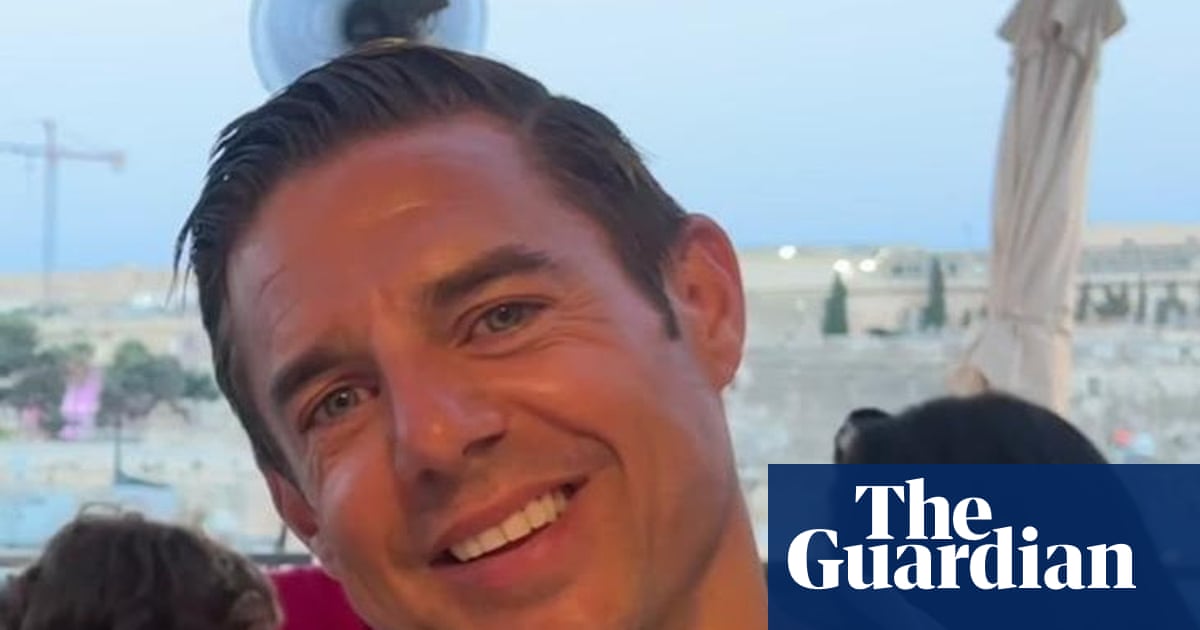
Suspect in ‘Putney pusher’ case told family that investigation was ‘murdering him’
Days before Nicholas Brandram, the man suspected of being the “Putney pusher”, killed himself, he told his family that the police investigation was “murdering him”.
He had “no fight left” in him, he told his sisters, Alexia Hicks and Sophie Voelcker, and could not see an end to the Metropolitan police investigation, or the online abuse.
Brandram’s lawyers warned the Met last week that his mental health had deteriorated and he was receiving treatment in a psychiatric hospital after renewed press reporting that he had been released under investigation.
“He said a couple of days ago that this investigation was murdering him. Day by day, he was slowly being murdered,” Hicks, 40, said through tears.
“He saw no end to this investigation,” added Voelcker, 45. “My sister and I were keeping a close eye on him because he was telling us he couldn’t go on. He said it more than once in the week before, that he couldn’t keep going. All we could do was just reassure him. We had faith in the system, we had faith in the police, and they neglected him. They failed in their duty of care to him, to the wider family, and we do not want to see another family going through this.”
The pair insisted that Brandram, 44, was not the “Putney pusher” and that he died thinking no one would believe in his innocence.
He was arrested on suspicion of attempted grievous bodily harm on 15 June, nine years after a jogger shoved a woman headfirst into the path of an oncoming bus on Putney Bridge in south-west London.
The case attracted considerable media attention but appeared to elude detectives, who wound down their investigation in 2018, after interviewing 50 men and arresting three suspects.
But there was renewed interest in the case after Brandram’s arrest, which his family described as heavy-handed and disproportionate. A number of officers in body armour reportedly swooped on his home address, his sisters said, while a reporter who had been tipped off about the arrest filmed the ordeal.
Although Brandram’s name was not published in the media because he had not been charged, his family said that biographical information in reports made him easily identifiable. He was described as a wealthy banker who lived in a £1.4m west London home and an army veteran with links to royalty. Brandram was the grandson of Princess Katherine of Greece, who was a great-granddaughter of Queen Victoria, which made his arrest all the more newsworthy.
While in police custody in June over the Putney Bridge incident, he was also arrested on suspicion of possession of class A and class B drugs.
His sisters said there was no forensic evidence linking Brandram to the Putney incident and that he had a prominent military tattoo and a withered calf which, they said, distinguished him from the man in footage of the attack on 5 May 2017.
That morning, Brandram had walked from his home in Notting Hill Gate to his office in Bond Street and sent his sisters an email from his work account, which they said he could only access from his workplace. They said that evidence was passed on to the police.
They added that Brandram had volunteered to take part in an identification parade and provided his DNA for comparison with a sample recovered at the time of the incident. Hicks said detectives told Brandram just days ago that they still did not know when the DNA analysis would be completed.
“Our brother willingly provided DNA in an attempt to obviously help clear his name and to complete the investigation, and for weeks now we’ve been asking the police just to complete the DNA test,” Voelcker said.
“We’ve always maintained that he’s innocent. He always maintained he was innocent. We just needed the police to complete their inquiry, and it just felt particularly egregious that they were just hanging this DNA test over him.”
Hicks said as details of the case kept being reported in the press, her brother became preoccupied by online abuse on forums such as Reddit.
“His reputation within a couple of days was in tatters. People saying he’s the alleged pusher, and you can imagine the vitriol that was coming out online,” Voelcker said.
“You can imagine what people might say about somebody they think tried to push a woman in front of a bus. There was a lot of people had a lot of views about our brother, about his background, about where he worked.”
“And the problem was he was reading it all every day,” Hicks said. “The vitriol is still there and that’s what’s so heartbreaking for us, is that when he took his own life he died thinking that effectively everyone hated him and thought he’d done something awful and that no one would see that he was innocent and he knew that his family were behind him but it wasn’t enough.”
The sisters said Brandram had stayed with them in recent days after his mental health deteriorated following the publication of an update about the case that said he had been released under investigation.
“He was really talking about ending his life and ending things. And he was very low and said he felt like he had no fight left in him. He couldn’t see the end,” Voelcker said.
Brandram was admitted to a psychiatric hospital for six days before being discharged on Sunday.
His family insisted the Met police were warned about his mental health.
Voelcker tried to boost his mood on Tuesday by telling him it was a beautiful day and that he had many friends and his family supporting him. He was found dead at his home in Chiswick, west London, later that day.
The family said their priority was to clear their brother’s name and “to ensure another family does not have to go through what we have as a result of the police delays and leaks to the media”.
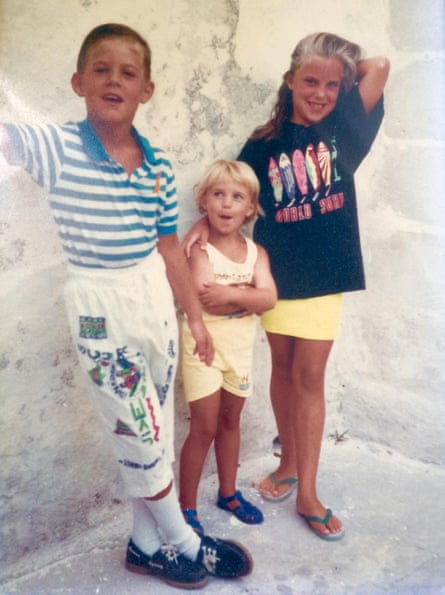
Hicks said: “Nick was really very loving, enthusiastic. He had an infectious character to be around, very funny. He was an extrovert, so he loved people. He was a much-loved father and uncle.”
Voelcker added: “He spent a long time in the army before going into the city. And his reputation was important. He was a proud man. I think that’s the thing and even the fact that he needed to seek help from a psychiatric hospital was a big deal for him.”
Ch Supt Dan Knowles, in charge of policing for south-west London, said: “Our thoughts are with Mr Brandram’s family and friends at this deeply distressing time. We recognise the significant impact his death will have on those who knew and loved him. We also understand the strain that being subject to a police investigation can place on individuals and their families.
“The investigation remains ongoing. Following Mr Brandram’s release under investigation, it was made clear that inquiries would continue while officers progressed outstanding lines of inquiry and forensic examinations. This remains the position, and further investigative work is ongoing.
“Investigations of this nature, particularly those involving complex evidential and forensic work, can take a number of months to complete as officers gather and assess all available evidence.”
He added that the force had made a mandatory referral to the Independent Office for Police Conduct on 16 September.
Originally published by theguardian.com. Syndicated material does not necessarily reflect the views of Grazia British.
More Culture
Barbra Streisand blames Trump’s ‘unchecked ego’ for Kennedy Center chaos: ‘Painful to witness’
President announced this week that the arts institution would be shut down immediately for major renovations amid a legal battle over his name on the building

Building a cloud designed for AI
The cloud built for the internet era was designed to serve many different workloads. Today, AI demands something fundamentally different. CoreWeave cofounder and CEO Mike Intrator…

Archbishop of Canterbury withdraws award from Muslim cleric who praised Osama bin Laden
The award was handed out last week, on the anniversary of the 9/11 attacks.
Glee co-creator gives three-word response to reboot rumors
Exclusive: ‘The Independent’ spoke to Ian Brennan at the red carpet premiere of his and Murphy’s new Netflix series ‘Monster: The Lizzie Borden Story’