
Texas Instruments’ $60 billion chip pledge sounds bold—but the U.S. still has work to do
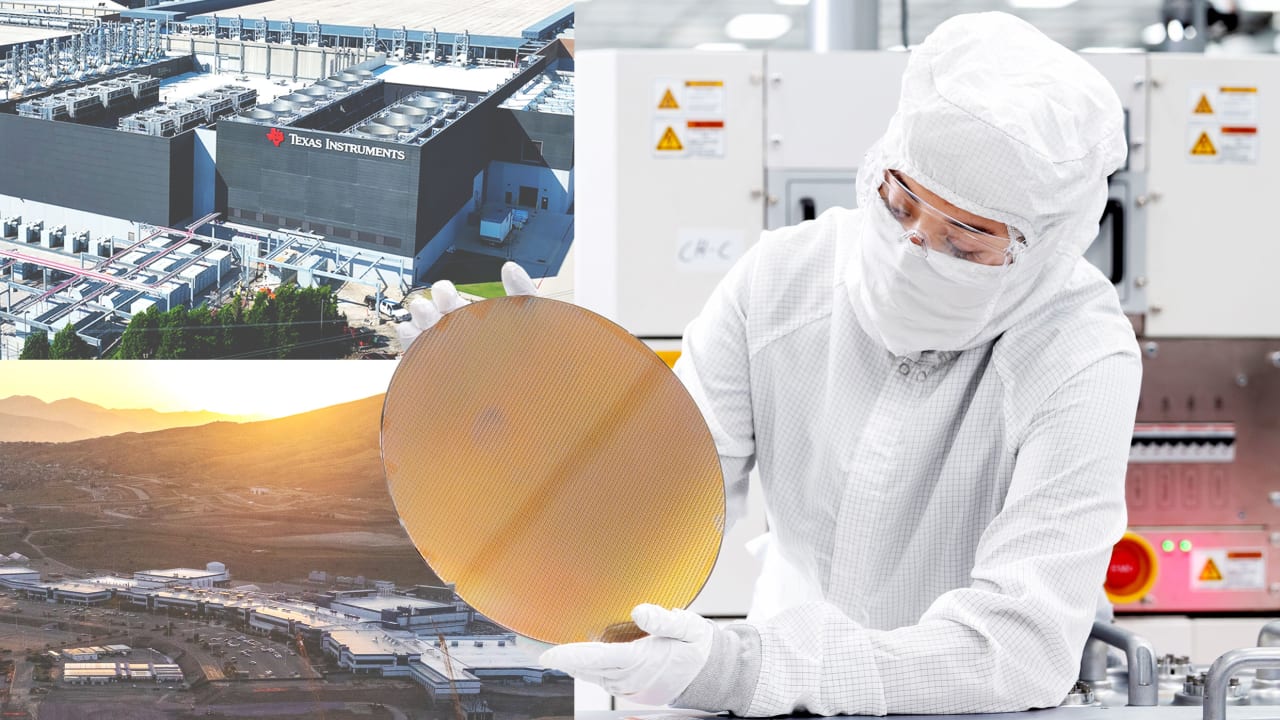
More than $60 billion of investment will be spent by Texas Instruments to build and expand seven semiconductor factories in the United States, creating more than 60,000 jobs in the country, the company said today.
The announcement, which will see the investment spent across seven semiconductor fabrication sites, is a boost for President Donald Trump, though it is not exactly new cash, some experts argue.
“I think it’s exactly what they’ve been saying for the last four or five years,” says Stacy Rasgon, a senior analyst at Bernstein who covers semiconductors. “They’re probably one of the few that’s actually put massive amounts of dollars in the ground in the U.S. already. So you might as well get credit for it.”
The announcement also does not include a time frame. Texas Instruments CEO Haviv Ilan said in a statement: “TI is building dependable, low-cost 300-millimeter capacity at scale to deliver the analog and embedded processing chips that are vital for nearly every type of electronic system.”
While the announcement may be aimed at pleasing Trump, it reinforces a strategy to ensure the survival of the U.S. AI sector at a time when the country is increasingly at odds with China. The threat of a potential invasion by China looms constantly over Taiwan, the world’s main manufacturer of computer chips.
“Personally, I think TI has been preparing for a decoupled world, where it’s no longer viable, for whatever reason, to source parts from Asia. And they’ll be sitting here with a whole bunch of capacity,” Rasgon says.
“TI’s latest investment is another move for the U.S. legacy semiconductor player to show its determination in strengthening its production capacity in the United States, which aligns with the current administration’s agenda,” says Ray Wang, research director for semiconductors and emerging technology at the Futurum Group.
Others believe the announcement is a move to onshore chip production in an uncertain world.
“This announcement builds on Texas Instruments’ long-standing efforts to build new chip factories in Texas and Utah,” says Chris Miller, professor at the Fletcher School at Tufts University.
Miller points out that Texas Instruments is already “a key supplier of the foundational semiconductors that industries from autos to smartphones require.” He adds that the company seems poised to grow its footprint even more, having steadily added new facilities and ramped up capacity in recent years.
That puts TI in a position of relative strength, giving the company the ability to ramp up domestic production and reduce reliance on overseas partners like the Taiwan Semiconductor Manufacturing Company (TSMC) by bringing more manufacturing back in-house.
A $100 billion deal, announced in March 2025, would also see TSMC bring more chip production capacity to the United States. At the time, experts questioned whether the move might result in Taiwan losing its economic defensive shield against a Chinese invasion.
“This is the exact countermove that the U.S. needed in the context of increasing its annual chip output,” says Koray Köse, founder and chief analyst at Köse Advisory. “This enhances the U.S. supply chain resilience and the security of it, especially when we look at the geopolitical tensions and the over-reliance on Taiwan from foreign chipmakers.” This, Köse says, shifts the balance in America’s favor by giving the country a stronger, more self-reliant supply chain.
It also helps Texas Instruments be insulated from Chinese competition.
“Those segments they are in are really commodity segments, where a lot of that supply, Chinese manufacturers are trying to take share from them,” says Willy Shih, a professor at Harvard Business School.
Beyond cash, more work is needed to keep the U.S. up to pace with China and others, says Miller, the Tufts professor. “Facilitating chip production will require streamlining regulation, training more workers, and ensuring that U.S. firms don’t face unfair competition from heavily subsidized companies in China,” he says. “The U.S. needs to continue to invest in training programs at universities and community colleges to produce a strong supply of fab technicians, trained construction workers, and engineers to build and operate chipmaking facilities.”
But Trump may resist one key step that Miller says is vital for the U.S. to become a chipmaking champion: immigration. “It also needs to facilitate immigration of high-skilled engineers with unique, chip-specific capabilities,” he says.
Originally published by fastcompany.com. Syndicated material does not necessarily reflect the views of Grazia British.
More Culture

Don’t Pull Out of Germany
Merz’s stupidity is no excuse for a stupid response. Source link

Step inside the gorgeous, futuristic offices of Vast, the startup designing the next-gen space station
A tall baobab tree greets people inside the Long Beach, California, headquarters of Vast, an aerospace company that is building the space station of the future. It’s planted beneath a…

5 ways high-performing teams stay calm when everything’s on fire
When markets swing, plans break, inboxes explode, and everyone starts saying the situation is “unprecedented” again, most teams do what humans have always done under pressure: they grip…

Confused Trump Openly Admits Plot to Rig Midterms as Polls Turn Brutal
Last week, the Supreme Court gutted protections against racial gerrymandering, and Donald Trump is already urging Republicans to seize on it. Trump unleashed a Truth Social rant on Monday…