
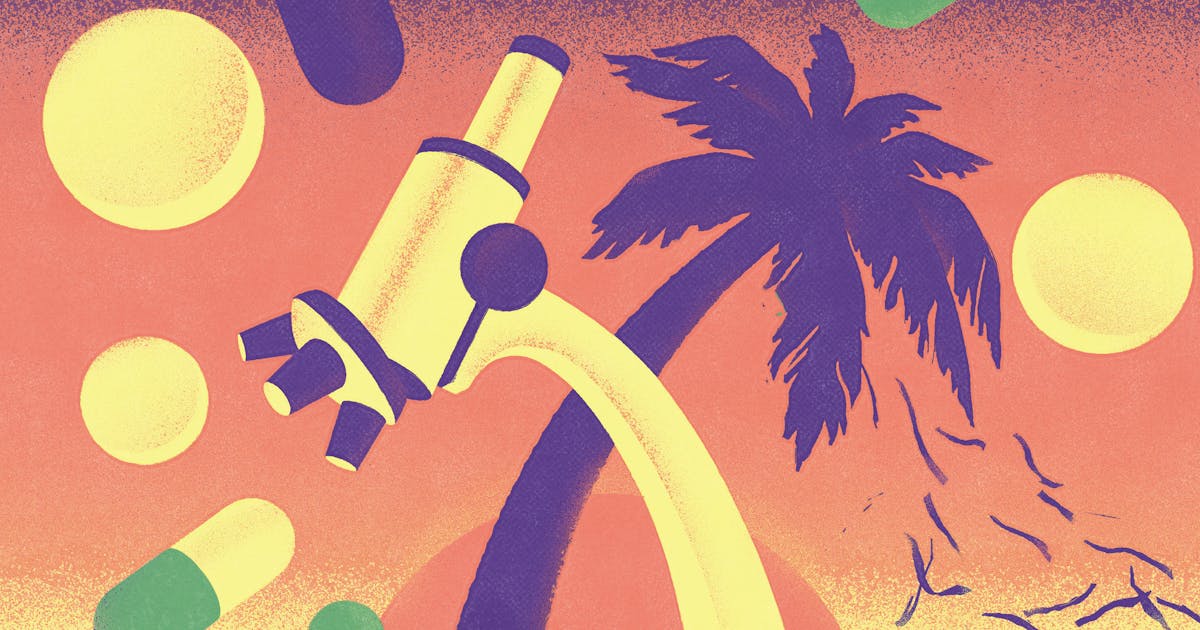
The Island Where People Go to Cheat Death
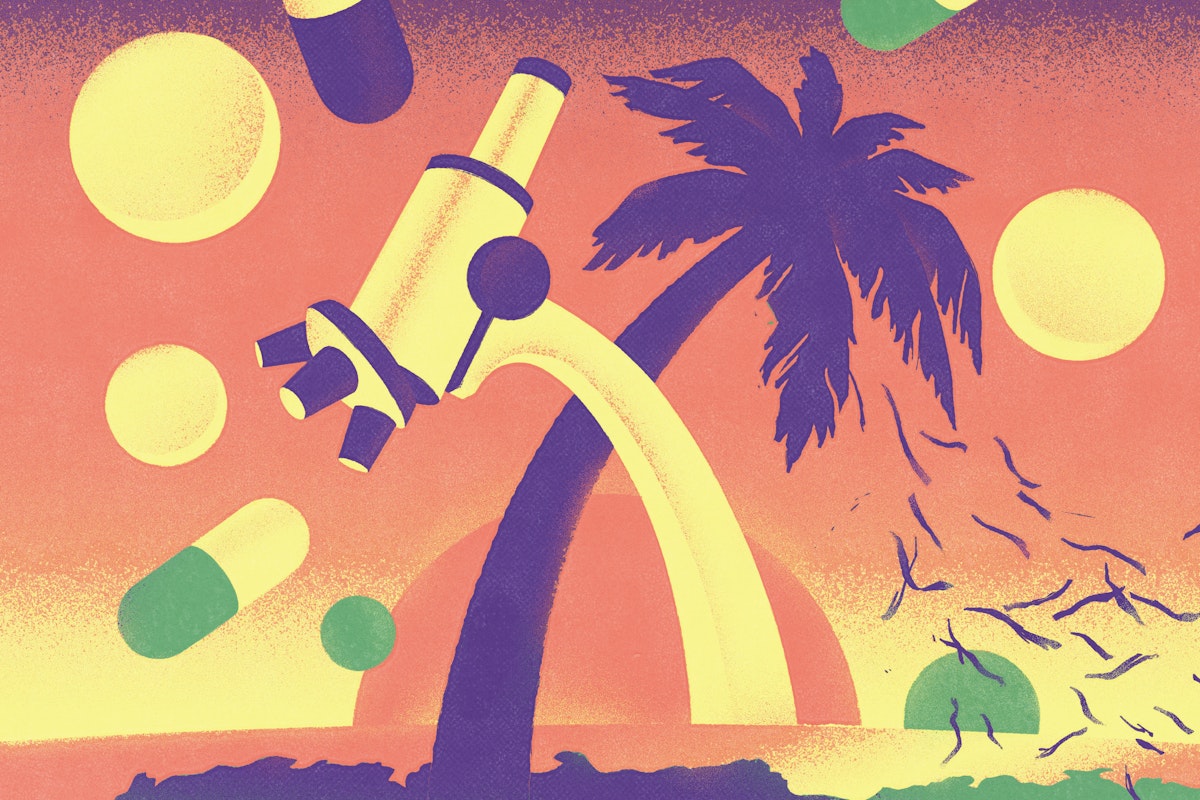
At the beach club, I met Tristan Roberts, a co-founder of Minicircle who left the company, and asked him what might still lure people to do human trials here. Despite the Honduran government’s decision, he said, the lax regulation was intact, for now. An American company operating in Próspera isn’t required to use CGMP-certified products, a stamp of quality control that incurs a large cost (CGMP stands for Currently Good Manufacturing Practice), and could theoretically start a small study at any time if it accepted liability for anything that went wrong. “That situation is ideal for a pilot study, even before Phase I, where it was just the founders and maybe the investors, maybe one or two friends, people who you trust to not sue you,” Roberts said. The other option—working with the GARM clinic, and getting approved by its IRB—took, in Roberts’s experience, mere weeks.
As we ate lunch, I realized I’d heard of Roberts before; in 2017, he had injected himself on Facebook Live with an experimental gene therapy that was meant to treat HIV. Ultimately, his viral load increased instead. In the video, Roberts is joined by Davis and Aaron Traywick, another biohacker, who self-injected an unapproved herpes vaccine on stage at a conference, and tried to pressure Roberts into taking another dose of the HIV vaccine in front of media. (Traywick died by drowning in a sensory deprivation tank in 2018.) Given his history, Roberts, more than others, might appreciate the limitations of going medically rogue, I thought. Getting laboratory and clinical supplies is difficult, he acknowledged: “doing follow-up, testing consistently, is difficult.” He was planning to turn his focus to follistatin gene therapy for dogs, he said. Later, I read a piece of autofiction he wrote about the funeral of the futurist Ray Kurzweil. In Roberts’s account, Vitalia’s downfall came from the sociopathic personalities it attracted and their death-avoidant mission.
But Roberts remained committed to the belief that, when it comes to making drugs, the status quo is flawed, and the financial and logistical barriers to testing out new medical ideas are too high. “We like to think of Latin American countries as being corrupted,” he said. “You can bribe officials. But in the United States, we just have the most sophisticated version of that, where if you don’t pay for the $80,000 lawyer who goes golfing with the FDA, they’re not going to look at your application.”
Originally published by newrepublic.com. Syndicated material does not necessarily reflect the views of Grazia British.
More Culture

Don’t Pull Out of Germany
Merz’s stupidity is no excuse for a stupid response. Source link

Step inside the gorgeous, futuristic offices of Vast, the startup designing the next-gen space station
A tall baobab tree greets people inside the Long Beach, California, headquarters of Vast, an aerospace company that is building the space station of the future. It’s planted beneath a…

5 ways high-performing teams stay calm when everything’s on fire
When markets swing, plans break, inboxes explode, and everyone starts saying the situation is “unprecedented” again, most teams do what humans have always done under pressure: they grip…

Confused Trump Openly Admits Plot to Rig Midterms as Polls Turn Brutal
Last week, the Supreme Court gutted protections against racial gerrymandering, and Donald Trump is already urging Republicans to seize on it. Trump unleashed a Truth Social rant on Monday…