
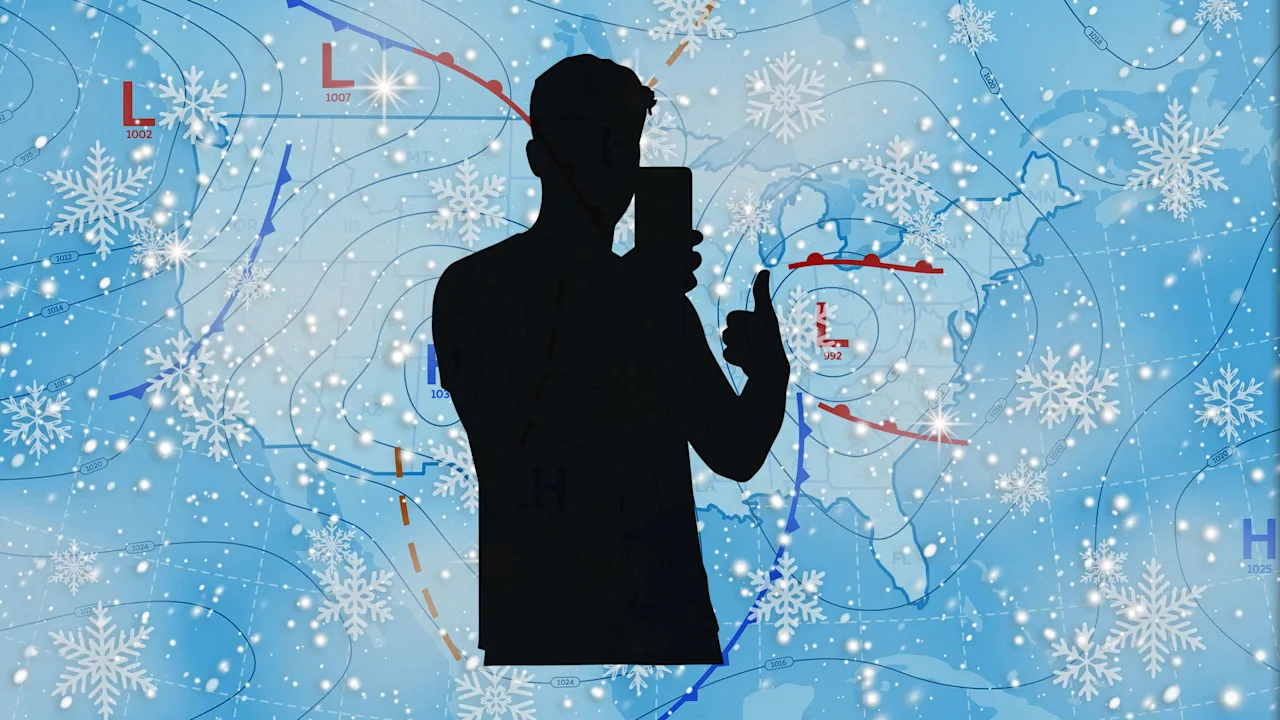
The rise of weather influencers
“Snow Will Fall Too Fast for Plows,” “ICE STORM APOCALYPSE,” and “Another Big Storm May Be Coming …” were all headlines posted on YouTube this past weekend as the biggest snowstorm in years hit New York City.
These videos, each with tens or hundreds of thousands of views, are part of an increasingly popular genre of “weather influencers,” as Americans increasingly turn to social media for news and weather updates.
People pay more attention to influencers on YouTube, Instagram, and TikTok than to journalists or mainstream media, a study by the Reuters Institute and the University of Oxford found in 2024. In the U.S., social media is how 20% of adults get their news or weather updates, according to the Pew Research Center.
It’s no surprise, then, that a number of online weather accounts have cropped up to cover the increasing number of extreme weather events in the U.S.
While some of these influencers have no science background, many of the most popular ones are accredited meteorologists. One of the most viewed digital meteorologists—or weather influencers—is Ryan Hall, who calls himself “The Internet’s Weather Man” on his social media platforms. His YouTube channel, Ryan Hall, Y’all, has more than 3 million subscribers.
Max Velocity is another. He’s a degreed meteorologist, according to his YouTube bio, who has 1.66 million followers. Reed Timmer, an “extreme meteorologist and storm chaser,” also posts to 1.46 million subscribers on YouTube. “While most prefer to avoid the bad news that comes with bad weather, I charge towards it,” Timmer writes in the description section on his channel.
The rising popularity of weather influencers is stemming not just from a mistrust in mainstream media—which is lingering at an all-time low—but also from an appetite for real-time updates delivered in an engaging way to the social-first generation.
YouTube accounts like Hall’s will often livestream during extreme weather events, with his comments section hosting a flurry of activity. There’s even merch.
Of course, influencers are not required to uphold the same reporting standards as network weathercasters. There’s also the incentive, in terms of likes and engagement, to sensationalize events with clickbait titles and exaggerated claims, or sometimes even misinformation, as witnessed during the L.A. wildfires last year.
Still, as meteorologists navigate the new media landscape, the American Meteorological Society now offers a certification program in digital meteorology for those “meteorologists who meet established criteria for scientific competence and effective communication skills in their weather presentations on all forms of digital media.”
While we wait to see whether another winter storm will hit the Northeast this weekend, rest assured, the weather influencers will be tracking the latest updates.
Originally published by fastcompany.com. Syndicated material does not necessarily reflect the views of Grazia British.
More Culture

Don’t Pull Out of Germany
Merz’s stupidity is no excuse for a stupid response. Source link

Step inside the gorgeous, futuristic offices of Vast, the startup designing the next-gen space station
A tall baobab tree greets people inside the Long Beach, California, headquarters of Vast, an aerospace company that is building the space station of the future. It’s planted beneath a…
5 ways high-performing teams stay calm when everything’s on fire
When markets swing, plans break, inboxes explode, and everyone starts saying the situation is “unprecedented” again, most teams do what humans have always done under pressure: they grip…

Confused Trump Openly Admits Plot to Rig Midterms as Polls Turn Brutal
Last week, the Supreme Court gutted protections against racial gerrymandering, and Donald Trump is already urging Republicans to seize on it. Trump unleashed a Truth Social rant on Monday…