

The world’s biggest space-based radar will measure Earth’s forests from orbit
These indirect systems rely on a combination of field sampling—foresters roaming among the trees to measure their height and diameter—and remote sensing technologies like lidar scanners, which can be flown over the forests on airplanes or drones and used to measure treetop height along lines of flight. This approach has worked well in North America and Europe, which have well-established forest management systems in place. “People know every tree there, take lots of measurements,” Scipal says.
But most of the world’s trees are in less-mapped places, like the Amazon jungle, where less than 20% of the forest has been studied in depth on the ground. To get a sense of the biomass in those remote, mostly inaccessible areas, space-based forest sensing is the only feasible option. The problem is, the satellites we currently have in orbit are not equipped for monitoring trees.
Tropical forests seen from space look like green plush carpets, because all we can see are the treetops; from imagery like this, we can’t tell how high or thick the trees are. Radars we have on satellites like Sentinel 1 use short radio wavelengths like those in the C band, which fall between 3.9 and 7.5 centimeters. These bounce off the leaves and smaller branches and can’t penetrate the forest all the way to the ground.
This is why for the Biomass mission ESA went with P-band radar. P-band radio waves, which are about 10 times longer in wavelength, can see bigger branches and the trunks of trees, where most of their mass is stored. But fitting a P-band radar system on a satellite isn’t easy. The first problem is the size.
“Radar systems scale with wavelengths—the longer the wavelength, the bigger your antennas need to be. You need bigger structures,” says Scipal. To enable it to carry the P-band radar, Airbus engineers had to make the Biomass satellite two meters wide, two meters thick, and four meters tall. The antenna for the radar is 12 meters in diameter. It sits on a long, multi-joint boom, and Airbus engineers had to fold it like a giant umbrella to fit it into the Vega C rocket that will lift it into orbit. The unfolding procedure alone is going to take several days once the satellite gets to space.
Sheer size, though, is just one reason we have generally avoided sending P-band radars to space. Operating such radar systems in space is banned by International Telecommunication Union regulations, and for a good reason: interference.

“The primary frequency allocation in P band is for huge SOTR Americans use to detect incoming intercontinental ballistic missiles. That was, of course, a problem for us,” Scipal says. To get an exemption from the ban on space-based P-band radars, ESA had to agree to several limitations, the most painful of which was turning the Biomass radar off over North America and Europe to avoid interfering with SOTR coverage.
Originally published by technologyreview.com. Syndicated material does not necessarily reflect the views of Grazia British.
More Culture

Don’t Pull Out of Germany
Merz’s stupidity is no excuse for a stupid response. Source link
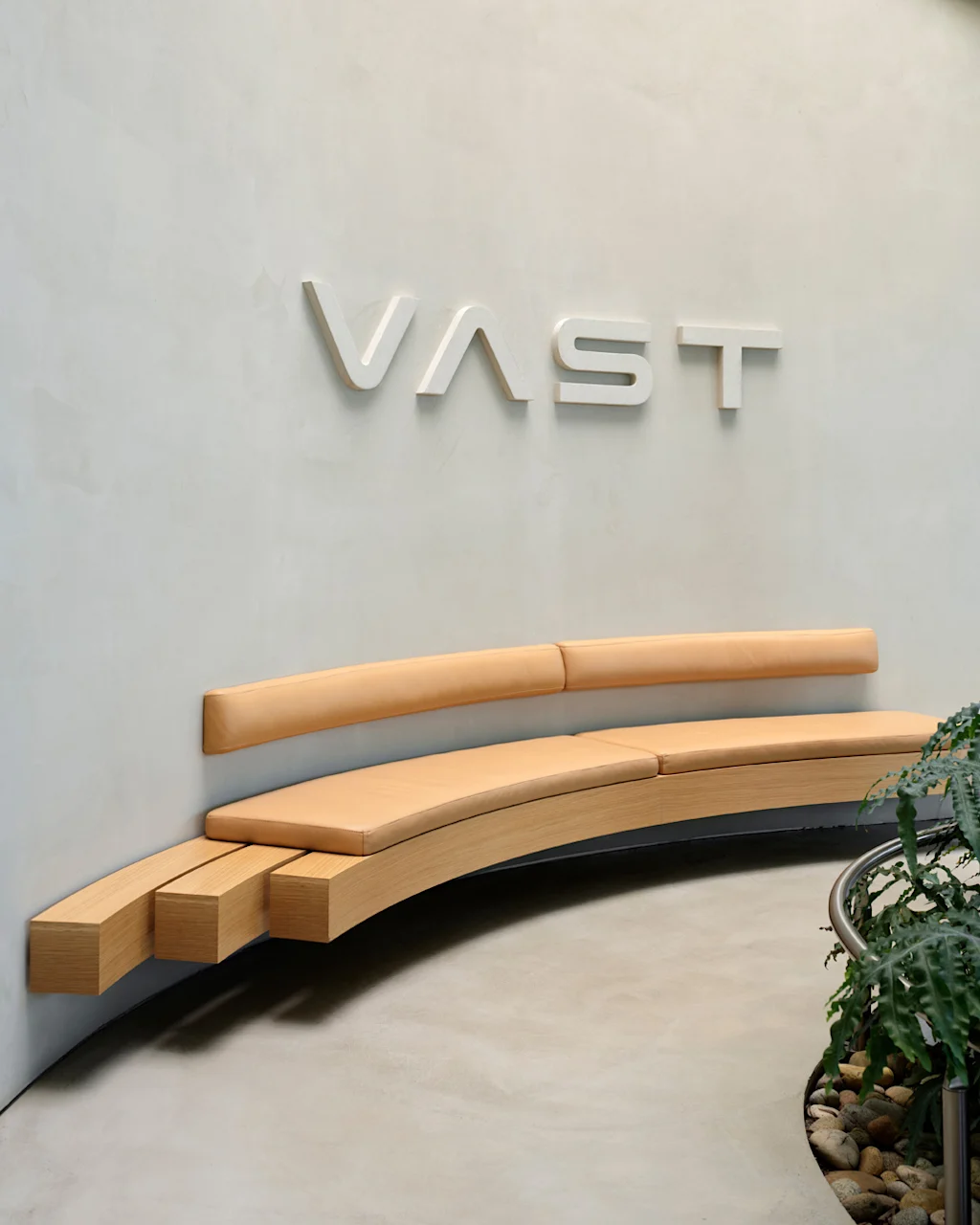
Step inside the gorgeous, futuristic offices of Vast, the startup designing the next-gen space station
A tall baobab tree greets people inside the Long Beach, California, headquarters of Vast, an aerospace company that is building the space station of the future. It’s planted beneath a…

5 ways high-performing teams stay calm when everything’s on fire
When markets swing, plans break, inboxes explode, and everyone starts saying the situation is “unprecedented” again, most teams do what humans have always done under pressure: they grip…

Confused Trump Openly Admits Plot to Rig Midterms as Polls Turn Brutal
Last week, the Supreme Court gutted protections against racial gerrymandering, and Donald Trump is already urging Republicans to seize on it. Trump unleashed a Truth Social rant on Monday…