
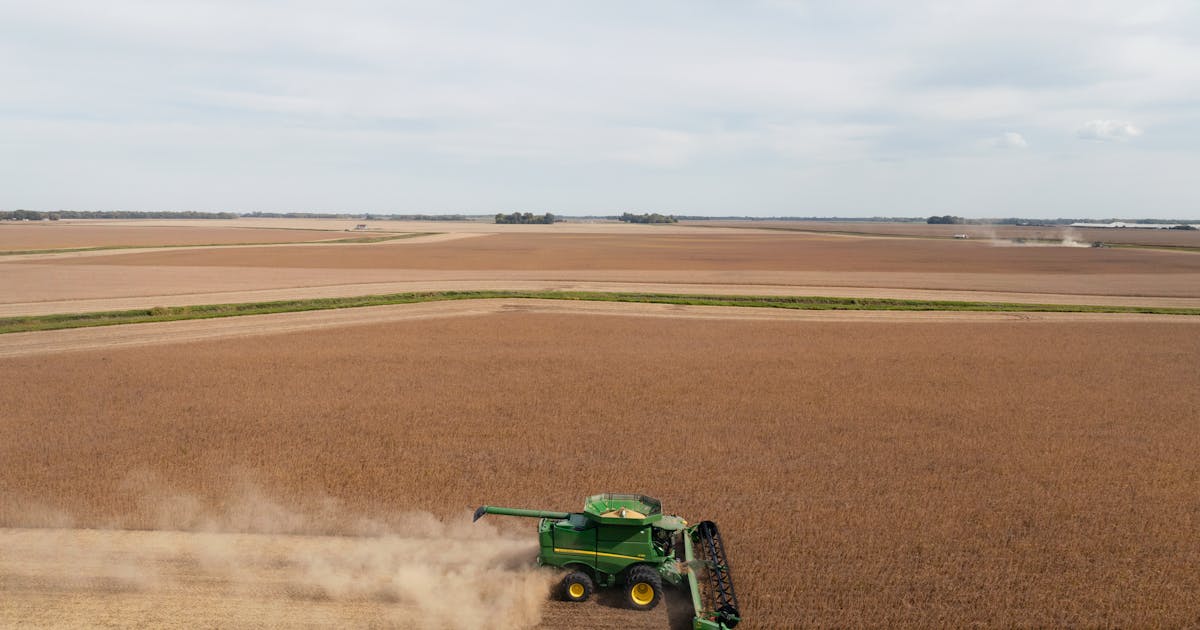
Trump’s Tariffs Should Force a Reckoning With America’s Soy Industry
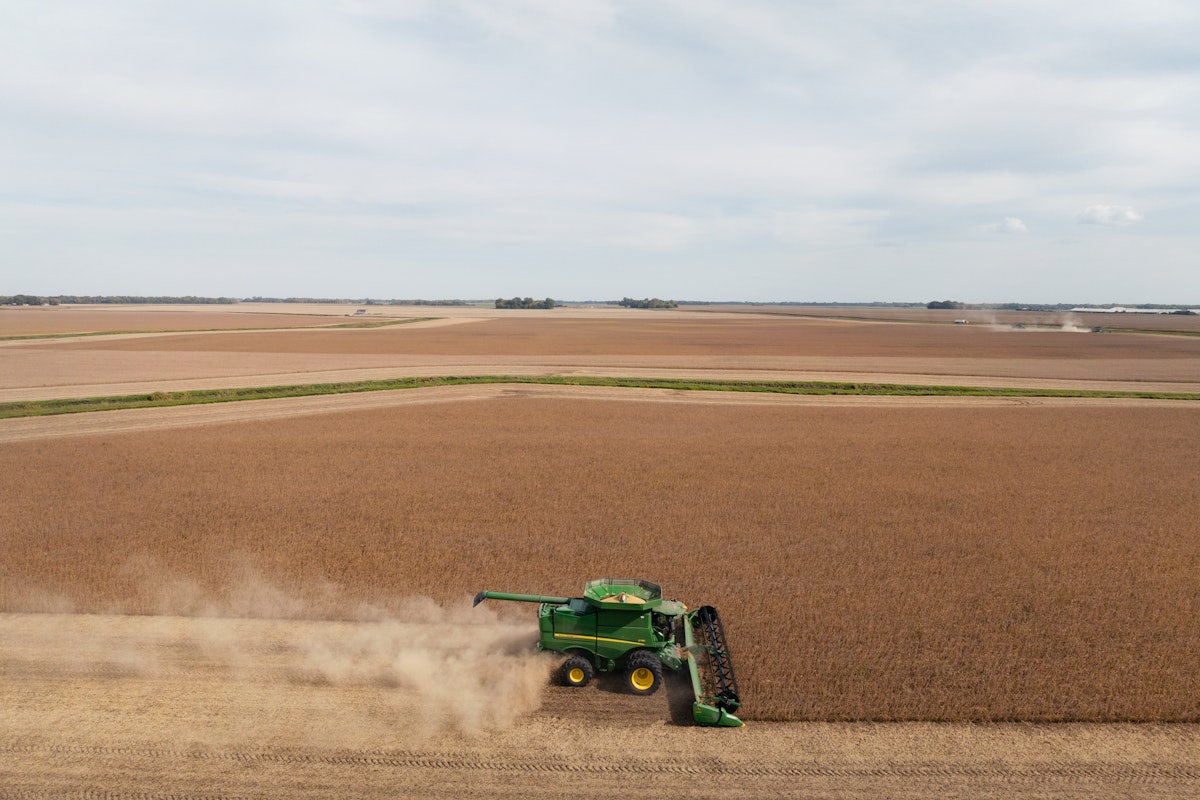
While China’s embrace of a meat-heavy diet is remarkable in its speed and scale, it is only catching up to Europe, which has long practiced factory farming, and still lags the United States, which pioneered industrial animal farming and where per capita meat consumption is 220 pounds per year (and more if you count fish). The geographer Tony Weis calls the remaking of food systems to serve factory farming “meatification,” which entails diverting grain and oilseed production from human food toward animal feed. In the U.S., 35 percent of all corn and over 90 percent of soy becomes animal feed. In fact, 67 percent of all crops go to animal feed while 27 percent go directly to humans (the rest goes to biofuels). (Globally, 77 percent of all soy goes to animal feed; only 7 percent goes to human food like soy milk and tofu.) While this is inefficient and environmentally dubious, at least the U.S. can handle its domestic demand. The EU and China can’t. Hence the huge market for American soy abroad and Brazil’s and Argentina’s massive soy economies.
As China’s demand for foreign soy grew, American farmers grew more of it: U.S. soy production and exports have double over the past 30 years, roughly tracking increases in Chinese meat consumption and soy demand for feed. The same was the case in Brazil. Importing soy amounts to offshoring demand for land. And that means offshoring deforestation. Most deforestation to create new soy farms takes place in South America. And with the U.S. cut off by China, Brazil is ending a moratorium on deforestation to cash in.
This is just one of the many harms caused by a global appetite for meat. The recently-released “EAT–Lancet Commission on healthy, sustainable, and just food systems”—a collaboration between the Swedish food NGO EAT and the prestigious British medical journal The Lancet—shows that the global food system is outstripping planetary boundaries, driving unsustainable climate change, land use change, and eutrophication of water. The single biggest culprit by far is meat. China may have offshored deforestation, but its glut of factory farms have caused a series of crises at home as well, such as widespread pollution and animal disease outbreaks, including a swine fever epidemic in 2019 that killed tens of millions of animals.
Originally published by newrepublic.com. Syndicated material does not necessarily reflect the views of Grazia British.
More Culture

Don’t Pull Out of Germany
Merz’s stupidity is no excuse for a stupid response. Source link

Step inside the gorgeous, futuristic offices of Vast, the startup designing the next-gen space station
A tall baobab tree greets people inside the Long Beach, California, headquarters of Vast, an aerospace company that is building the space station of the future. It’s planted beneath a…

5 ways high-performing teams stay calm when everything’s on fire
When markets swing, plans break, inboxes explode, and everyone starts saying the situation is “unprecedented” again, most teams do what humans have always done under pressure: they grip…

Confused Trump Openly Admits Plot to Rig Midterms as Polls Turn Brutal
Last week, the Supreme Court gutted protections against racial gerrymandering, and Donald Trump is already urging Republicans to seize on it. Trump unleashed a Truth Social rant on Monday…