
US to keep China chip curbs, spurning Nvidia’s call for relief
The Trump administration will maintain efforts to keep advanced artificial intelligence (AI) technology out of China’s hands, a top White House official said, brushing off calls from Nvidia chief executive officer Jensen Huang to ease restrictions on chip exports to the world’s second-largest economy.
“We obviously have huge respect for Jensen,” Sriram Krishnan, White House senior policy adviser for AI, said on Wednesday (May 21). “When it comes to inside China, I do think there is still bipartisan and broad concern about what can happen to these GPUs once they are physically inside” the country, he added.
While the Trump administration still sees a security risk from widening AI chip exports to China, Krishnan said it agrees with Huang’s view that restrictions on a wide range of other US trading partners need to be revisited. The Trump administration is rescinding and moving to replace the Biden-era AI diffusion rule that Krishnan said created “GPU haves and GPU have nots”.
“When it comes to the rest of the world, we want American AI stack starting from the GPUs to the models to everything on top,” Krishnan said. “On that, Jensen and I and us are in agreement.”
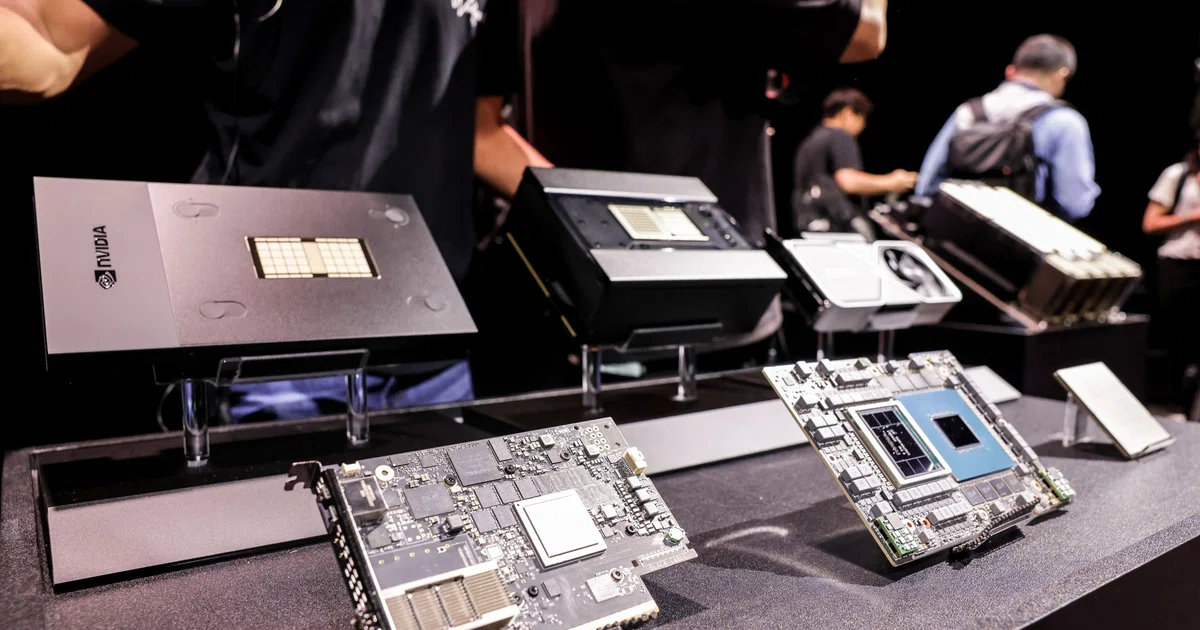
Krishnan spoke hours after Huang made his most forceful public comments to date against escalating US export restrictions aimed at China. Speaking at the Computex industry conference in Taipei, Huang blasted the measures as a “failure” and urged the US to lower barriers to chip sales in China before American firms cede the market to rivals such as Huawei Technologies.
Huang told reporters that China will account for a US$50 billion opportunity in 2026. “China has 50 per cent of the world’s AI developers, and it’s important that when they develop on an architecture, they develop on Nvidia, or at least American technology,” he said.
Nvidia recently wrote off US$5.5 billion in H20 AI chips that had been designed to comply with previous export curbs, but were targeted by a new round of restrictions from the Trump administration this year.
Krishnan pointed to the flurry of projects in Saudi Arabia and the United Arab Emirates announced by American companies during US President Donald Trump’s trip to the Middle East last week as evidence of a new effort to ease US allies’ access to AI. He stressed that the agreements would still contain security restrictions to prevent the illegal transfer of advanced technology to China and other adversaries.
“These deals and these GPUs are predominantly going to be run by American hyperscalers, American cloud service providers and American companies,” said Krishnan, who was a general partner at venture capital firm Andreessen Horowitz prior to joining the White House. “Most of these GPUs are going to be run, hosted, controlled by American companies.” BLOOMBERG
Originally published by businesstimes.com.sg. Syndicated material does not necessarily reflect the views of Grazia British.
More Culture

Don’t Pull Out of Germany
Merz’s stupidity is no excuse for a stupid response. Source link

Step inside the gorgeous, futuristic offices of Vast, the startup designing the next-gen space station
A tall baobab tree greets people inside the Long Beach, California, headquarters of Vast, an aerospace company that is building the space station of the future. It’s planted beneath a…

5 ways high-performing teams stay calm when everything’s on fire
When markets swing, plans break, inboxes explode, and everyone starts saying the situation is “unprecedented” again, most teams do what humans have always done under pressure: they grip…

Confused Trump Openly Admits Plot to Rig Midterms as Polls Turn Brutal
Last week, the Supreme Court gutted protections against racial gerrymandering, and Donald Trump is already urging Republicans to seize on it. Trump unleashed a Truth Social rant on Monday…