
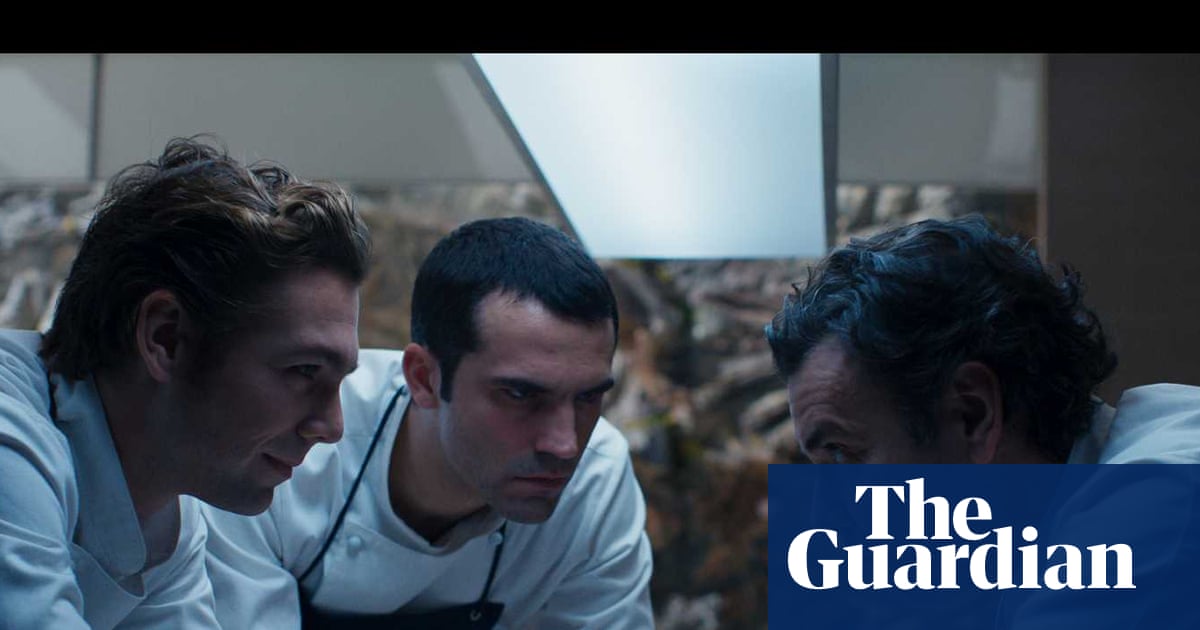
‘We broke the rules:’ why chef Ferran Adriá is the subject of new TV drama
Revered and reviled, during the 28 years he presided over El Bulli, a small restaurant in a remote corner of Catalonia, Ferran Adrià changed cooking for ever.
Now he is the subject of Gènesi (Genesis), a six-part TV drama screening on Catalan television with a worldwide release later in the year that recounts the story of El Bulli from the day he arrived there in 1983 as a kitchen hand with no background at all in haute cuisine.
“No one knew what to call what we were doing, and if something doesn’t have a name they don’t know how to talk about it,” Adrià told the Guardian. “Journalists called it molecular cuisine. I preferred the term ‘techno-emotional’.”
Adrià quickly rose to become head chef. He was relatively inexperienced – before starting as a line chef at El Bulli, he had worked as a dishwasher in a hotel and then as a cook during military service. But despite this, he says he never experienced impostor syndrome.
“In 1995, it was unthinkable that a chef who wasn’t French would be on the front pages,” he says. “Then I was on the cover of Time, which described me as one of the 100 most influential people in the world. But we weren’t interested in being famous.”
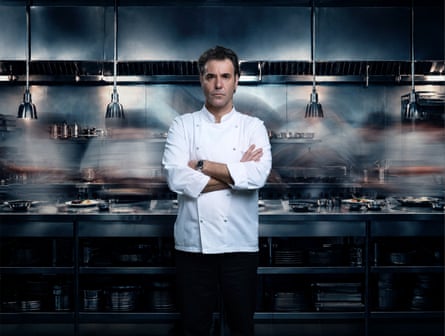
While much of Gènesi, which was partly funded by the Catalan government, has the look of a travel promotion, both El Bulli’s kitchen and 70 of the 1,846 original dishes it produced are lovingly recreated, including the famous moment when Adrià makes a tortilla de patatas with crisps.
Some cooking scenes are oddly frantic, given that Adrià was not a shouty chef à la Gordon Ramsay, nor even slightly in the rock’n’roll mode of Anthony Bourdain. His kitchen was a place of calm, nothing like the TV series The Bear in which the chefs work in a state of perpetual nervous collapse.
Business really took off in 1996 when Joël Robuchon, the doyen of French cuisine, called Adrià “the best chef on the planet”. After that, El Bulli would regularly receive over a million requests for its 8,000 available seatings each season.
Its foams, liquid nitrogen and molecular madness were key to its image in the cultural sphere, but for those fortunate enough to obtain a reservation and able to afford a menu that never quite covered its costs, eating in El Bulli was an unforgettable experience. Each dish was a surprise, the meal an entertainment and a show, but with food that was utterly original and exquisite.
Situated at the end of a windy road on the Costa Brava and with almost as many chefs as diners, the restaurant was never profitable, and although it could have charged what it liked, Adrià says it was never supposed to succeed as a business.
“Avant garde cuisine is true to itself or it doesn’t work,” he says. Heavily in debt, El Bulli closed in 2011. “When I say the most important thing is to conceptualise, I mean what matters isn’t creating dishes but to explore the limits of innovation of both the produce and the diners. We never valued produce in terms of what it cost; a lentil was worth the same as caviar.”
The essence of Mediterranean cuisine is to let the produce speak for itself, so subjecting it to a series of esoteric techniques was also a departure.
“I don’t really see a contradiction,” says Jordi Artal, chef at the Michelin-starred Cinc Sentits in Barcelona. “The important thing for me is whether the technique is being used for its own sake, or in the service of improving the ingredient.
“Ferran and El Bulli developed a whole new vocabulary of techniques and ways of looking at ingredients. You could change a texture, temperature or form without losing the identity of the product.
“He demonstrated that cooking could be a creative discipline, that a chef could question things and develop his own language, to rethink what perhaps previously was just accepted as ‘the way’.
“This gave all of us who followed the confidence to look beyond classical models and ask what our own cuisine could become.”
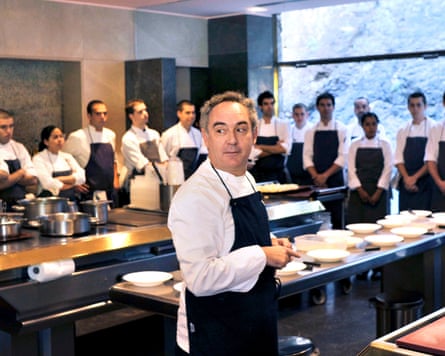
Adrià says that before El Bulli, French cuisine dominated the world, but insists his approach was never a rebellion against the French.
“I am who I am thanks to France, but that doesn’t mean French cuisine can’t be questioned. If all we do is reproduce canonical recipes, we’re just robots.”
Much of El Bulli’s legacy lies in the many chefs who have used the experience and cachet of working there to open restaurants of their own. Among them is Oriol Castro who, with two fellow El Bulli alumni, runs Disfrutar in Barcelona, voted best restaurant in the world in 2024.
Castro says one of the most important things was that El Bulli shared its techniques and recipes with the rest of the world.
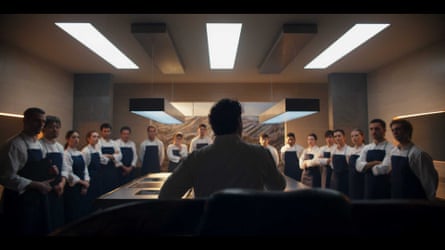
“It was very exciting to work in a kitchen where we were breaking all the rules, trying to do something different. And there was a great atmosphere; it was like a family, really. It was magical.”
Adrià says “the most important thing about El Bulli is that it empowered everyone. It was a bit like Obama’s slogan, ‘Yes, we can.’” He adds: “El Bulli was always a controversial restaurant and still is, 15 years after it closed.”
Originally published by theguardian.com. Syndicated material does not necessarily reflect the views of Grazia British.
More Lifestyle

The First Look at The Other Bennet Sister Holiday Special Teases a Very Different Mary Bennet
The limited series will return this winter.

Don’t Prune These 6 Plants in September—They Add Beauty and Shelter All Fall
Seed heads, stems, and fading foliage provide food and shelter for wildlife while keeping your garden beautiful through fall.
A sea of hands, a giant ‘lifesaver-saurus’ and a melting robot: Queensland’s SWELL sculpture festival 2026 – in pictures
Almost 100 large-scale artworks are on display during the free, 10-day outdoor beach-side exhibition in the state’s south-east

The True Story of Lizzie Borden
There’s more to it than the nursery rhyme.