
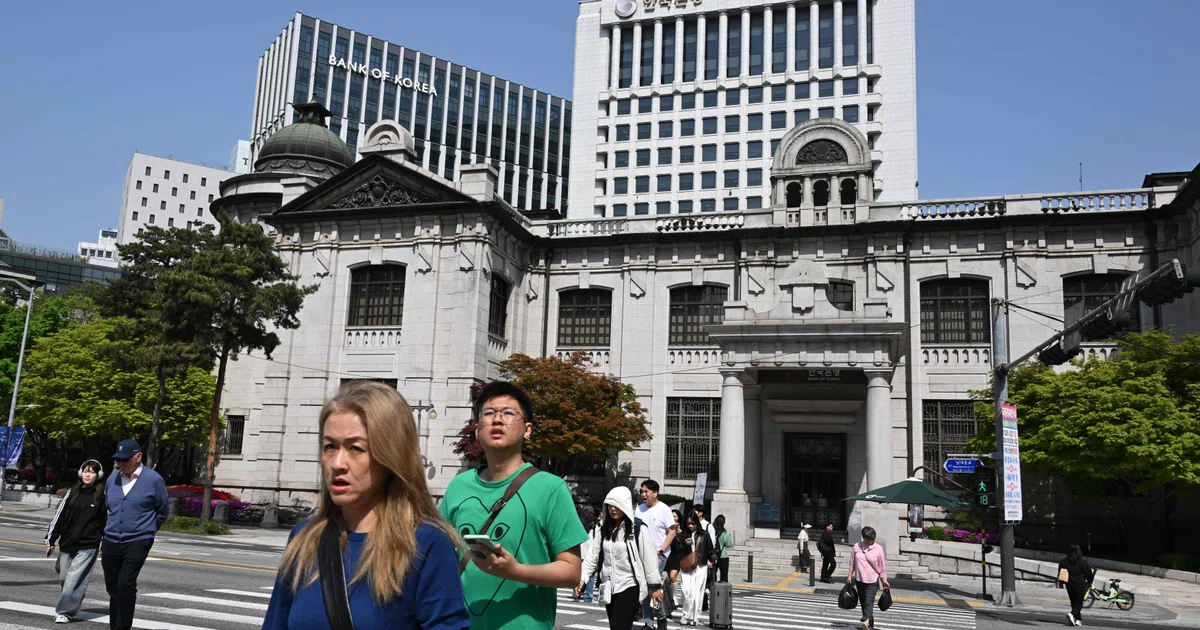
Bank of Korea overhauls repo framework amid changing liquidity conditions
The Bank of Korea (BOK) said it’s revamping its open market operation framework to increase its operational flexibility to manage liquidity, stabilise short-term rates, and respond during periods of financial stress.
Starting Jul 10, the central bank will conduct both buying and selling of repurchase agreements, or repos on fixed days, shifting away from a model focused largely on liquidity absorption through sales. It will offer 14-day repo purchases on Tuesdays to better manage short-term funding mismatches. Currently, BOK offers seven-day repo sales every Thursday and conducts repo purchases on an ad-hoc basis.
The overhaul reflects a shift in Korea’s liquidity environment as its current account surplus shrinks and outbound investment grows, limiting structural inflows from abroad and increasing volatility, the central bank said.
With lower fund inflows from abroad resulting in less liquidity in the market and rising uncertainty in domestic money demand, the BOK is moving towards a more flexible two-way repo system to keep short-term rates aligned with its policy goals.
“At a fundamental level, the main issue is the structural decline in the need for liquidity absorption,” Gong Dae-heui, director of open market operations team, told reporters on Thursday (Jun 26). “Still, what matters more from an operational perspective is the increased volatility – the fact that fluctuations have become larger and more frequent is a more pressing concern in reality.”
Open market operations are the BOK’s main tool for implementing monetary policy and a key measure for limiting volatility in the short-term money market. By buying or selling securities such as government or policy bank bonds, the central bank can manage liquidity and guide short-term interest rates towards its policy target.
To support purchase operations, the BOK said it will expand eligible collateral to include bonds issued by three policy banks: Korea Development Bank, Industrial Bank of Korea, and Export-Import Bank of Korea.
Revised criteria for participating institutions will take effect in August. The BOK will also adjust its incentives to encourage broader market participation, and said it will monitor the impact of the new system as it’s implemented. BLOOMBERG
Originally published by businesstimes.com.sg. Syndicated material does not necessarily reflect the views of Grazia British.
More Fashion

LEESA ROWLAND From Hollywood to the Unknown: The Producer, Writer, Actress and Model Creating Her Own Next Chapter
Leesa Rowland has never been defined by just one role. Actress. Model. Writer. Producer. Author. Creative visionary. Philanthropist. Each title represents a different part of a career…

The Rise of Trevor Dutch: Strength, Style and Substance
From New York City to Europe’s Fashion Capitals, Trevor Dutch Is Bringing Strength, Sophistication, and Individuality to Every Frame In a city that never slows down, Trevor Dutch has…

Commentary: This year's Met Gala proved one thing: The real devil who wears Prada is Jeff Bezos
Apparently not content with bankrupting Sears, Toys R Us, Radio Shack and countless other businesses; buying and then maiming the Washington Post; and leading the Tech Bro right turn to…

Bald eagle 'massaging' its mate? AI deepfakes collide with the laws of the wild
Shadow gingerly places one taloned foot, then the other, on Jackie as she hunkers down on the nest. With Big Bear Lake glittering in the distance, he raises each foot in a kneading motion…