
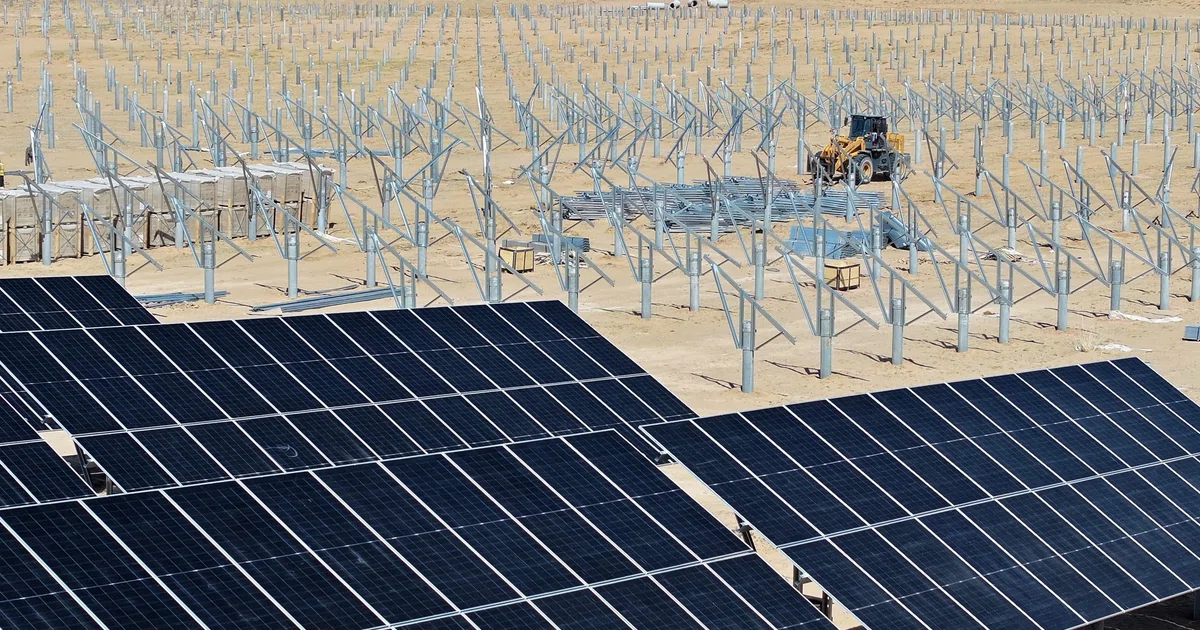
Chinese solar losses deepen even before worst of trump tariffs
Chinese solar manufacturers continue to plunge deeper into the red, and the outlook is getting gloomier as sky-high tariffs on exports threaten to compound domestic oversupply.
Five of the biggest names in the industry – JA Solar Technology, Jinko Solar, Longi Green Energy Technology, Tongwei and Trina Solar – published first-quarter earnings overnight, racking up over eight billion yuan (S$1.4 billion) in losses between them. Their combined loss last year was less than two billion yuan, when two of the companies were still profitable.
“Prices across the main segments of the solar industrial chain were low in the first quarter,” Jinko said in its earnings statement. “This, combined with disruptions in demand caused by changes in international trade policies, pressured profit margins in each segment of the integrated solar supply chain.”
So, the first takeaway is the industry’s so-called self-discipline measures – basically voluntary output controls agreed by dozens of manufacturers last year – have not really worked yet, although Jinko said in its statement that self-regulation had shown a gradual improvement over the period.
The second is that conditions will only deteriorate if the worst of the Trump administration’s tariffs come into force. Those include staggering levies as high as 3,521 per cent on four South-east Asian nations where Chinese firms had based much of their production to circumvent US duties.
New tariffs
The new tariffs, which were announced earlier in April, should be finalised in the coming weeks, assuming that the US trade regulator determines the imports have been detrimental to American producers. That’s likely to force another round of costly relocation for the troubled industry.
CSI Solar, an affiliate of Nasdaq-listed Canadian Solar, said on Monday it’s preparing to move capacity to other regions facing lower duties. JA Solar said earlier this month it’s planning to speed up efforts to globalise its manufacturing, including by opening a plant in Oman.
In the meantime, the ramp-up in domestic installations that’s supported demand in recent months is likely to meet dead air after a Jun 1 deadline, when less favourable policies on solar pricing come into effect.
So, expect profitability to improve sequentially in the second quarter, said Daiwa Capital Markets analysts including Dennis Ip. But that’s “likely to be unsustainable due to a potential demand vacuum in the third quarter”, according to a note from the brokerage. BLOOMBERG
Originally published by businesstimes.com.sg. Syndicated material does not necessarily reflect the views of Grazia British.
More Fashion

LEESA ROWLAND From Hollywood to the Unknown: The Producer, Writer, Actress and Model Creating Her Own Next Chapter
Leesa Rowland has never been defined by just one role. Actress. Model. Writer. Producer. Author. Creative visionary. Philanthropist. Each title represents a different part of a career…

The Rise of Trevor Dutch: Strength, Style and Substance
From New York City to Europe’s Fashion Capitals, Trevor Dutch Is Bringing Strength, Sophistication, and Individuality to Every Frame In a city that never slows down, Trevor Dutch has…

Commentary: This year's Met Gala proved one thing: The real devil who wears Prada is Jeff Bezos
Apparently not content with bankrupting Sears, Toys R Us, Radio Shack and countless other businesses; buying and then maiming the Washington Post; and leading the Tech Bro right turn to…

Bald eagle 'massaging' its mate? AI deepfakes collide with the laws of the wild
Shadow gingerly places one taloned foot, then the other, on Jackie as she hunkers down on the nest. With Big Bear Lake glittering in the distance, he raises each foot in a kneading motion…