


Sari Fishman Manifesto
“I Don’t Edit the Fire” A Cover Profile of Sari Fishman
Sari Fishman isn’t in it for the applause. Or the medals. Or the neat little shelf of perfectly aligned successes. She’s in it for the spark. The noise. The mess. The one sacred moment when the thing—whatever it is—becomes real.
Her art begins in the basement. Literally. There’s tar. There’s glue. There’s paint that cracks when it dries, and sometimes she doesn’t even know what it’s going to look like until days later. “I went down to check how it was drying,” she says, “and it had already changed shape.”
Of course it did.
Because nothing she makes ever stays the same. It writhes and resists and breathes until it settles. Or doesn’t. That’s the point.
“If I happen to catch it on camera while it’s happening—that’s rare—but if I do, that’s the moment. That’s the truth. Not the memory. Not the story we tell about it later. Just that.”
She doesn’t fix what comes out. Not the painting. Not the poem. Not the misstep in a dance.
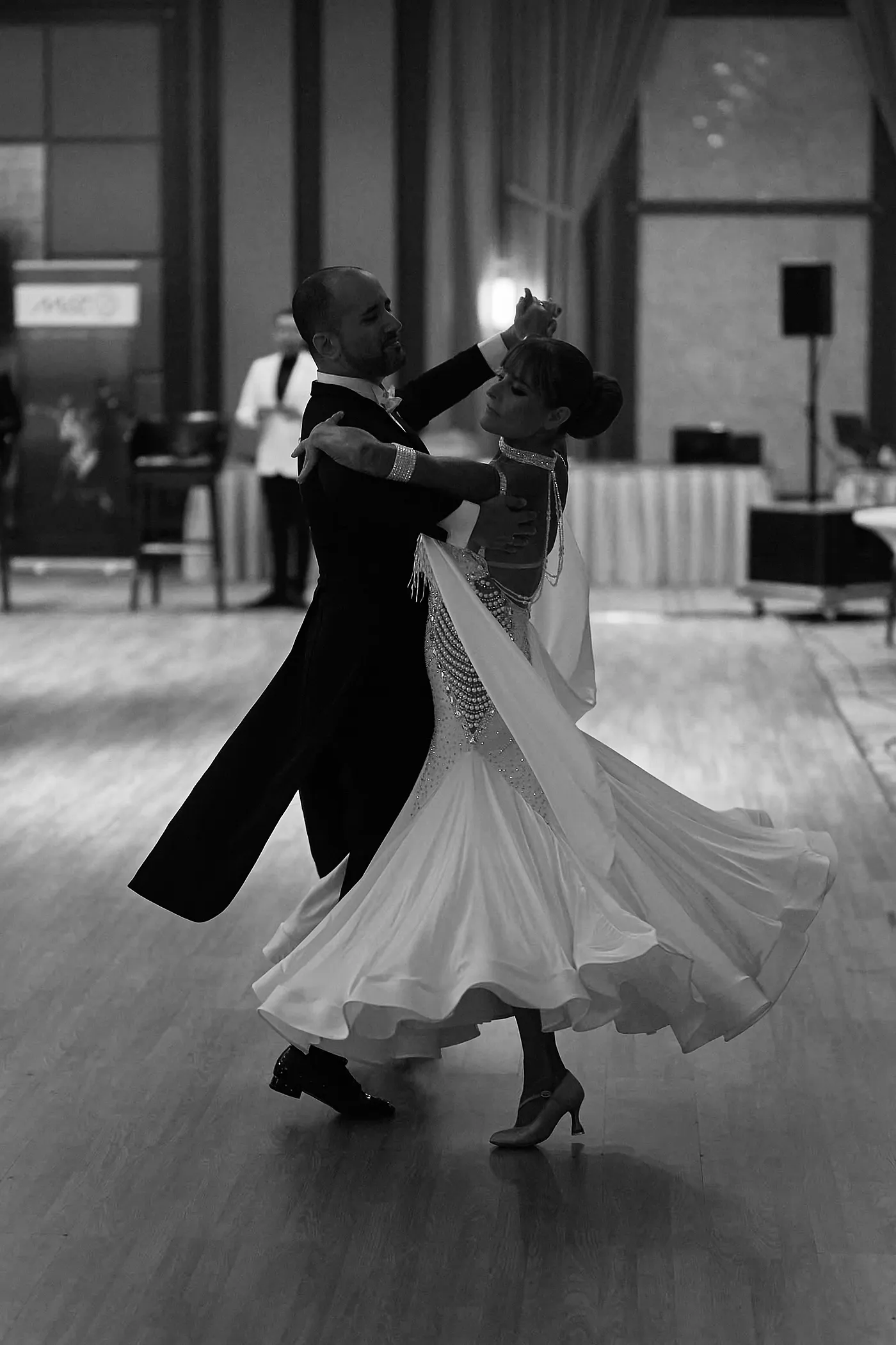
And there are plenty of those. In July 2025, Fishman stood under the lights for her first ballroom dance competition, in the PRO-AM category with her teacher, Oron Dahan. She forgot steps. Smiled. Kept dancing.
“There were 24 dances,” she says. “I didn’t get a single one right from start to finish. But that wasn’t the point.”
She showed up. Hair done. Makeup. Costumes. But mostly: pulse. That’s what she remembers. That and the photos, which made the cover of this magazine. Traces, that’s all. Like a fossil of something once alive.
And that’s how she sees her paintings too. The ones hanging in galleries now? They’re leftovers. The actual thing already happened. The creating. The now.
She doesn’t write poems to be published. Doesn’t paint for exhibitions. Doesn’t dance for prizes. She does it because she must. Because something inside pushes out, wild and imperfect.
PURE ART, she calls it. All caps. Not for drama, but for clarity.
And yes, she’ll polish it later. Present it. Package it. There’s a part of her that knows the game. The driven one. The businesswoman. But she knows who lit the fire.
In a world obsessed with algorithms and neat endings, Fishman chooses friction. That’s not a metaphor. Her art literally doesn’t blend. Tar and silicone and enamel and oil—they fight. They crack. They speak in the language of contradiction.
And that, she says, is what separates us from AI.
“We’ll all use AI. We already are. But AI wants the right answer. The moral answer. The clean and optimized answer. Humans—we’re messy. We contradict ourselves. We carry impulse and wounds and desire. I don’t hide that. I bring it forward.”
It’s not about beauty. It’s about presence.
“Perfection doesn’t interest me. I seek truth. And the truth lives in the flaw.”
In July, a week after she stepped off the dance floor in Budapest, she launched her second book, OVERDOSE, in Tel Aviv. A head-on collision of poetry and visual art. Thirty-five poems. Thirty-five raw, mixed-media paintings.
That same week, works from her first book, INNER SELF PORTRAIT, were shipped to Japan. The GR Kitano Art Gallery in Kobe signed her for a year-long solo display. Some of those works also made their way to the Israeli Pavilion at the Osaka Expo. She’ll return to Japan on October 5th for the formal launch of both books in Japanese, translated by Tommy Tanaka.
Then, on October 11th, she’ll head to Florence. Her solo exhibition will open as part of the Florence Biennale and Italy’s National Contemporary Art Week. OVERDOSE—the exhibition—will showcase selected works from the book. It will also mark the Italian launch of her books, translated by Alon Altaras and published by Ronzani Editore, with nationwide distribution beginning in November.
The Portuguese editions, translated by Mânia Henis, are also ready. Once a publisher is secured in Brazil, she’ll bring the same spirit there—presence, not promotion.
Because Fishman doesn’t create to explain. She creates to feel. To live through the thing. And maybe, if someone sees the painting, or reads the line, or watches the dance—they’ll feel a flicker of that too.
But that’s not the goal.
The moment is.
And that, she says, no machine can touch.
Photograph Credits: William Shelever
