
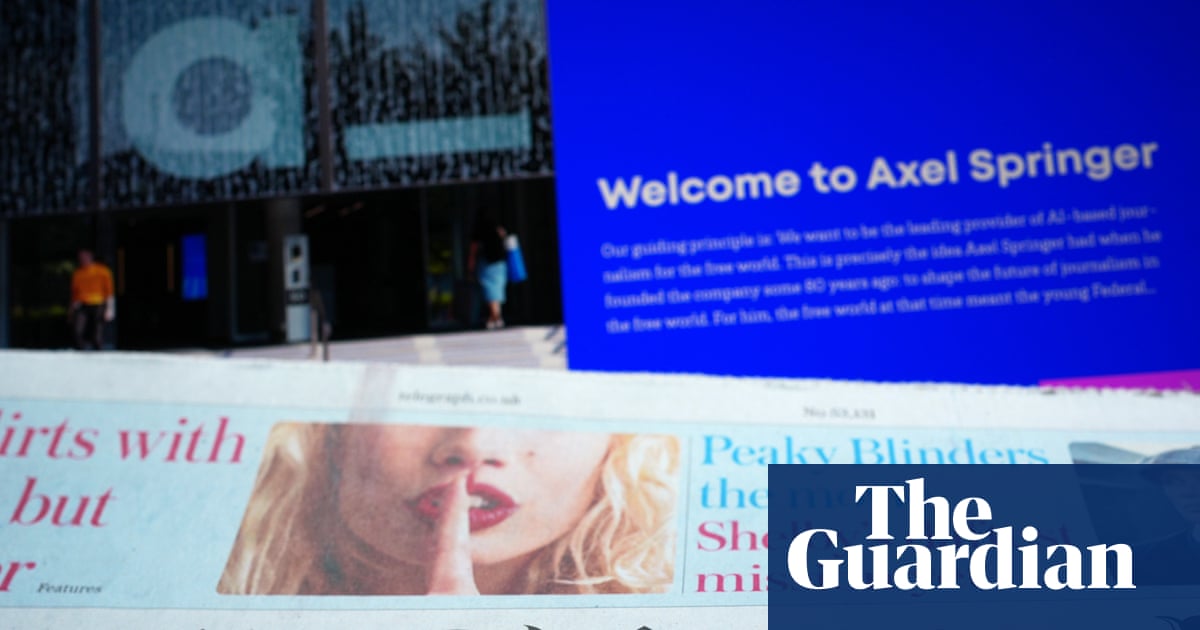
Telegraph cuts up to 100 jobs as new owner promises to turn paper into ‘AI-powered’ global business
The new owners of the Daily Telegraph have made large numbers of staff redundant, telling them the title will be transformed from a newspaper “into a global, AI-powered premium media and intelligence business”.
In an all-company briefing and email on Friday morning, staff were told the title would rely increasingly on technology, data and AI to “reinvent the reader experience”. Newsroom insiders said they expected as many as 100 people to lose their jobs.
The “next chapter” of the Telegraph will focus on new revenue streams including “video, audio, puzzles, events, B2B, licensing, commerce and new products”, the CEO, Carolin Hulshoff Pol , wrote.
It will also focus on growing its audience internationally, “particularly in foreign affairs, defence and business”, she said.
Some staff were told on Thursday they were being fired, while others received calls and emails on Friday morning. Some senior staff were said to be in tears as they told colleagues their fate.
The culture and sports departments have been particularly hard hit, according to insiders. A source from inside the Telegraph said the atmosphere in the newsroom was “like a morgue”.
The Telegraph was bought in June by the European media group Axel Springer for £575m, ending three tortuous years for the title and its staff, during which potential owners were blocked, fell through or faced fierce internal opposition.
The paper joined a stable of media brands including the German titles Bild and Die Welt, as well as the digital outlets Politico and Business Insider. Mathias Döpfner, Axel Springer’s chief executive and controlling shareholder, said he intended to invest in the Telegraph to make it the “leading centre-right media outlet in the English-speaking world”.
However, heavy job cuts have been expected at the paper amid an internal staff consultation in recent weeks into the future of the business.
Pol said that during the lengthy sale process, “the Telegraph had limited ability to invest, adapt and move at the pace the market demanded”, adding that “the media world and technology have changed at extraordinary speed”.
“Our ambition is to transform the Telegraph from a leading British newspaper into a global, AI-powered premium media and intelligence business – built on trusted journalism, direct relationships with our audiences and expertise that sets us apart.
“To deliver on this ambition, we need to change how we are organised, how decisions are made, where we focus our resources and create efficiencies. We need clearer accountability, faster decision-making and a simpler, more effective organisation.”
She said the organisation would “use AI confidently while enhancing what technology cannot replace: judgment, originality, courage and trust”.
A spokesperson for the Telegraph Media Group reiterated Pol’s remarks, adding: “Today marks the start of a formal consultation process. These are difficult choices that we believe are necessary for the future of the business.”
TMG would not confirm the number of redundancies.
Originally published by theguardian.com. Syndicated material does not necessarily reflect the views of Grazia British.
More Culture
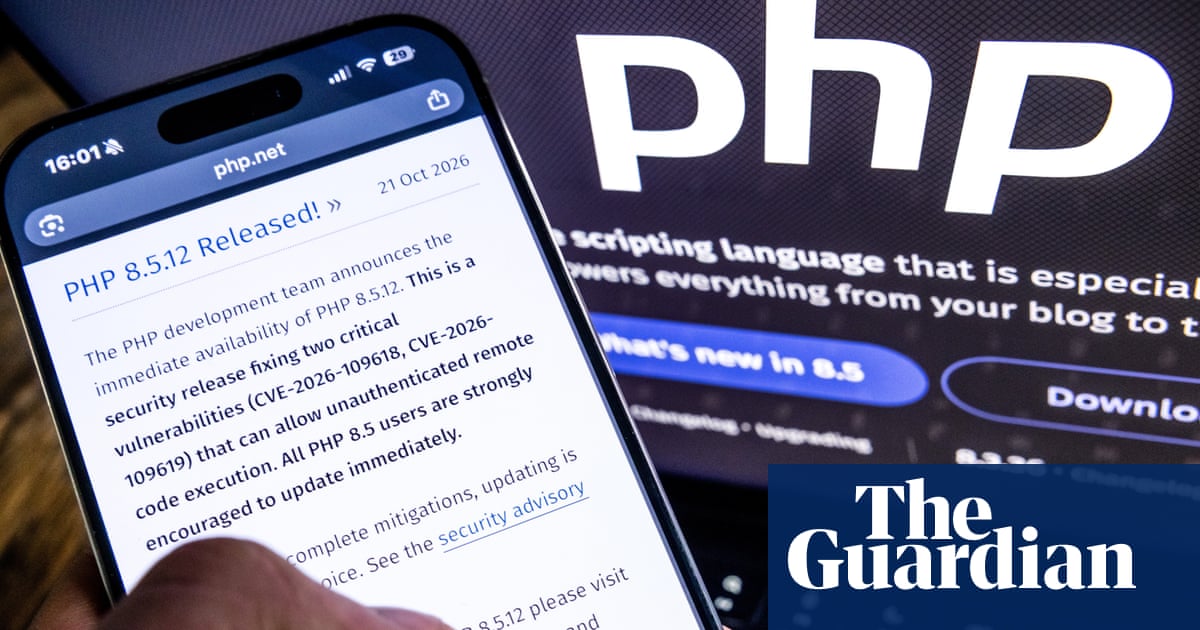
Flaw in PHP computer language leads to shutdown of websites around world
Precautionary takedowns come as experts say vulnerability in PHP, which is used by 70% of sites, could be exploited
European air fares could rise by as much as 20% in 2027, Ryanair boss predicts
Conflict in Middle East is pushing jet fuel costs higher and many carriers are not hedged against such increases, Michael O’Leary says
Electricity costs put UK steelmakers in worst position in three years against EU rivals
Premium paid over French counterparts has risen to almost £30 a megawatt hour, analysis by lobby group finds

Why Britain should reject the lure of cheap – and scary – Chinese AI
In the west the technology comes with at least some effort to provide security and a benign intent – not so from China