

What Is Skull Hill? NASA's Mars Rover Spots Mystery Skull-Shape Feature on Red Planet While Scientists Believe Doesn't Belong There
NASA's Mars rover has come across a bizarre and intriguing feature — a mysterious skull-like formation perched on a slope that space experts and enthusiasts claim doesn't belong to that place. The mysterious looking rock that is being dubbed "Skull Hill," was first spotted on April 11 by the Perseverance rover as it was driving down a ridge known as Witch Hazel Hill.
The hill lies within the Jezero Crater, a vast 28-mile-wide depression that researchers believe was once filled with water and was possibly a huge lake. However, what makes the rock so fascinating and intriguing to scientists is its stark contrast to the rest of the landscape around it.
Mysterious Feature Spotted on Red Planet
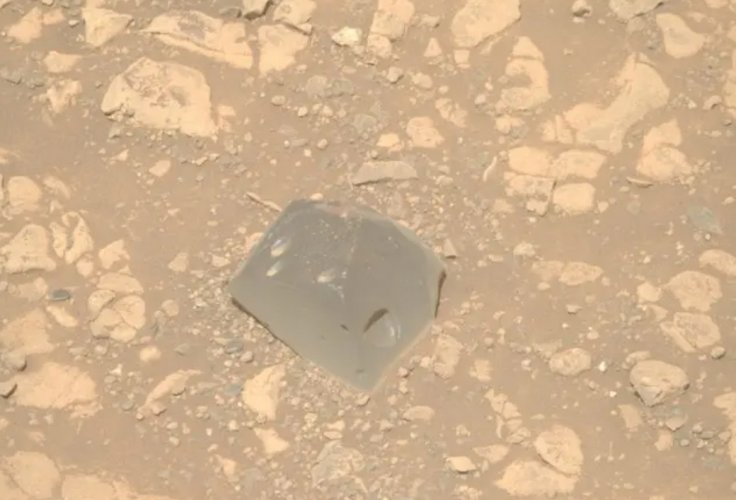
Skull Hill is completely different from the other things that has been spotted on the Red Planet so far, which has raised curiosity among both scientists and star gazers. Unlike the pale, dusty surroundings, Skull Hill can be differentiated because of its dark color, sharp edges, and surface dotted with small pits.
The completely different features make it appear as if it came from another location, explained Margaret Deahn, a NASA collaborator and Ph.D. student at Purdue University. That could very well be the case, Deahn says.
The rover has come across several interesting, intriguing, and mysterious rocks that likely didn't form where they were found. These are known as "floats"—rocks that may have originated elsewhere and were later moved to their present spot, Deahn wrote in a blog post about the discovery.
Mystery Continues

The research team believes that Skull Hill may have originated somewhere else and was then displaced from its original site by erosion, an ancient collision, or another forceful natural event.
Initially, its appearance even suggested it could be a meteorite.
However, after analyzing the chemical makeup of a nearby rock with Perseverance's laser-equipped SuperCam, NASA scientists debunked that theory, as the rock lacked the high levels of iron and nickel usually found in meteorites.
Another theory suggests that Skull Hill could be an igneous rock, created when molten lava or magma solidified, which means the formation of Skull Rock could date back to millions or even billions of years. However, the researchers still aren't sure about its origin and how it came there.
"Luckily for us, the rover has instruments that can measure the chemical composition of rocks on Mars," Deahn said, indicating more tests that are likely to take place in the coming days to determine the rock's origins.
Originally published by ibtimes.sg. Syndicated material does not necessarily reflect the views of Grazia British.
More Fashion

LEESA ROWLAND From Hollywood to the Unknown: The Producer, Writer, Actress and Model Creating Her Own Next Chapter
Leesa Rowland has never been defined by just one role. Actress. Model. Writer. Producer. Author. Creative visionary. Philanthropist. Each title represents a different part of a career…

The Rise of Trevor Dutch: Strength, Style and Substance
From New York City to Europe’s Fashion Capitals, Trevor Dutch Is Bringing Strength, Sophistication, and Individuality to Every Frame In a city that never slows down, Trevor Dutch has…

Commentary: This year's Met Gala proved one thing: The real devil who wears Prada is Jeff Bezos
Apparently not content with bankrupting Sears, Toys R Us, Radio Shack and countless other businesses; buying and then maiming the Washington Post; and leading the Tech Bro right turn to…

Bald eagle 'massaging' its mate? AI deepfakes collide with the laws of the wild
Shadow gingerly places one taloned foot, then the other, on Jackie as she hunkers down on the nest. With Big Bear Lake glittering in the distance, he raises each foot in a kneading motion…