
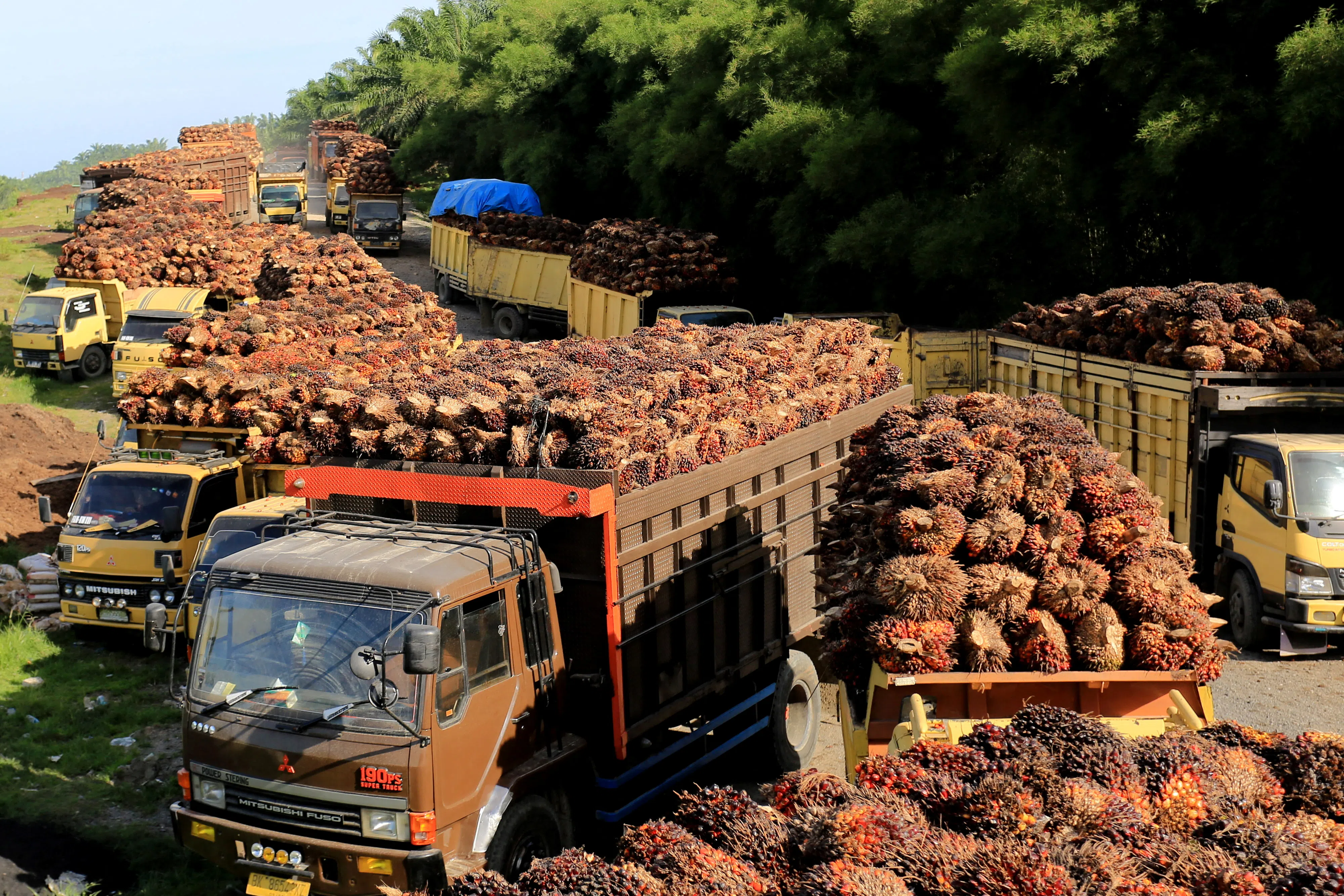
World’s most popular vegetable oil is no longer the cheapest
Palm oil has lost its position as the world’s cheapest edible oil, thanks to shrinking output in the biggest growers and plentiful supply of the main alternative.
The tropical oil, which traded at a discount of US$782 a ton to soyoil as recently as November 2022, is currently commanding a rare premium. In contrast to soy, sunflower and rapeseed crops, palm is harvested year-round and needs less land to produce, meaning it’s usually cheaper.
Indonesian and Malaysian palm plantations, which account for 85 per cent of global supply, are facing challenges. Smallholders are reluctant to cut ageing trees and replant as it can take four to five years for new trees to bear fruit, compared with around six months for soybeans.
Palm prices have risen 10 per cent this year, while soybean oil is down about 9 per cent on better crop prospects in countries such as the US. Still, a structural shift is unlikely in the near- to medium-term because of palm’s unique qualities that make it attractive to many sectors.
Key users such as cookie makers, restaurants and hotels in India are unlikely to look for substitutes immediately, even as some household consumption of palm oil may shift to its rivals, said Aashish Acharya, a vice president with Patanjali Foods, one of the nation’s top edible oil importers. Indonesia’s biodiesel demand will also keep palm prices supported, he said.
The ubiquitous commodity is found in everything from pizza and ice cream to shampoo and lipstick. Animal feed producers also use it as an ingredient, while some countries process palm into biofuels.
The palm oil market may adjust once seasonal supply and demand factors kick in. Palm consumption typically drops in December and January in India, the biggest importer, as it solidifies at lower temperatures, prompting consumers to seek alternatives.
“Once festival demand in India fades and palm’s high production season in South-east Asia gathers momentum, the premium could evaporate,” said Gnanasekar Thiagarajan, head of trading and hedging strategies at Kaleesuwari Intercontinental. “If that doesn’t happen, palm would lose its huge market share to soy and sunflower oils in India.” BLOOMBERG
Originally published by businesstimes.com.sg. Syndicated material does not necessarily reflect the views of Grazia British.
More Fashion

LEESA ROWLAND From Hollywood to the Unknown: The Producer, Writer, Actress and Model Creating Her Own Next Chapter
Leesa Rowland has never been defined by just one role. Actress. Model. Writer. Producer. Author. Creative visionary. Philanthropist. Each title represents a different part of a career…

The Rise of Trevor Dutch: Strength, Style and Substance
From New York City to Europe’s Fashion Capitals, Trevor Dutch Is Bringing Strength, Sophistication, and Individuality to Every Frame In a city that never slows down, Trevor Dutch has…

Commentary: This year's Met Gala proved one thing: The real devil who wears Prada is Jeff Bezos
Apparently not content with bankrupting Sears, Toys R Us, Radio Shack and countless other businesses; buying and then maiming the Washington Post; and leading the Tech Bro right turn to…

Bald eagle 'massaging' its mate? AI deepfakes collide with the laws of the wild
Shadow gingerly places one taloned foot, then the other, on Jackie as she hunkers down on the nest. With Big Bear Lake glittering in the distance, he raises each foot in a kneading motion…