


YouTube failed as a dating site. This one change altered its fortunes forever
In YouTube’s early days, the odds seemed good that the platform would be destroyed—not by a competitor, but by its own popularity.
How could any young video startup ever cover the cost of streaming so much content across the internet? Or avoid the fate of Napster, another media-sharing startup of the era that was sued out of business for rampant copyright infringement? Even being acquired by Google in 2006 posed a risk: YouTube could have been mismanaged into irrelevance, as often happens after tech giants acquire shiny new toys.
But over its first 20 years, YouTube didn’t just survive—it revolutionized media, redefining what TV could be. By letting anyone upload video for free, it empowered a new generation of creators to cater to every imaginable audience and attract fan bases in the millions. It taught marketers to appreciate the value of reaching these viewers, and it used technology to give rights holders control over their content. The platform conquered PCs and then smartphones and was eventually available on nearly every new TV set.
Today, with 2 billion logged-in users a month, YouTube is watched more than any traditional TV outlet. According to Nielsen, the company has grown its total viewers by nearly 50% since December 2023, bounding past Paramount, NBCUniversal, and Disney to take the top spot among media companies. It’s now the U.S.’s most-watched video provider, not just among streamers but cable and broadcast TV channels, too. Its 2024 ad revenue was $36.15 billion, a figure that doesn’t include subscription revenue from its YouTube Premium and YouTube TV businesses.
YouTube’s story is still unfolding, and new twists—such as the arrival of generative AI—have yet to play out. But to understand where business, tech, and culture are heading, there may be no smarter place to look than YouTube’s past. We talked to dozens of employees, creators, and other eyewitnesses to tell the story of where YouTube has been, and where it’s going. (Their comments have been edited for length and clarity.)
In this article—the first chapter of an oral history Fast Company will be publishing in five parts—some of those interview subjects recall key moments in YouTube’s earliest days, from tiny startup to category-defining phenomenon. Its story, like so many others, began at PayPal. The payments startup’s early employees, who’d be known as the “PayPal mafia,” began to infiltrate the tech industry and start new companies, particularly after PayPal went public in 2002 and was acquired by eBay soon after.
Steve Chen, cofounder—with Chad Hurley and Jawed Karim—of YouTube: The three of us and most of the early YouTube hires, that original core team, all came from PayPal. We had had at least three or four years of experience working together. Chad, I think, I met on the first day that I landed in Silicon Valley.
Roelof Botha, former PayPal CFO and partner at Sequoia Capital, YouTube’s first investor: PayPal was a bit of a cauldron of an experience. We had a very small team in the office, next to the Palo Alto dump. I remember being there on weekends and seeing Steve standing outside smoking, because he was still a smoker back then. I worked with Jawed on a project in 2000.
While Chen, Hurley, and Karim hatched plans for a video-sharing startup in early 2005, an entire field of such services was sprouting up, including Google Video, Revver, Veoh, and Vimeo. All leveraged Macromedia’s Flash software, which shipped with most web browsers and had simplified the formerly gnarly process of streaming video over the internet. In Chen, Hurley, and Karim’s initial conception, their service would focus on letting people upload videos of themselves to find dates.
Casey Neistat, filmmaker whose 2003 video “iPod’s Dirty Secret” had been a rare pre-YouTube viral phenomenon: When I first started making movies in the very early 2000s with my older brother, there was no appropriate venue for the kind of videos that we made.
Felicia Day, actress, singer, writer, and YouTuber: It’s so strange to think that people didn’t watch videos online. I remember seeing the lightsaber kid, and that’s pretty much it.
Mike Downey, senior product manager, Flash: In the early days of Flash, the player was bundled with Netscape Navigator. Microsoft then knew they needed to bundle Flash with Internet Explorer. Because IE couldn’t succeed if it didn’t have everything Netscape had.
John Harding, Google software engineer (2005-2007); YouTube engineering manager, director, VP (2007-present): Before [Flash], you needed either desktop software or complicated browser plug-ins, and it didn’t work for half of the people half of the time.
Downey: The alternative was RealPlayer or Windows Media Player, or a couple of others. You were taken out of the web and into the RealPlayer experience or the Windows Media Player experience, and it wasn’t a seamless thing.
Billy Biggs, Google/YouTube software engineer (2006-present): Flash video is what made this all possible. Suddenly the internet had video as a thing.
Harding: We did some pretty cool things with Google Video that we hadn’t seen other people do. Like, we let you jump all the way to the end or any point within a video, which was something that Flash didn’t actually support.
Dmitry Shapiro, founder and CEO, Veoh: I started pitching Veoh to investors in mid-January of 2005. And the first person that I pitched [to] was a guy named Roelof Botha at Sequoia. I’m not suggesting that Roelof took my idea and gave it to Chad and Steve. But the history shows that we were there at a similar time.
Chen: We started development in February of 2005. Even during that phase, we were not sure whether Macromedia Flash would be sufficient.
Botha: I was at a gathering of former PayPal people in San Francisco, and somebody mentioned, “Hey, you should check out what Jawed and Chad and Steve are working on.” And so I went home and typed in the URL and discovered YouTube. They were still in Chad’s garage in Menlo Park at the time, the three of them. I reached out, and we started to chat about the business.
Chen: When we originally released it, we thought that it was going to be a dating site. After a week passed by and zero videos were uploaded, we thought, Okay, before we give up, why don’t we just open it all up and let the users decide what they want to upload? It wasn’t that we saw a spike in traffic right away, but we started seeing sprinkles of content come in.
“Me at the Zoo”
April 2005
In the first-ever YouTube video, the platform’s cofounder Jawed Karim informs us that elephants have “really, really, really long trunks, and that’s cool.” It’s a start.
Shapiro: Veoh believed that it was going to be extraordinarily expensive to host and stream video from our servers, and therefore we needed to build a peer-to-peer network to dissipate the costs. Chad and Steve didn’t try to solve the problem. They got to market fast and became a hit.
As the service gained traction with creators, there was more stuff to watch. As more people watched, there was more incentive for creators to post. This virtuous circle propelled growth.
Chris Maxcy, YouTube VP of business development (2005-2013): When I started, my hypothesis was, this is a young company that’s going to have to work with the AOLs of the world, the Yahoos of the world, because it’s going to be all about getting traffic. That premise quickly changed.
“Evolution of Dance”
April 2006
In under eight minutes, Judson Laipply prances his way through decades of American pop music, from Chubby Checker to Eminem. Winningly energetic and goofy, this was the most-watched YouTube video of all time as late as October 2009.
Chen: We started seeing a spike in activity through the social networking sites out there. At the time, MySpace was the biggest one, and they allowed you to take that same embed code that you see on YouTube today and embed it into your MySpace updates. Overnight, that video could get hundreds of thousands of other people putting it into their own profiles and sharing it with their entire network.
Rhett McLaughlin, cocreator and cohost (with Link Neal) of Good Mythical Morning: People started asking us, “Why don’t you have a YouTube channel?” And we said, “We don’t have one because YouTube channels are for people who don’t have websites.” We didn’t understand anything about what was about to unfold.
Ian Hecox, cocreator (with his high school friend Anthony Padilla) of the comedy duo Smosh, which got its start lip-synching TV theme songs: We started making these videos out of sheer boredom. And then, when we found out about YouTube, one of our main drivers [to post videos there] was just free hosting. Because every time somebody watched a video through our website or on MySpace, we would have to pay for that bandwidth.
Justine “iJustine” Ezarik, YouTuber, whose first YouTube video was test footage showing her microwaving and eating oatmeal: I was posting videos everywhere—MySpace, Yahoo, Revver. There were just a bunch of places that were hosting videos. I started posting to YouTube mostly just to store the videos.
Botha: Part of what YouTube did was they had the comment section. They were able to cultivate a community.
Anthony Padilla, cofounder, Smosh: You could see the audience feedback immediately. You could refresh the page and see the views go up immediately. Seeing those numbers increase when we made something better helped us refine what we made so we could continue doing what we liked.
Ezarik: I was like, “Oh, this is so cool. There’s a whole community of people here.” So I started posting for [the YouTube] audience, and then finding other people who were making videos. And that’s where it got interesting. There weren’t many people doing it.
Hecox: What initially attracted people to our content was the accessibility of it and the relatability of it. Any kid that ever had a camera could relate to what we were doing. They’re like, “I also have access to a camera and I make silly skits with my friends.”
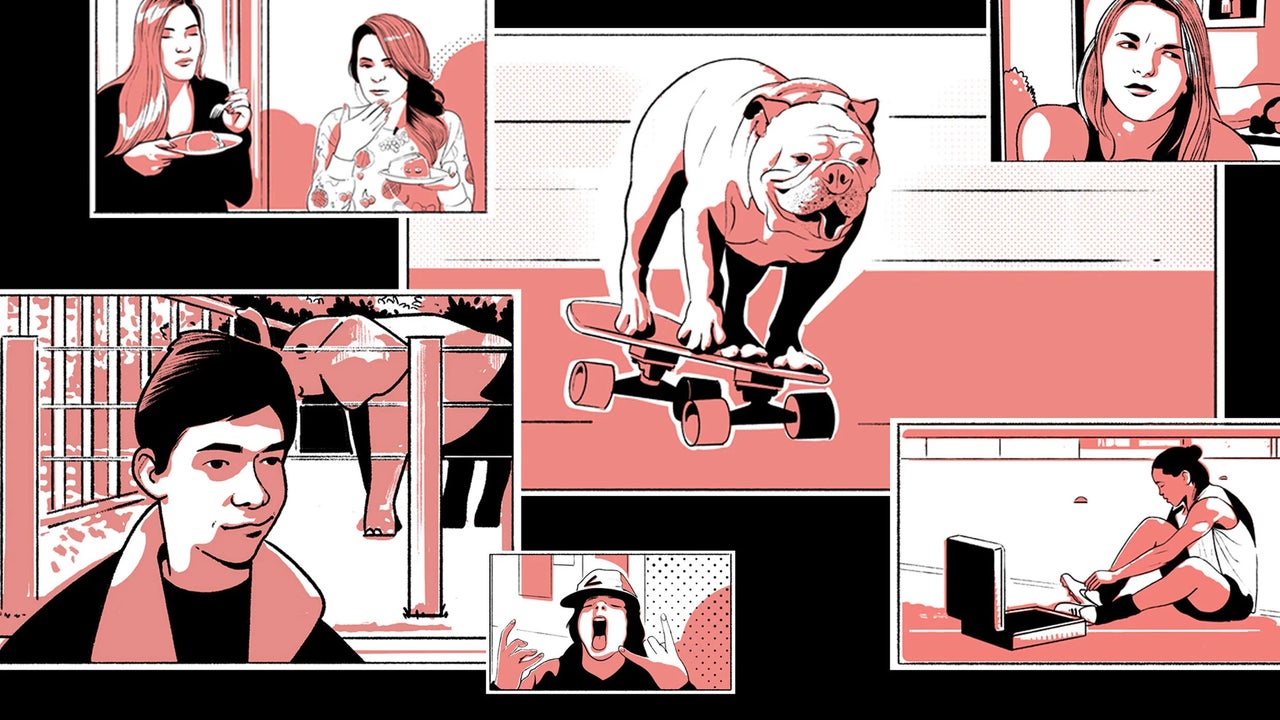
Mia Quagliarello, YouTube senior product marketing manager, content and community (2006-2011): “Skateboarding dogs” was the [term people used to] be derogatory about the kind of content that was there. There was a lot more content than skateboarding dogs.
“Lonelygirl15”
June 2006
Bree, a 16-year-old who broadcasts from her bedroom, becomes YouTube’s most popular creator. It turns out she’s fictional, and her videos develop into a serialized science-fiction story.
Chen: A video of [soccer star] Ronaldinho juggling a ball off a goalpost was one of the first videos in 2005 that really took off.
Botha: We reached out to the person who uploaded it. It turned out to be one of the marketing people at Nike. Chad, Steve, and I flew up to Oregon to meet them. To me, it was a very interesting window into how brands would use this platform, and it wouldn’t just be America’s Funniest Home Videos done on the internet.
In August 2006, YouTube hit the Comscore Media Metrix top-50 ranking of the largest web properties. Still wincing from their encounters with Napster and other file-sharing services widely used for piracy, media companies eyed the new phenom warily, though some chose to engage with it. Unauthorized sharing of copyrighted content abounded.
Jack Flanagan, EVP, Comscore (2002-2010): When those reports came out, people would jump into them immediately just to see how they ranked. The fact that it was the first time that YouTube broke into the top 50 was just a huge accomplishment.
Michael Fricklas, general counsel, Viacom (2000-2017): It had started to become pretty well known in the movie and television industry that there was this new pirate site.
Maxcy: I remember talking with a very, very, very large studio down in L.A. This one particular individual said, “We love YouTube. We think this is really going to help our business, particularly from a promotional standpoint. But when I leave this room, I’m going to have to say, loudly in the hall, that we’re going to reserve the right to sue you.”
Chen: Even Lady Gaga playing in the background is technically copyrighted content if it’s more than a few seconds. We were very aware of the Napster issues.
Zahavah Levine, YouTube general counsel, chief counsel (2006-2011): Many users were uploading videos of themselves, either alone or with friends, singing songs or dancing to music playing in the background, or maybe of their kid dancing in their living room to music playing in their house.
Hecox: One of our first videos, the Pokémon theme song music video, quickly became the most viewed video on YouTube. It stayed there for about a year and a half before it was removed for copyright infringement. That was a catalyst for us to push ourselves into original content that didn’t have copyrighted content, because we didn’t want to see our videos removed.
Maxcy: Warner Music Group was our first label partner. That really helped us build credibility with some of the other larger labels.
Levine: I still remember sending an email to our main contact at WMG proposing that instead of removing all the user-uploaded videos identified as containing WMG recordings, we instead monetize them with ads and share the money with WMG. To our great surprise and joy, Warner agreed.
Lyor Cohen, Warner Music Group CEO of recorded music (2004-2012); YouTube and Google global head of music (2016-present): [WMG chairman and CEO Edgar Bronfman Jr.] had a lot to do with it. He was quite receptive to experimenting and pushing the boundaries. We saw an opportunity to push the accelerator rather than pump the brakes.
Levine: Until that moment, music companies had always negotiated and approved the right to use a piece of music in a video on a song-by-song and a use-by-use basis. This was the first time ever that a music company granted blanket “sync rights” for an entire catalog of compositions to be used in unknown video content. A historic first—and a huge milestone.
Additional reporting by María José Gutiérrez Chávez, Yasmin Gagne, and Steven Melendez
[ad_2]
Source link
