
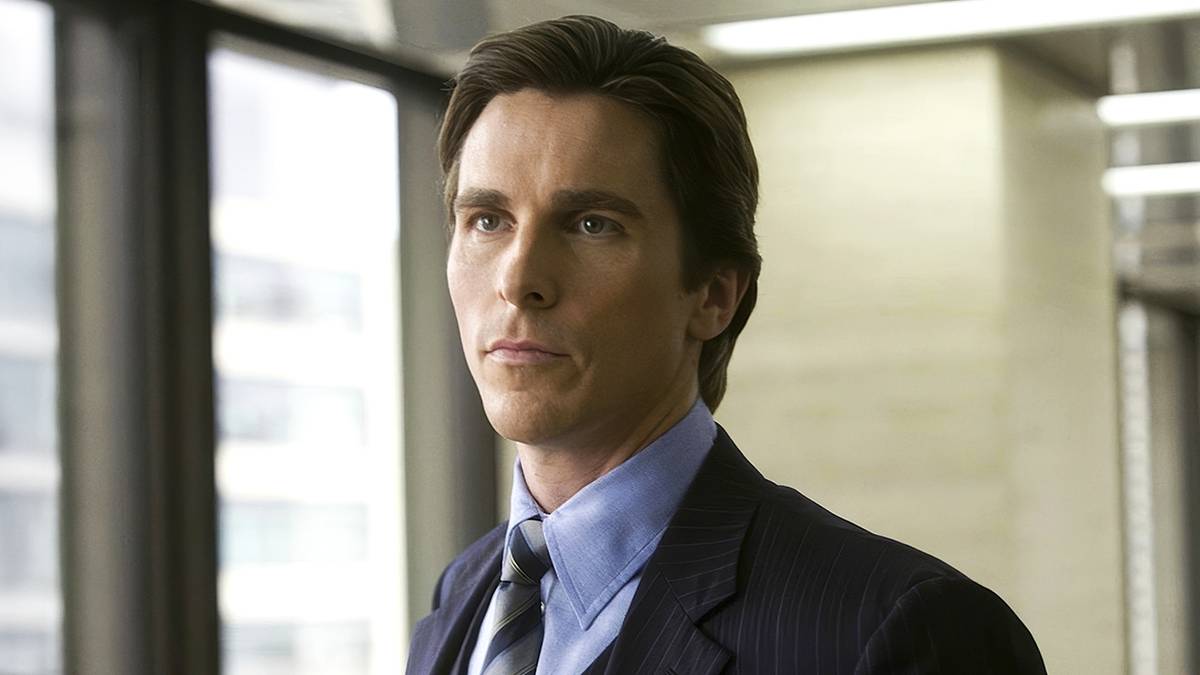
17 Years Later, This Is Still The Greatest Scene in Superhero Movie History
The most genre-defining superhero movies in Hollywood history are the ones that properly translate the source material from the comic book panels to the big screen. Iconic moments that capture the essence of comics range from Superman’s first flight in Superman: The Movie to the assembling of Marvel superheroes against the forces of Thanos in Avengers: Endgame. But if there’s one particular movie that took a comic book and elevated it into something greater than escapist entertainment, Christopher Nolan’s The Dark Knight achieved just that.
As the second installment of Nolan’s trilogy, which began with 2005’s Batman Begins, the 2008 blockbuster has endured for fifteen years due to its gritty crime thriller tone, spectacular action sequences, and a chilling Oscar-winning performance by the late Heath Ledger as the Joker. What could have been just another superhero movie sequel turned out to be one of the most groundbreaking pieces of cinema in the 2000s, as well as the first Batman installment to cross the one billion mark worldwide. Within the spectacle of Batman’s heroism and the Joker’s path of pure anarchy, however, their face-to-face encounter in a police interrogation room is by far the greatest scene in superhero movie history.
What Is 'The Dark Knight' About?
Set shortly after Bruce Wayne/Batman (Christian Bale) stopped the League of Shadows from vaporizing the water supply of Gotham City, crime continues to plague the town despite his best efforts. Now, the Gotham City district attorney Harvey Dent (Aaron Eckhart) emerges as Gotham’s white knight in a crusade to bring down organized crime bosses, including Salvatore Maroni (Eric Roberts), causing Bruce to consider stepping away from his one-man crusade to pursue a new life with Rachel Dawes (Maggie Gyllenhaal). Meanwhile, the Joker (Ledger) gets involved with the gangs in an attempt to take Batman and Dent out of the picture.
Though Batman and Joker have been sworn enemies since the early days of the Bob Kane-era DC Comics, their dynamic in The Dark Knight is worlds away from the Michael Keaton and Jack Nicholson interpretations from Tim Burton’s Batman in 1989. The latter picture took the creative liberty of making the Clown Prince of Crime into the murderer of Bruce Wayne’s parents and creates a karmic twist with Batman dumping his tormentor into a chemical bath, which results in the Joker’s creation. Nolan takes a different path by making the Joker less of a public showman than Nicholson’s take, and only has one primary goal: expose the breakdown of society, with Batman being targeted as the cause of increased violence in Gotham rather than being its protector. This psychological dance between good and evil is put on full display in a direct moment of the supervillain’s control over his nemesis in the interrogation room, sans CGI or wonderful gadgets.
Batman Resorts to True Desperation Under the Joker’s Control
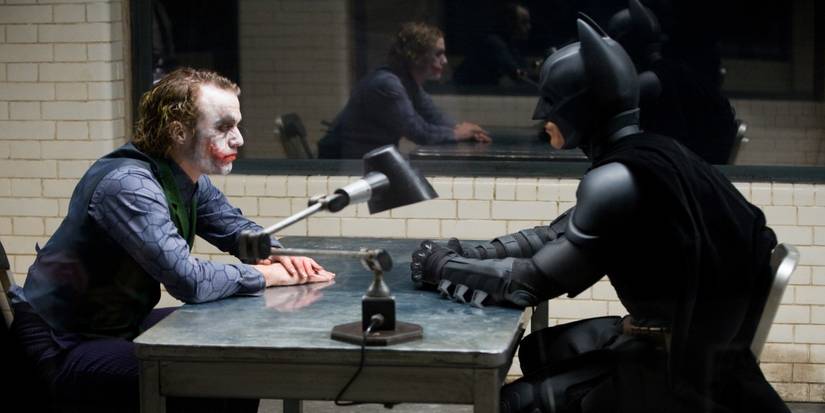
Throughout The Dark Knight, Batman struggles to grasp what the Joker really wants out of all the chaos he creates. After tricking the Joker into arrest following his pursuit of Dent in a police convoy, Batman confronts him at Gotham P.D. for answers to his motives and eventually the whereabouts of Rachel and the district attorney held hostage in two undisclosed bomb-ridden buildings. Before Batman can get the truth out of him, however, the Joker exposes his worldview of the absurd and the false sense of morality. For a vigilante who weaponizes fear, no amount of punishing physicality from Batman can make the Joker break, which proves the sadist’s very point that the man who refuses to kill is willing to throw his moral code away when pushed past his limit.
The genius of Ledger’s performance is more than his nuances and unpredictable, violent actions. His version of the Joker is constantly one step ahead of Batman until the very end. The interrogation room scene displays how he can turn the hero’s victorious moment quickly into a false sense of security. Bale is equally compelling here because everything that shaped Bruce Wayne into the Caped Crusader falls short. This is the first time in a Batman film that we see the iconic superhero resort to desperation and the true fear of losing someone he loves, unlike previous films, where saving the day is to be expected.
What Nolan proved in just one five-minute sequence of two men having a hard conversation is that the greatest action scene in any superhero movie is not a CGI-ridden spectacle but instead human tension. Neither Batman nor the Joker are superpowered beings, which is one of the reasons why they have resonated with the public for decades. Their interrogation room encounter forces the audience to not only re-examine the justifications for Bruce Wayne’s heroics but also to empathize with the Joker’s cold truth about social disorder in a morally grey world.
The Dark Knight is streaming on Tubi in the US.
Release Date
July 16, 2008
Runtime
152 minutes
Producers
Benjamin Melniker, Charles Roven, Emma Thomas, Kevin De La Noy, Michael Uslan
Originally published by collider.com. Syndicated material does not necessarily reflect the views of Grazia British.
More Lifestyle

Millennium Docs Against Gravity Festival Director on How Documentary Film Helps Audiences Find ‘Sense Amid the Chaos’ of Current Events
Poland’s Millennium Docs Against Gravity, the documentary film festival that takes place simultaneously across seven Polish cities, returns for its 23rd edition from May 7 – 17 with a…

Mubi Acquires Na Hong-Jin’s Korean Thriller ‘Hope,’ Starring Michael Fassbender, Alicia Vikander and Hoyeon, For Multiple Territories Ahead of Cannes Premiere
Mubi is once again flexing it financial muscle ahead of Cannes, picking up one of the buzziest films heading to this year’s festival. The arthouse distributor and production company has…

MetFilm Sales Acquires Mongolian Documentary ‘Colors of White Rock’ Ahead of World Premiere at Tribeca (EXCLUSIVE)
London-based MetFilm Sales has acquired Mongolian filmmaker Khoroldorj Choijoovanchig’s debut feature documentary “Colors of White Rock” for worldwide sales representation. The film will…

Brit Detective Drama ‘Bergerac’ Bought for U.S. by PBS Distribution (EXCLUSIVE)
British detective drama “Bergerac” is heading to the U.S. with PBS Distribution following a deal with Banijay Rights. The acquisition comes ahead of next week’s London TV Screenings, with…