
40 Years Later, This Christmas Movie Is Still the Worst Ever
In November 1985, Santa Claus: The Movie arrived with the promise of giving Christmas movies the same mythic treatment producers Alexander and Ilya Salkind had brought toSuperman. On paper, the project made perfect sense. If anyone could elevate a beloved cultural figure into epic, modern mythology, it was the producers who’d already convinced audiences a man could fly. Directed by Jeannot Szwarc, who had directedSupergirla year earlier, it had a crew with experience bringing myths to life, and the potential to be an epic family movie.
Instead, viewers got a shrill, disjointed film that disappointed critics and audiences alike; in retrospect, more Supergirl than Superman. Santa Claus remains one of the most enduring figures in global storytelling, and his origins could make for an enchanting holiday adventure. Instead, Santa Claus: The Movie is one of the worst Christmas movies ever, a garish mess that prefers noise, color, and slapstick to whimsy or joy.
A Santa Story With No Magic
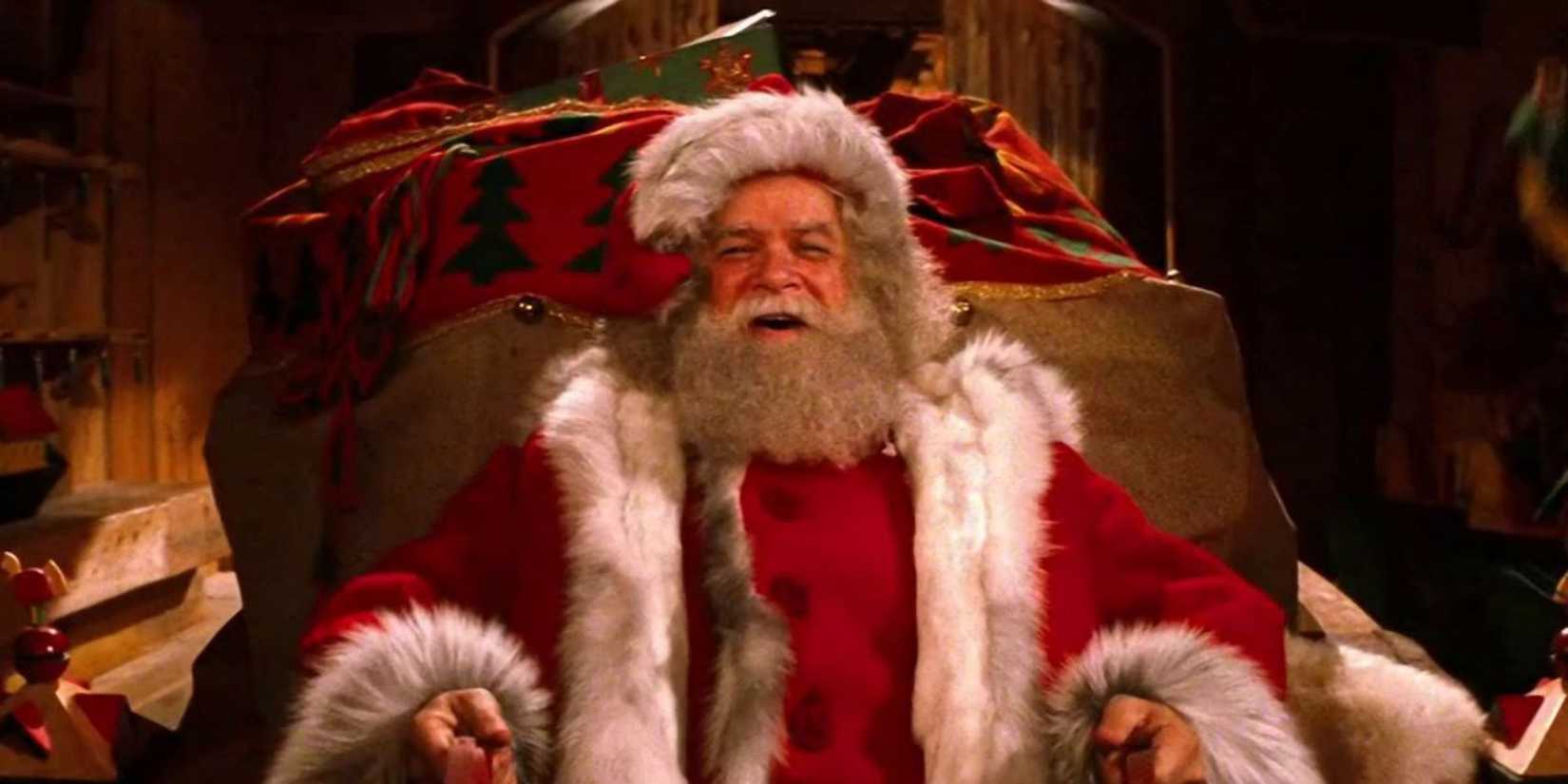
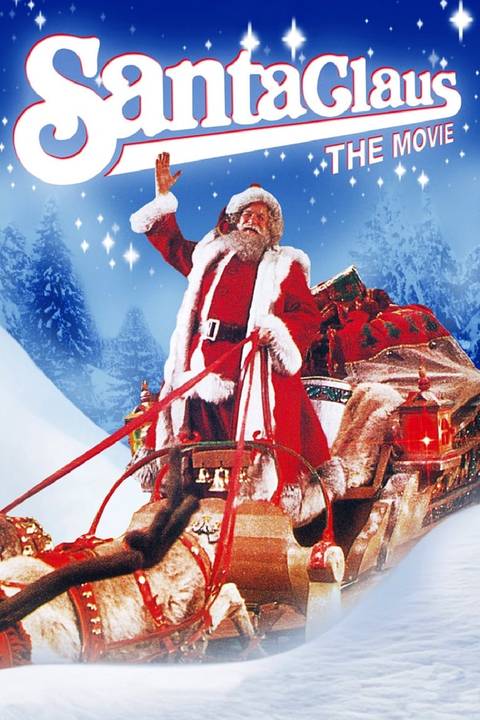
The film’s opening shows flickers of promise. David Huddleston looks every bit the iconic Claus; he’s warm, sturdy, and jolly. He’s got the beard and looks good in the red suit, and he often shows up on lists of the best movie Santas. As a humble woodcarver, he’s swept into an elven realm during a blizzard and proclaimed the chosen one who will bring joy to every child in the world.
But the script fails Huddleston, giving his Klaus no sense of inner life or tension. Huddleston’s Santa never expresses fear, hesitation, or longing, even when faced with the revelation that his life’s purpose is essentially divine. He reacts to an eternity of gift-giving with little more than a cheerful shrug. When confronted with moral choices, such as how to treat naughty kids, conflicts evaporate instantly.
Other cinematic Santas bring perspective or personality, such as Ed Asner’s curmudgeonly charm in Elf, J.K. Simmons’ tragic nobility in Klaus, or Tim Allen’s deadbeat-dad-turned-believer in The Santa Clause. David Newman’s script, however, avoids emotional stakes. Santa’s personality never goes deeper than “happy to be here,” which becomes especially glaring compared with how the Salkinds treated Superman. Christopher Reeve’s Man of Steel was heroic not because of his powers but because of his humanity. Here, Santa is treated as an icon who needs no depth. He looks perfect on a poster, but there’s nothing to sustain a two-hour movie.
All Spectacle, No Spark
For a time, the film almost survives on the strength of its production design and effects. The snowstorm that nearly consumes Claus and his wife is impressively staged, the reindeer animatronics are fun, and the North Pole workshop is lovingly built. There’s a moment where it’s easy to imagine this turning into a flawed but watchable holiday staple.
But there’s no magic, and Szwarc’s direction is dwarfed by the production. The elaborate sets and props reveal themselves as hollow and plastic the longer the film avoids building a world around them. There’s none of The Polar Express’ sense of scale or Elf’s TV-special charm. Even the chaotic Red One had a fresher take on the North Pole. Santa Claus: The Movie starts with “let’s make a big Santa movie” and stops there. Nothing is pulled from “‘Twas the Night Before Christmas,” global folklore, or even traditional holiday stories, but nothing original fills the void either.
The colorful costumes and sprawling sets hint at a musical, which might have at least lent it some energy. Instead, it tosses a few half-hearted Christmas standards onto the soundtrack and leaves the world feeling both overproduced and dramatically inert. The film sits in place for nearly an hour. And then it gets worse.
Related
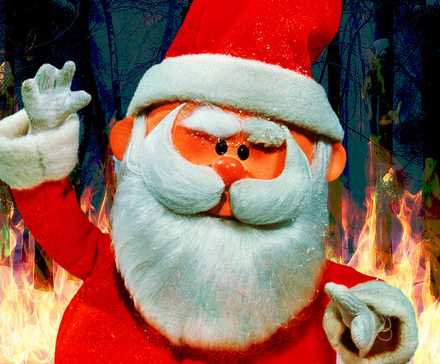
Santa Has Never Been More of a Villain Than in This Christmas Special
Ho, ho, no.
Everything Goes Off the Rails in the ‘80s
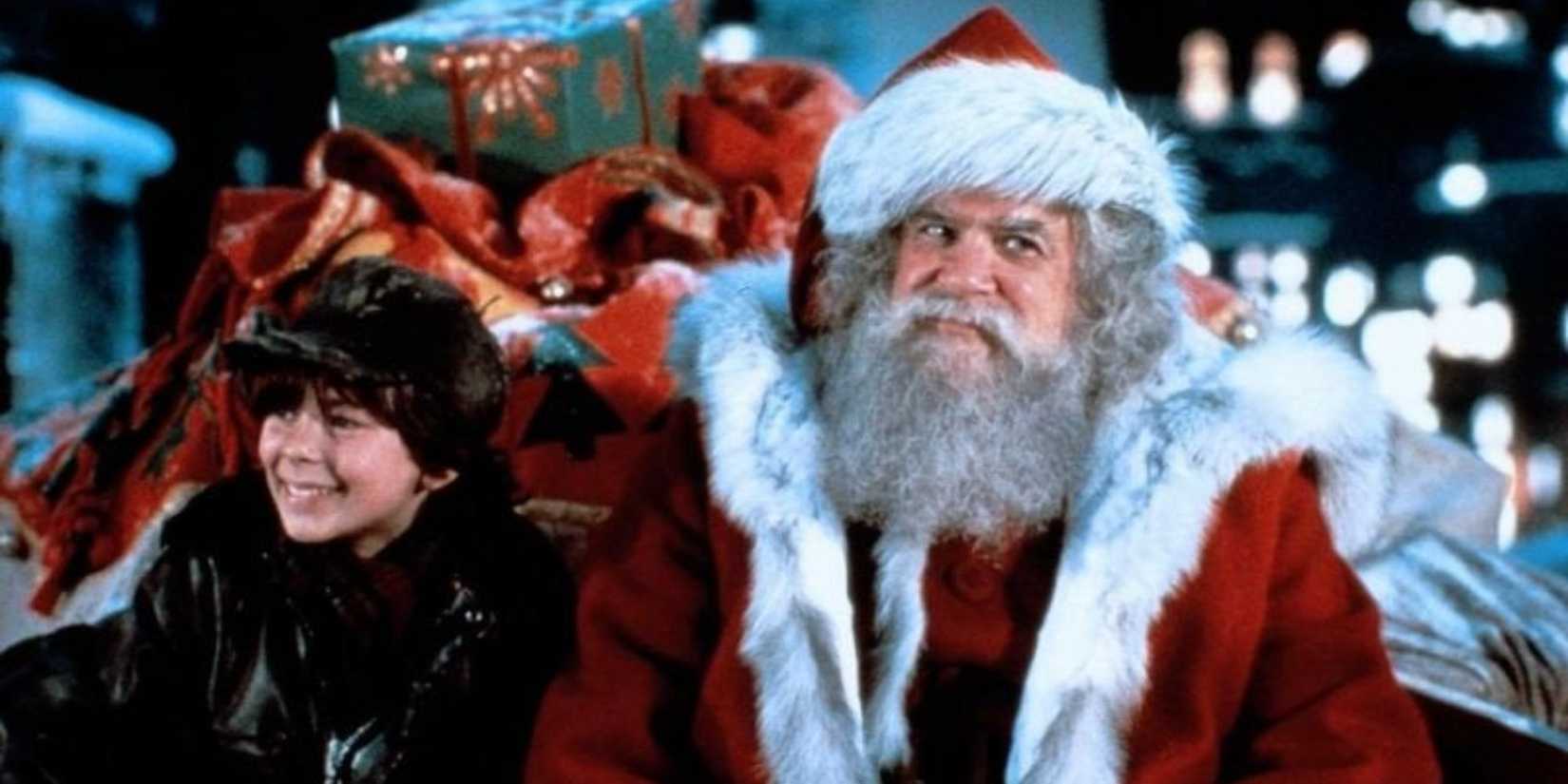
When the story jumps to the 1980s, whatever fragile charm the movie had shatters under cartoon chaos, garish design, obnoxious product placement, and a painfully grating Dudley Moore performance. Moore plays Patch, a pun-loving, absent-minded elf whose need to prove himself launches a nonsensical subplot.
Whatever tone of wonder existed evaporates. The film becomes a zany, loud comedy as Santa teams up with an orphan to stop Patch and a greedy toy executive from introducing “Christmas 2.” John Lithgow at least understands the assignment, delivering hammy energy as the villainous magnate B.Z., but even he can’t salvage the movie’s tonal whiplash. What follows is a barrage of slapstick stunts, awkward moralizing, and a finale that feels slapped together at the last minute.
The movie also becomes shamelessly commercial in a way that feels uniquely, painfully 1980s. Santa movies often try to make the character “cooler” for kids, The Santa Clause hadDavid Krumholtz's Bernard and the E.L.F. squad, Netflix twice turned Kurt Russell into a charismatic yuletide heartthrob, but Santa Claus: The Movie leans into a corporate version of Christmas that feels cheap and desperate. An orphan stares longingly into a McDonald’s window, a holiday dinner is incomplete without a can of Coke, and John Lithgow sips Pabst Blue Ribbon from a wine glass. These moments aren’t just bad product placement; they actively destroy any sense of myth. Santa suddenly feels less like a timeless figure and more like a mascot trapped in a brand catalog.
'Santa Claus: The Movie' Was a Missed Opportunity
Santa Claus: The Movie wanted to be the definitive cinematic Santa but never identified what makes the figure meaningful. Santa’s story contains themes of generosity, transformation, and enduring hope, all fertile ground for whimsy and emotion. The Salkinds recognized the potential, but never had a script willing to explore it.
Instead, the movie became a curious footnote in holiday cinema: a well-funded spectacle that mistakes volume for emotion and glitter for wonder. In the decades since, more interesting Santas and films like Klaus have shown how rich the mythology can be when treated with imagination and heart. Forty years later, Santa Claus: The Movie remains a brightly wrapped package with nothing inside, a reminder of how easily a great idea can be buried under noise, excess, and the misguided belief that Christmas magic can be manufactured on command.
Santa Claus: The Movie is currently steaming on Peacock and Prime.
Release Date
October 29, 1985
Runtime
108 minutes
Director
Jeannot Szwarc
Writers
David Newman
Producers
Ilya Salkind


- David Huddleston Santa Claus
- Burgess Meredith Ancient Elf
Originally published by collider.com. Syndicated material does not necessarily reflect the views of Grazia British.
More Lifestyle

Millennium Docs Against Gravity Festival Director on How Documentary Film Helps Audiences Find ‘Sense Amid the Chaos’ of Current Events
Poland’s Millennium Docs Against Gravity, the documentary film festival that takes place simultaneously across seven Polish cities, returns for its 23rd edition from May 7 – 17 with a…

Mubi Acquires Na Hong-Jin’s Korean Thriller ‘Hope,’ Starring Michael Fassbender, Alicia Vikander and Hoyeon, For Multiple Territories Ahead of Cannes Premiere
Mubi is once again flexing it financial muscle ahead of Cannes, picking up one of the buzziest films heading to this year’s festival. The arthouse distributor and production company has…

MetFilm Sales Acquires Mongolian Documentary ‘Colors of White Rock’ Ahead of World Premiere at Tribeca (EXCLUSIVE)
London-based MetFilm Sales has acquired Mongolian filmmaker Khoroldorj Choijoovanchig’s debut feature documentary “Colors of White Rock” for worldwide sales representation. The film will…

Brit Detective Drama ‘Bergerac’ Bought for U.S. by PBS Distribution (EXCLUSIVE)
British detective drama “Bergerac” is heading to the U.S. with PBS Distribution following a deal with Banijay Rights. The acquisition comes ahead of next week’s London TV Screenings, with…