

Isabel Coixet and Alba Rohrwacher on Toronto Title ‘Three Goodbyes’ and Portraying a Cancer-Stricken Woman ‘From a Fresh Perspective’
Early in her illustrious career, Spanish director Isabel Coixet broke out internationally with “My Life Without Me,” in which Sarah Polley plays a young mother who conceals the fact that she has terminal cancer. Therefore, not wanting to retread covered ground, the prolific Coixet initially was not keen to take on an adaptation of Michela Murgia’s Italian bestseller “Tre Ciotole” (“Three Bowls”), a semi-autobiographical book about being diagnosed with kidney cancer.
But when Italian producer Riccardo Tozzi insisted and Coixet read the collection of stories, she was persuaded to make the film because the story showed how “even in goodbye there is grace, and even in sorrow, there is space for joy.” The result is “Three Goodbyes,” which just premiered at Toronto International Film Festival and will release in Italy on Oct. 9 via Vision Distribution.
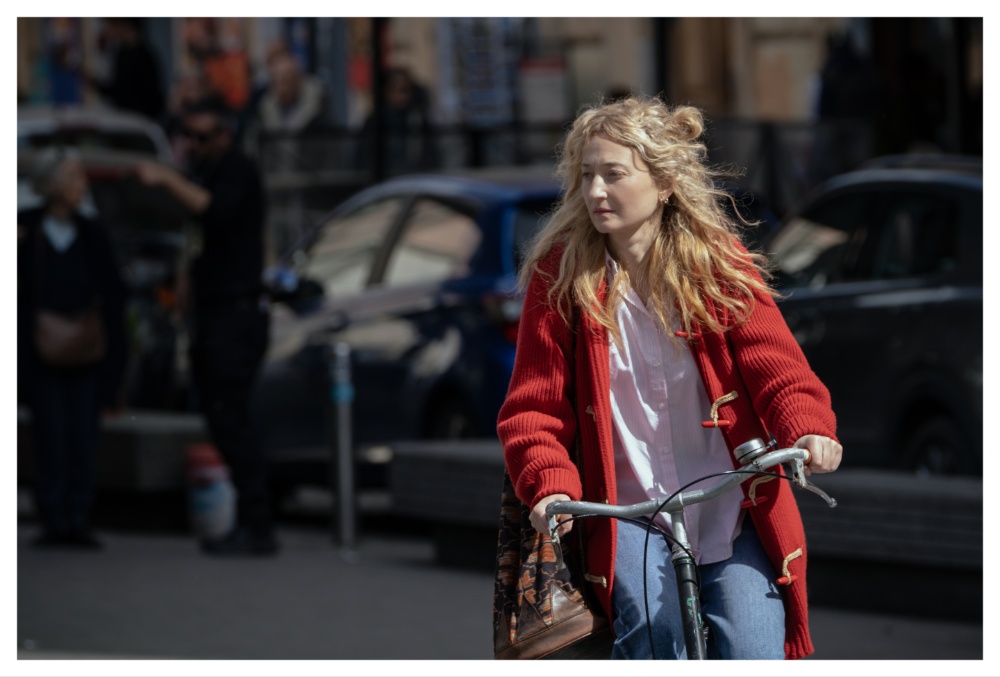
In Murgia’s “Tre Ciotole” a couple, Marta and Antonio, split up after what seems like a trivial argument. Marta, played by Alba Rohrwacher — who recently starred in Pablo Larrain’s “Maria” — reacts to the breakup by withdrawing into herself. The only symptom she cannot ignore is her sudden lack of appetite. Antonio, a rising chef, played by Elio Germano — who won top acting honors in Cannes with Daniele Luchetti’s “Our Life” — immerses himself in his work. But despite being the one who ended things with Marta, he can’t seem to forget her. Then, Marta discovers that her loss of appetite has do to with her health and, with time running out, she confronts the inevitable with vital resolve.
“The stories are very simple, but they contain something that I always wanted to say,” Coixet says. “I always wanted to do something about the human legacy — not something grandiose, just something about this sweet and human legacy that we experience with the people we love.”
Below, Coixet and Rohrwacher speak to Variety about portraying Marta and the joy of working together on “Three Goodbyes.”
Isabel, what drew you to this project? Of course, you had previously depicted a woman with cancer in “My Life Without Me.”
Coixet: Well, I have to say that after “My Life Without Me” they offered me all the films with a woman who has cancer. I think I was offered — I’m not joking — maybe 30 or 40 scripts with that same theme. And I never wanted to go there again. I thought for me, it didn’t make any sense. I always hate to repeat myself. But in this case, there was something . I remember when Riccardo Tozzi told me he had the rights to this book, he mentioned the illness. And I was like, “It’s not for me. I’ve done that.” But he insisted, and I’m glad he did because I found something very powerful in these stories. I was in tears reading them.
Why so?
Coixet: The stories are very simple, but they contain something that I always wanted to say. I always wanted to do something about the human legacy. Not something grandiose, just something about this sweet and human legacy that we experience with the people we love. Actually not just the people we love, even with the people with whom we’ve had even just a simple human exchange. So the moment I got the book, I was hooked. And the first thing I thought is, “I want to work with with Alba.” Even before writing the script, Alba was on my mind, because I love the way that she exists on screen. So that was easy.
Alba, your character embodies a particular type of vitality and also represents Michela Murgia’s legacy. What drew you to the character?
Rohrwacher: The first thing that grabbed me was the opportunity to work with Isabel, because I love her work and her way of looking at the world. Tozzi called me and said Isabel wanted to work with me and that was enough, even before I knew what it was about. Right after that, I found out that it was an adaptation of Murgia’s novel, which I read only after reading the script. But I immediately thought it was not by chance that Isabel was adapting Murgia, because they both have an ability to show us reality from a fresh perspective. was clear-headed and very touching.
Did you know Murgia’s work before this film?
Rohrwacher: Yes, I had read other books by Michela. When I read this one, it became a compendium of sorts. The world that we delicately sought out was like retracing her world with Isabel’s eyes and my soul.
One aspect of Murgia’s world depicted in your film is her passion for K-Pop. Isabel, talk to me about including the K-Pop idol cardboard cutout in the “Three Goodbyes” script.
Coixet: I must admit, I am not very fond of K-Pop. But it was Michela Murgia’s obsession, and I wanted to respect that. The K-Pop idol in the film is fictional. When Marta talks to the cutout, it’s a way to point to the loneliness of her character. Not just the loneliness, it’s also the fact that she can only talk honestly about what’s happening to her to the cutout. She can’t really talk to her sister . She can’t talk to the people whom she works with at the school. So Jirko is like her alter ego.
Food is known to feature in your work, Isabel, and is quite important to this film. What’s the significance of that?
Coixet: I have to say it’s true. It’s more the Feuerbach concept . Food is more than something that allows us to breathe and move and have energy. To me, eating is something that says things about people. There is always this thing about food: what we eat, what we don’t eat, how we cook. It’s also a way to punish yourself, like Marta eating crackers and ketchup. I think food says a lot of things about us. For me, one of the most beautiful moments in the film is when she is eating an ice cream cone. And yes. That’s not Michela. That’s me. Because there are people who love ice cream and they never dare eat it. And I’m more about having ice cream every day. I believe in ice cream.
Rome is beautifully portrayed in this film, which is your first Italian work. Talk to me about shooting in Rome.
Coixet: I think every filmmaker in the world dreams of making a film in Rome. But I was very aware of the dangers of doing a postcard depiction. When Marta is talking about Rome, that’s what I love about Rome. Neighborhoods like Pigneto, Testaccio, Trastevere. When Marta says: “Rome has all these Madonnas that look at you from above,” that was Alba’s idea. I think I had been preparing all my life to make this film. Rome has 1,000 different tones of orange in its walls and I wanted to show these textures.
Alba, tell me about working again with Elio Germano.
Rohrwacher: The first film I made with Elio was “My Brother Is an Only Child,” in which I played his sister. It was one of my first jobs right out of film school. There is a great ease working with him. We have a similar way of getting to the truth of a character. Once we’ve found it, we just go. When I act with Elio, we keep going after the end of a scene. We go beyond the written page.
Coixet: This is the beauty of working with them. Whatever is on the page, they are going to go beyond that. I love that. The script is the script, but when things full of truth and freedom happen I am the first one to say, “Andiamo” [“Let’s go”].
This interview has been edited and condensed for clarity.
Originally published by variety.com. Syndicated material does not necessarily reflect the views of Grazia British.
More Beauty

Only A Human IMDb Could Possibly Crack These Movie Chains With No Mistakes
The Reel Deal #14 — May 5, 2026 Sign up here to get notified every time we publish a new The Reel Deal! 📬 🎬 HOW TO PLAY: Each puzzle is a chain that connects two actors through the…

The Full Cast Of “The Celebrity Traitors” Season 2 Has Finally Been Unveiled
The Celebrity Traitors is expected to return to our screens for its second outing in October, with the fifth iteration of the regular show due to air in early 2027. Earlier this year, it…

No One Born After 1990 Has Seen 30/42 Of These Iconic Classic Movies
Movies Before 1990s I Checklist Quiz There have been countless classic movies since the birth of cinema, from Singin' in the Rain to The Godfather and so on. This list doesn't cover them…

Did These "Friends" Episodes Actually Happen Or Are They Fake?
I'll be there for you! View Entire Post › Source link