

Oscar Nuñez on Returning for ‘The Office’ Spinoff ‘The Paper,’ Why Oscar Ends Up in the Midwest and How His Character Became a Gay Icon
About a year ago, Oscar Nuñez went to lunch with his old pal Greg Daniels, the comedy TV guru who developed the American version of “The Office,” on which Nuñez starred for nine seasons as the prickly and pragmatic accountant, Oscar Martinez.
“I’m working on a new show,” Daniels told him. “How would you feel about coming back as Oscar?”
“I’m game. Of course,” said Nuñez, not thinking much of it. He’d go on to meet with Daniels a few more times as the writer-producer fleshed out his idea. At one point, Daniels told Nuñez he wanted paper — the product for sale at Dunder Mifflin, around which “The Office” revolved — to be a central component of the new project.
Eventually, Daniels took Nuñez to meet the writers. “Oh no,” Nuñez remembers thinking. “This is really happening.”
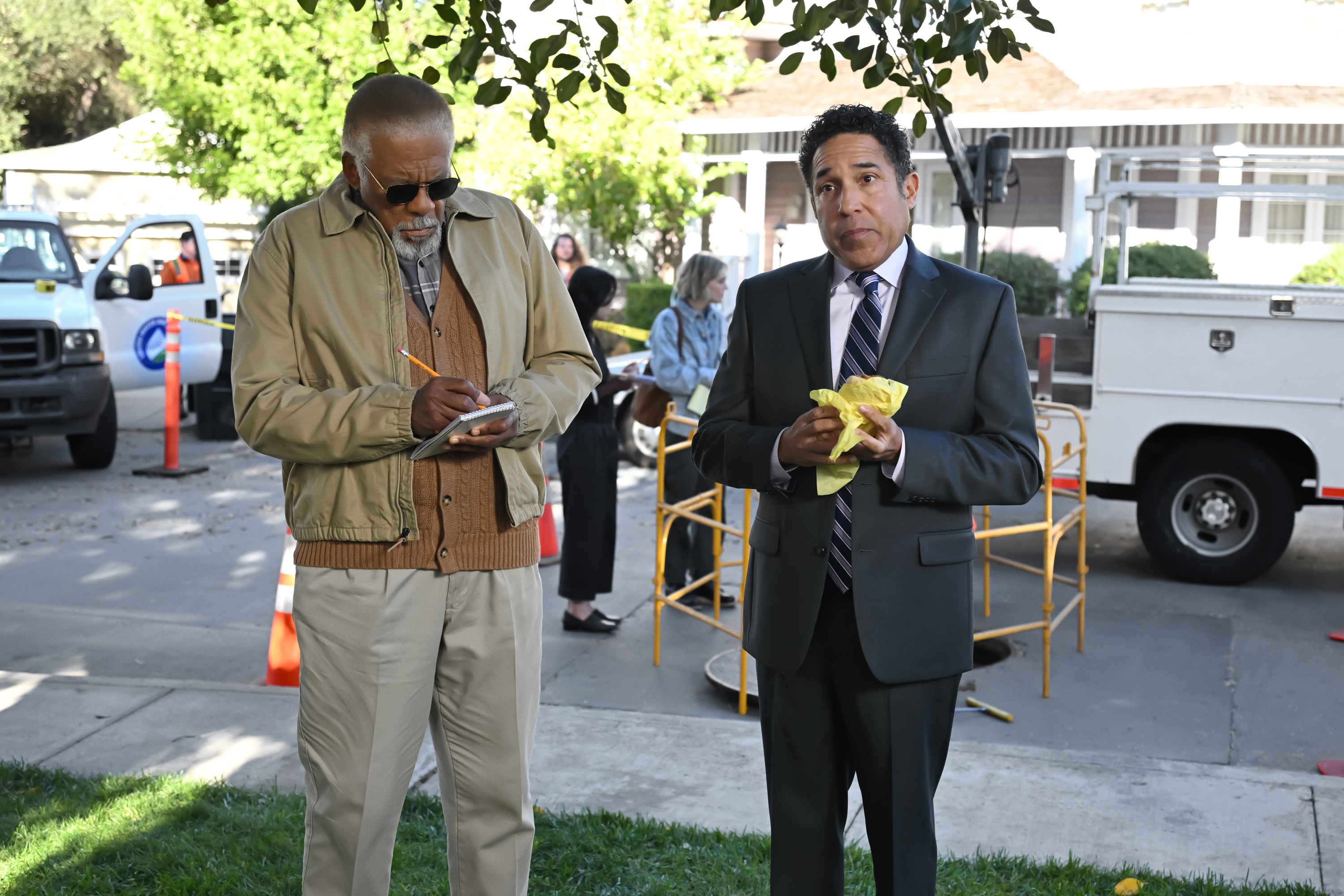
On Sept. 4, Peacock will drop all 10 episodes of “The Paper,” a very loose spinoff of “The Office” that follows the staff of a struggling local newspaper in Ohio, and an eager new editor-in-chief hoping to breathe life into a dying medium. It’s explained in the first few minutes of the series why Oscar winds up in the Midwest, working as an accountant for the Toledo Truth Teller alongside a ragtag group of colleagues played by Domnhall Gleeson, Sabrina Impacciatore, Chelsea Frei, Melvin Gregg, Gbemisola Ikumelo, Alex Edelman, Ramona Young and Tim Key. Oscar isn’t the only through line between the projects: the unseen camera crew capturing all the workplace antics at the Scranton branch of Dunder Mifflin has found a new paper-related subject in Ohio.
“I was a little nervous when we first started,” Nuñez tells Variety about the upcoming series. “I didn’t know who the characters were, what the episodes would be, how it would all roll out.” His concerns were assuaged when he arrived on set and witnessed the cast and crew’s careful attention to detail. He specifically brings up Gleeson, who plays the paper’s starry-eyed new boss, Ned Sampson. “He’s a very thoughtful young man,” Nuñez says. “He really cared about his character and asked a lot of questions. I thought that was very cool.”
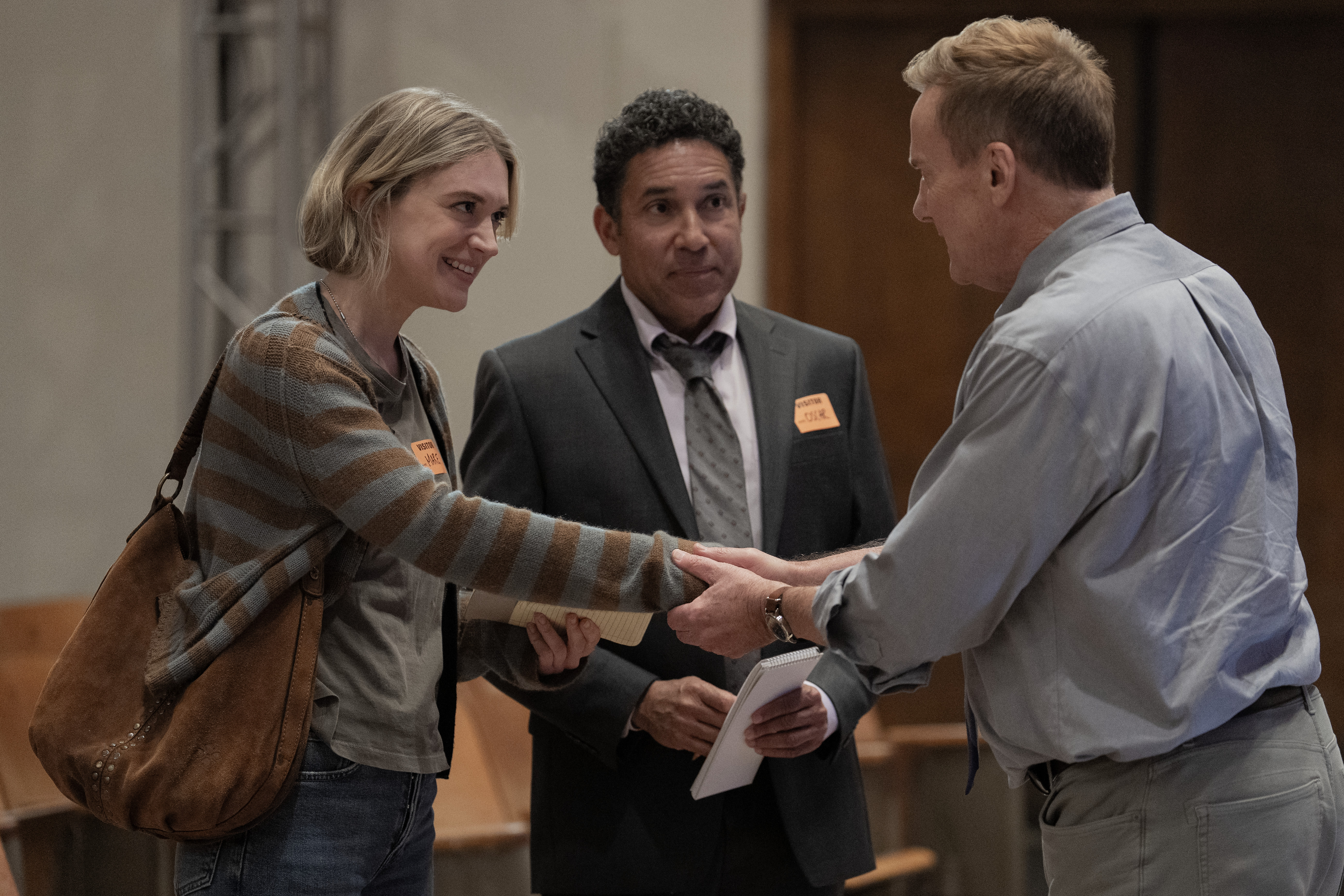
“The Office” ended in 2013, but seven years after it went off the air, it became by far the most-streamed show in America. (It scored 57 billion viewing minutes in 2020, 17 billion more than the second-most streamed series, “Grey’s Anatomy.”) The workplace comedy, an adaptation of the British cult hit co-created and led by Ricky Gervais, turned a handful of its cast members into household names. As for Nuñez, it catapulted the Cuban-born actor from an unknown day player into a fixture on one of the biggest TV shows of all time. For nearly two decades, Nuñez has not been able to leave his house without a stranger yelling “Oscar!” (It helps that he shares his character’s first name.)
In the years following its finale, as he fielded constant questions about reboot rumors and spinoff ideas, Nuñez continued to embrace his character, introducing himself as “Oscar from ‘The Office’” on Cameo and appearing at fan conventions alongside his former castmates. But when the new show premieres, it will bring the character back on television and behind an office desk for the first time in more than a decade.
Nuñez is thrilled, but Oscar Martinez, not so much. In the first episode of “The Paper,” the accountant is dismayed to find the same documentary crew that stalked him in Scranton prowling around his new workplace. In the first episode, he tells off a camera man: “You can’t use my voice, my likeness, my face, nothing!”
A title card begs to differ: “Yes we can. There’s no end date on the release Oscar signed in 2005.”
“Oscar is not in his early 20s. He doesn’t have to be on Instagram,” Nuñez says. “He is a pseudo-intellectual. He wants to do his job and find a boyfriend and go to some plays. He wants to enjoy his life without being in a documentary. Some people don’t want to be actors. They’re very happy just having a quiet life.”
After “The Office” ended, Nuñez said in interviews that he imagined Oscar might one day leave Dunder Mifflin and run for political office. But “The Paper” finds him more or less where we left him, albeit in a different city.
“His company was bought by a bigger company, and they decided to keep him on board,” Nuñez says of his character. “‘You want to keep working for this company? You’re going to have to relocate.’ It’s the same fella but in a different city, probably making more money if he negotiated properly.”
But while he works a back-office job as a bean counter, removed from the daily duties of publishing a newspaper, the revitalization of the Toledo Truth Teller stirs something in Oscar, who chooses to get involved.
“Does he just want to make a buck and be cynical, or does he want to do something? We’ll have to wait and see,” Nuñez teases.
Nuñez is the only “Office” alum featured to be in the cast of “The Paper” so far, but the show has plenty more Dunder Mifflin DNA. Paul Lieberstein, a writer-producer on the original series who played the love-to-hate HR head Toby, worked on “The Paper” alongside other “Office” directors Jeffrey Blitz, Dave Rogers, Matt Sohn, Jennifer Celotta and Ken Kwapis. And, as a bonus, Daniels co-created the series with Michael Koman, whose wife Ellie Kemper starred on “The Office” as Erin. Without spoiling, a peripheral character from “The Office” appears early on in the season, and another fan favorite is mentioned. Listing his former co-stars whom he’d like to see make a cameo on “The Paper,” Nuñez says, “It would be crazy to see Creed come back. Or Angela — I don’t know what she’s doing.”
But while Nuñez is surrounded by a brand-new ensemble of actors, he didn’t worry about trying to manufacture the same comedic alchemy that made “The Office” click. The groundwork was already laid in the casting.
“They’re all so good,” Nuñez says of his castmates. “All you really have to do is show up, do your thing, and keep up with them — and trust that you’re there for a reason, too.”
As for the writing, he adds, “Nothing will ever be like ‘The Office.’ That was crazy how funny that was. But this is not too shabby.”
Reminiscing about his favorite episodes of “The Office,” Nuñez brings up “Gay Witch Hunt,” the Season 3 premiere in which Michael Scott (Steve Carell) learns Oscar is gay and — in a horribly misguided attempt to prove he’s comfortable with his employee’s sexuality — kisses him on the lips in front of the entire office. Michael’s behavior causes corporate to step in and offer Oscar a three-month paid vacation. As it so happened, Nuñez’s absence from the next eight episodes allowed him to create and star in the Comedy Central series “Halfway Home,” which ran for one season in 2007. “Greg Daniels is so cool he figured out a way for me to do both things,” he says.
To many fans’ surprise, Oscar was not initially conceived as a gay character. Sometime before the Season 2 episode “The Secret,” Nuñez remembers Daniels approaching him and saying, “Can I ask you something? Do you mind if we make your character gay?” Nuñez said, “No, I don’t care,” and Daniels replied, “Oh, good, because we already wrote the scripts.”
In the 20 years since, Oscar has become a queer icon of sorts. “I often forget my character is gay,” Nuñez says, “and I’ll go to a convention and young people come up to me and say, ‘Thank you. Your character helped me come out of the closet.’”
“It’s very cool,” Nuñez says. “That’s the best part about it.”
It’s not lost on Nuñez that “The Paper” is, naturally, a more topical show than “The Office.” With more than two publications shuttering per week in the United States, it’s predicted that by the end of this year, the country will have lost one-third of its print newspapers over the past two decades. According to a Northwestern University report, 55 million Americans have limited to no access to local news. And the federal government’s recent attacks on national news organizations have, no doubt, further endangered the media ecosystem.
“It’s something that’s dying,” Nuñez says of journalism being a viable career path. “It continues to be, for people who believe in a free press, a noble profession, to go out there and investigate things that need to be investigated.”
Still, Nuñez could do without the upcoming press junket for “The Paper,” where he’ll spend hours with hundreds of journalists all asking the same questions. “Not my favorite thing,” he smiles. “I hope I don’t murder anyone.”
Originally published by variety.com. Syndicated material does not necessarily reflect the views of Grazia British.
More Lifestyle

Millennium Docs Against Gravity Festival Director on How Documentary Film Helps Audiences Find ‘Sense Amid the Chaos’ of Current Events
Poland’s Millennium Docs Against Gravity, the documentary film festival that takes place simultaneously across seven Polish cities, returns for its 23rd edition from May 7 – 17 with a…

Mubi Acquires Na Hong-Jin’s Korean Thriller ‘Hope,’ Starring Michael Fassbender, Alicia Vikander and Hoyeon, For Multiple Territories Ahead of Cannes Premiere
Mubi is once again flexing it financial muscle ahead of Cannes, picking up one of the buzziest films heading to this year’s festival. The arthouse distributor and production company has…

MetFilm Sales Acquires Mongolian Documentary ‘Colors of White Rock’ Ahead of World Premiere at Tribeca (EXCLUSIVE)
London-based MetFilm Sales has acquired Mongolian filmmaker Khoroldorj Choijoovanchig’s debut feature documentary “Colors of White Rock” for worldwide sales representation. The film will…

Brit Detective Drama ‘Bergerac’ Bought for U.S. by PBS Distribution (EXCLUSIVE)
British detective drama “Bergerac” is heading to the U.S. with PBS Distribution following a deal with Banijay Rights. The acquisition comes ahead of next week’s London TV Screenings, with…